


Blurring the line between fact and fiction has become ever more relevant in an era of artificially hallucinated images and alternative facts. But there is a long tradition of tapping real events for fictional retellings. Claire Carusillo borrows from her real life family history for the plot behind The Responsible Party, her debut novel. The novel follows multiple generations of Mounsey women in the years after two of them survive sinking ships. Carusillo creates a story by blending fact and fiction where she explores the definition of truth, who defines it, and whether it even matters.
Claire, a fictional version of the author, retells the story of her mother’s childhood, and how the sinking ships defined her family history. The tragic boat incidents were real. The Empress of Ireland sank in the St. Lawrence Seaway, and famously, the Lusitania was sunk by German U-boats at the onset of World War I. Fanny miraculously survived the sinking of the Empress. When word reached her family, Sarah set out to retrieve her, boarding the ill-fated Luistania. On their return to the Midwest, the mother and daughter team launched a career telling the stories on the vaudeville circuit.
In the present, Claire, the narrator, has been cancelled publicly for her bad skincare advice. After using an over-the-counter DNA test with seemingly meaningless results, her DNA ends up submitted to a database Claire suggests is controlled by Mormons. This DNA triggers the novel’s plot. Police have linked her DNA sample through the database to a past murder. The DNA suggests either she or her mother, Kath, was connected to the crime scene. When the police want fresh samples, Kath refuses.
Suddenly, Carusillo thrusts us into a murder mystery story. What happened, who was involved, and why all surface as motivations for the character of Claire to revisit her mother’s personal history. Unraveling what the police are investigating remains a persistent question lingering in the background of the novel as the story meanders through Kath’s trials and triumphs. There are a lot of side quests along the way, and every so often Carusillo reminds us the reason everyone is sharing their stories is to get to the bottom of the crime.
There are offbeat tangents Kath travels down. Two men show up at the McDonald’s teenage Kath works at and demand hamburgers. The store has closed, and they bully her, but she ends up befriending them. The quirkier part is they also live in a lighthouse and host bacchanalian parties. These unexpected plot points and misfit characters are reminiscent of the oddities that show up in Nell Zink’s novels, in the good ways that are exciting and weird and fun.
There are other twists across the generations that keep this journey fresh and unexpected as the story progresses. The family stories begin to unravel as Kath filters her story to Claire, who filters the story to us. At times, the narrative point of view wobbles, even as Claire narrates. Should we question Clare’s credibility? Or Kath’s? Or anyone else’s? None of these characters are so honest or good that they aren’t all suspects in the various misdeeds, or have motivation to mislead. Their flaws not only make them more human, but also keeps them in play when it comes to solving the mystery. Who is telling us the truth? Claire even tells us, “I’m still the only person who should get to repeat this story.”
Adding to the heightened tension is the high energy of the prose. The words come fast, and with high impact, with the urgency of breaking news on the internet. There’s a lot of information contained in every line, and Carusillo links together ideas and facts that are often just tangents on themselves. For instance, Claire tells us: “In 1971, a Big Mac retailed for sixty-five cents. McDonald’s restaurants didn’t have drive-thrus until 1975, when a franchisee next to a military base in southern Arizona cut a hole in his exterior wall because personnel could not be seen off-duty in their uniforms and those growing boys were hungry. My phone dies.” This staccato voice works so well on the internet in short bursts, but the continuous high voltage prose becomes numbing. It feels too one-note. It’s all high intensity, without a refractory period.
Carusillo balances this intensity with humor. There are funny observations and witty descriptions buried in this text, lines to giggle at, or to be quietly amused. But it is heavy reading. There is so much of this kind of stylized lecturing, consuming the text is fatiguing. The book lends itself to repeated readings where many of these wry observations materialize on the second go round.

One concern that did arise was how easy it was to feel detached from the characters in the novel. Partly this sense comes from how the prose is presented through layers of narrators. Despite serving as narrator, Claire has little to do with the events of the novel. The majority of the novel is happening to Kath, or to Kath’s mother, aunt, and grandmother before Kath was even born. This filtering through the varying voices creates distance between the reader and the characters. Layers of narration can be justified, but Carusillo’s narrative struggles in this regard. Claire’s presence, and the interjection of Claire’s experiences provide entertaining asides, like her social media obsessions. But it never feels like there is a meaningful critique or examination of Claire’s foibles. These exist mainly as plot devices wrapped up in wry humor.
What Carusillo does succeed at is in blurring the line between truth and fiction. The promotional materials insist the novel draws on a true story. But also, the novel is a fictional account. The presence of Claire in the narrative creates this sense of verisimilitude. Real events can be bent or twisted. Since the story is passed through so many points of view, the blending of fact and fiction becomes less definitive.
The Responsible Party is a highly stylized narrative filled with observatory humor, witty phrases, and entertaining eccentricities. The question of authenticity becomes an important plot point, and Carusillo’s inclusion of an eponymous character further blurs these distinctions. There are plenty of pieces here to find something to enjoy, but maybe not all of them all at once.
FICTION
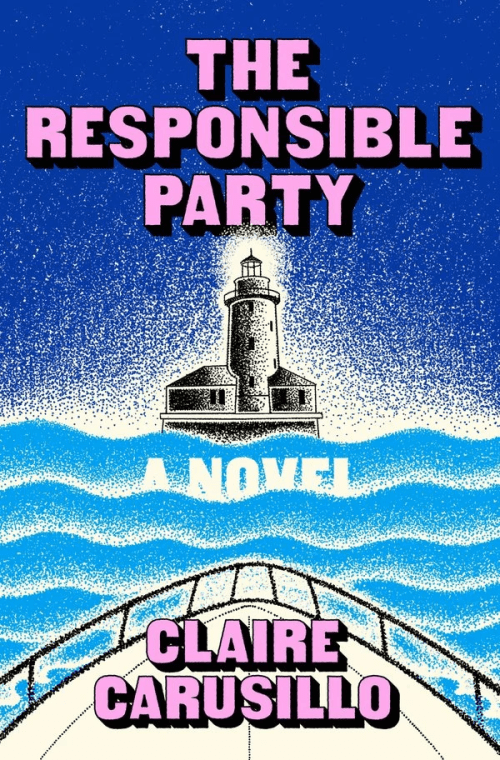
The Responsible Party
By Claire Carusillo
Henry Holt and Co.
Published August 11, 2026


