


At 31 years old, Lola Treasure Gold is broke, barely employed, and back to living with her free-spirited adoptive mom in their crumbling Hollywood Hills home. But most importantly, her best friend Alex—who is also the other half of a longstanding situationship—died in a tragic, yet undeniably stupid skateboarding accident gone viral, sinking Lola in all-consuming grief.
When a mysteriously edited video of Lola talking at a desert wake with friends goes viral, she catapults her one minute of fame into becoming a self-styled internet guru, telling her hundreds of thousands of new Instagram followers to light their own way out of grief, like ships in the night. Accidentally, but suddenly, her “Be Your Own Beacon” (#beyourownbeacon) mantra spawns opportunities to make money off new age spirituality and dig her out of her spiraling credit card debts.
In What a Time to Be Alive, Jade Chang follows her messy protagonist through each month of her grieving year and meteoric rise as an internet folk hero. Because Alex’s death has shattered everything, Lola’s months come in chaotic fragments at wakes, museums, and the odd jobs her new persona shores up. Her first-person narration is punchy, introspective, sometimes profound, and often hilarious, but the dialogue is shallow enough to capture the stupid things that people actually say in real life.
As Lola’s career kicks off, she teeters between delusion, nihilism, and genuine sincerity. Sometimes, she jokes she is starting a cult; other times, she believes its message. But for all the self-help advice Lola offers to strangers on social media, the accidental influencer can’t seem to find herself. Former friends accuse her of using Alex’s death for clout. Lola is also on-again, off-again searching for her birth mother, who was deported to China when Lola was a child and seemingly vanished off the face of the earth. The spiritual checklists that Lola pins in her social media bio empower others online, but they don’t help her get her fractured life together.
Influencing isn’t something that comes naturally, but an academic endeavor backed up by spreadsheets of case studies on sexy nihilism and how to sell authenticity. As Lola races from TED conferences to moon gazing ceremonies, woo-woo healing retreats, psychedelic experiences, and ghostly encounters, grief is never something she gets over. There’s a rawness, a grossness, an irrationality to her narration. She clings to what’s left of Alex, no matter how strange—from Google Earth’s satellite images of him to his unclaimed sperm waiting in a bank from his strapped-for-cash college days. When she thinks she is okay, grief comes to take her hostage again, trapping her in days-long reality TV runs and candy binges. It’s a nagging wound and a stranger in the night, unannounced yet always welcome.
“We never talk about how there’s a corner of grief that feels like pleasure. To feel so much emotion, to know it’s shared with other people you’re bound to, to experience something so overwhelming that there’s no room in your body for a single other thing, to exist wholly in an unfamiliar state, it’s a kind of love,” she tells herself while hiding from countless sorry-for-your-loss messages and housesitting for a rabbit named Aristotle near Joshua Tree. On Alex’s birthday, Lola tells an estranged friend, “I haven’t understood a single thing I’ve done all year…Except I also feel like it’s the only worthwhile year I’ve ever had in my life.”
My unrelenting fear of the West Coast and its foreign Californian ways leaves me unfamiliar with LA traffic, hazy pink sunsets, electric summer nights, and the canyon roads that Chang so lovingly describes throughout the book. But when I read passages like this (funnily enough, from Lola’s Instagram posts), I can smell it even from the Midwest. “Smoke and jasmine, sage and diesel. The Santa Anas smell different every year, but they always carry a dark heat, a wild, prickly sense of freedom that sweeps in from the deep desert. To me, their arrival brings a louche possibility, unsettling and electric.”
I had not read anything by Joan Didion, whose writing Lola draws on in this passage, but the California grief in Chang’s writing compelled me to check out Didion’s A Year of Magical Thinking from the library and rectify the situation. Even though one is a memoir and the other fiction, the similarities feel extremely obvious—documenting the first year of grieving a loved one and the ways the griever oscillates wildly between the tragedy of loss and its power to derange the mind. For Chang’s novel, there is perhaps an added listlessness with Lola having bypassed many adult milestones and missing a stable family of her own. She was born unmoored, raised unmoored, and may never find the dock to rest her sailing ship through life—but has now chosen to let millions of chronically online strangers pick her port.
Slices of Lola’s new life are sandwiched between the old as she keeps processing her best friend’s death and the long moments leading up to it. What a Time to Be Alive is half grief manifesto and half satirical commentary on the woo-woo influencer scene, sprinkled with humor and luxurious prose. Lola begins and ends her year of grief with the feeling that this was not how she thought her life was going to turn out. But by the time year’s end rolls around again, becoming the person she is meant to be is a distraction in itself; she is always coming of age.
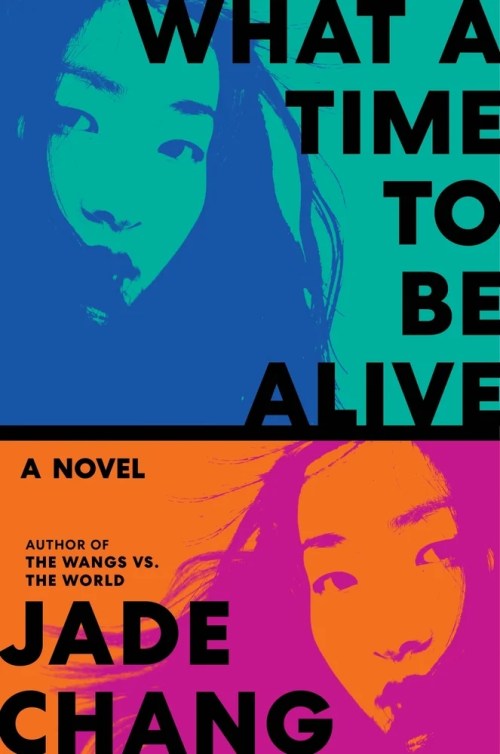
FICTION

By Jade Chang
Ecco
Published September 30, 2025


