


“Yes, I think the vices you indulge in return to bewitch you.”
What is the root of evil? Are there some individuals by the nature of their birth who are more susceptible to the whispers and snares of the devil? These are core questions around which the sprawling and dark tale of Jules Barbey D’Aurevilly’s The Bewitched spiral.
The novel opens with a visitor at an inn seeking passage through eerie and unfamiliar moors. Locals believe the area to be haunted, but one of them volunteers to accompany the stranger across. As they travel, he tells the man the story of the ghosts: a story involving a mysterious priest, extramarital affairs, obsession, sexual desire, bewitchings, and much death. I am loath to go into too much detail about the plot itself, as there is much delight to be gleaned from discovering its twists and turns, but suffice it to say, this is a page turner of the purest kind.
The frame story is one piece of an overall complex narrative structure. Sentences are long and winding, frequently stretching past a full page in length. The tone is often anecdotal, as though we are hearing something that might or might not have happened, blurring the lines between fact and fiction even within the world of the novel. These elements are used to great effect, creating a story that winds and digresses, building delicious, propulsive uncertainty on every page.
A piece of classic French Gothic literature in its first English language translation since 1928s, Raymond Mackenzie’s translation feels both incredibly familiar and something entirely new, a gift to lovers of Gothic literature. The translator’s introduction and notes throughout the text do an excellent job of situating the novel within the context of French history. As is the case with the best Gothic stories, the novel can certainly be read and enjoyed without this context, but the depth adds an irresistible layer of richness.
Though it was not published until the 1850s, The Bewitched is set in the very early 1800s, mere years after the French Revolution. The novel takes place in Normandy, the region of France from which Jules Barbey D’Aurevilly’s family originated. The novel’s Blanchelande monastery and Lessay moor are populated with mostly merchants,former peasants, and other commoners. The aristocracy has been all but excised from the region, but the tensions between those still loyal to the monarchy and those loyal to the fledgling republic are still thrumming. This tension, between aristocracy and commoner, monarchy and republic is key to the novel.
Mackenzie’s introduction makes Barbey’s loyalties clear from the very beginning, but the prose itself confirms it with little context needed: Barbey’s Royalist leanings— written some 60 years after that monarchy was dissolved— are their own ghosts. What is lost when the world entirely restructures itself? What is lost when divinity is removed from governing? The Bewitched is a fascinating counterpoint to the better-known Les Miserables.
Fans of Frankenstein, Dracula, and other Gothic literature will find much to love in The Bewitched, as will readers of the Bronte sisters, as the landscapes and unique cultural idiosyncrasies of their respective regions are similarly venerated in these works. Even those returning to Steinbeck’s East of Eden because of the Netflix series may find some interesting thematic overlap in their expansive family stories and anxieties about the future.

Either way, I haven’t been able to stop thinking about The Bewitched since I began reading it, begging the question: am I, myself, bewitched?
“For nothing exhausts the brain like the impossibility of quieting it.”
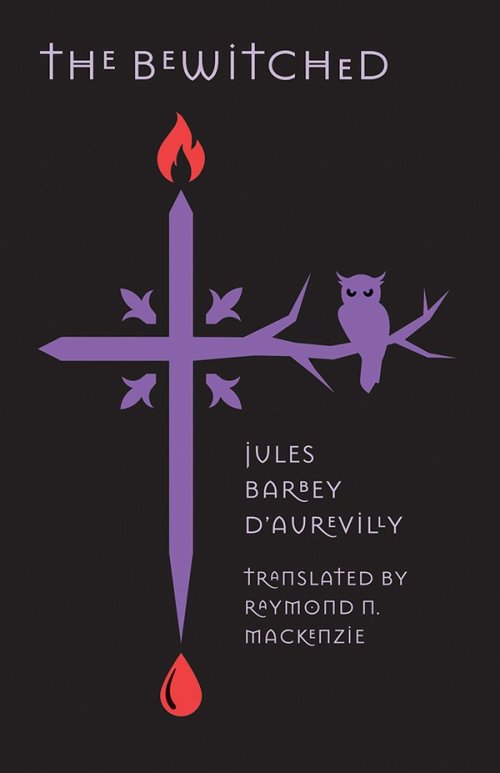
FICTION
The Bewitched
By Jules Barbey D’Aurevilly
Translated by Raymond N. MacKenzie
University of Minnesota Press
Published November 17, 2026


