


Trouble runs ocean-deep in the lives of Milly and Val.
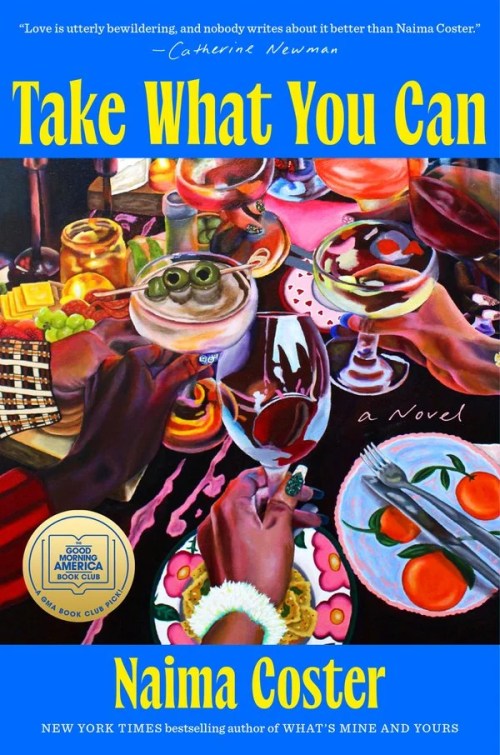
In Naima Coster’s fifth novel, Take What You Can, the story spans a year in the lives of the two best friends and soon-to-be mothers, Valerie (Val) and Milena (Milly). The novel boldly portrays the brutal realities of motherhood, class, and trauma against the fast-paced backdrop of New York City. While seemingly the best of friends, holes are poked in their relationship early on, and it’s soon evident that what lies beneath the surface is betrayal and pain, both independent of and shared by these women. The title, “Take What You Can,” echoes throughout the story as each character moves with desperation, and sometimes courage, to maintain their lives and those they love. Through persistent themes of wealth and loyalty, Milly and Val are tested.
Originally befriending each other as the only Black girls in their collegiate study abroad program, Milly and Val become entangled in a complicated friendship spurred by the mysterious and ever-generous Helene, who favored the girls all those years ago in France. Helene gave them money, shelter, and access to a world they couldn’t have afforded alone. Years later, and now in their mid-thirties, Val and Milly are balancing marriage, careers, finances, and new motherhood. They give birth to daughters within days of each other, but that’s where the similarities end. While Val is pleased to be a mother, Milly is bogged down by the burden of motherhood and what it has done to her body, physically and emotionally.
Milly seems to have it all: a dedicated online fan base of social media followers and a set of supportive, rich in-laws. But it is not enough as she grieves and yearns for her own deceased mother. Val finds herself at odds with a husband whom she prioritizes over her own needs. She loves her daughter and is eager to make up for what she lacked growing up.
The women brush with tension when Cleo, who is entirely on the outskirts of wealth, becomes the nanny to their daughters. Milly recognizes Cleo as hired help, while Val is determined to make a best friend out of her. Money is always at the center, and it’s revealed through carefully paced flashbacks that the women’s money tensions started long ago during college and have only built up over time. It is enough to bring their entire relationship into question.
Coster set out to write a sharp commentary on class. We know the story well: the tale of the privileged friend who came from very little (Milly) and another who fell a little short of where she wanted to end up (Val). But Coster’s execution is what makes her novel so captivating. The story starts slowly, setting readers up with a little context, which leaves us wanting more. There’s a strong build-up; before long, it’s hard to set the novel down.
The characters feel intensely real. Milly is raw and unapologetic when it comes to protecting her peace, and Val is a bleeding heart who needs others. Their psychology and context are so mesmerizingly honest, and, at times, uncomfortable, which makes them all the more compelling. It’s easy to settle into their orbits. With swift switches between Val and Milly’s third-person points of view within the same chapter, readers are not allowed to root for one woman over the other. Both main characters are painfully flawed, and yet you want to hug them or perhaps share a glass of wine with them both.
While reading, I often wondered whether Val and Milly even like each other. The truth? They might not, but they do love one another. Take What You Can is a master class in nuanced characterization. No character is simple enough to be labeled a “villain.” The harsh realities of the novel’s central conflicts are not unlike our own world, where perception and individual background dictate a far more complicated reality. The characters are most interesting at their lowest points, and readers can’t help but feel frustrated, confused, and enamored with their choices— maybe all three at once.
Take What You Can has a quiet urgency. Privilege and entitlement loom over Val and Milly, casting a spotlight on the state of the world. There is always more to reach for, but what is it that blinds us from appreciating the lives we’ve already built? I’m still asking myself.
FICTION

By Naima Coster
Pamela Dorman Books
Published August 4, 2026


