


There’s a magical bending of time spent in a dress-up box, or a trunk, underneath the hooks hung at height level in the corner of the basement—a secluded way to spend an afternoon. No passport needed to transform into a swashbuckling pirate, maybe with an eye patch or two, or to tie a blanket as a skirt. The Players Club by Rachel Mills reintroduces the idea of play for women, where the stakes increase, as do the tax brackets in adulthood.
Readers of Eleanor Oliphant is Completely Fine by Gail Honeyman will find traces of the narrator in Beth Greenwood who obscures the grief from an early adulthood and childhood spent surviving with her sister Elspeth. Two sides of the same coin, rolling into different directions. Elspeth, prim twin, like Claire in Fleabag, wears manicured outfits to weekly brunch, reignited into a career as a social worker in training after her husband leaves her for his younger mistress. Beth Greenwood designs packages and graphics for a fast-food company, clocking in and out, without revealing details of her personal life to her coworkers.
Overcome or rather possessed in the driver’s seat of her brain, Beth Greenwood finds herself stepping foot in a designer woman’s wear store becoming a familial money career woman, draped in a knit dress, purchased that day, stealing an umbrella from the store. Then Becky the backpacker persona takes her to a travel gear store where after traipsing the bookstore for something Becky would enjoy, shares a clandestine kiss in the alleyway with a fellow “traveler.” These “Life Plays” are labeled and systemized, once Beth meets Leila and the larger Players Club.
A group of women on the second story of King Charles I Pub create pseudonyms for their club personas and convene to plot their next life play. Like an artist visited by a muse, a life play is a state of “becoming” when a player is visited by a person they will inhabit for a day accomplishing some eccentric feat before disappearing from the scene.
However, Beth does not play by the rules. The Player’s Club Handbook, self-published, and like the self-established rules of a book club, demand authenticity in plays for a true “becoming” while not involving children as a cardinal rule, civilians are okay. As Beth immerses herself with in person connections long neglected at work, this state of play continues in the gossip with Elspeth detailing a player’s exploits as a female Elvis impersonator, or an elderly body builder.
Over brunch Elspeth uses these stories as sustenance while her health begins to decline. Beth travels deeper in the world of the players in an attempt to report back a salacious detail, which will give Elspeth an insight into a state of play, while her days are filled with treatments. The rules of not telling outsiders don’t apply for Beth, when it includes a sister.
Membership in The Players Club requires supporting cast roles in other member’s Life Lust to Life Play like club member Saorsie’s desire to be a female Elvis impersonator. Told through first person narration, the novel follows Beth inside as she indoctrinates herself within The Players Club, much like initiation.
Since characters by the rules do not know each other’s occupations or true name outside of the club, Beth’s first-person narration provides a “playbook” for the transitions from her own “Life Play” to her real life, contrasting the level of human connection and cognitive state as she adopts different characters.

Additionally, the character of Elspeth serving as a foil for Beth both in sibling dynamic, and health parallels, like the centrifugal force in Emma Cleary’s novel Afterbirth, provides an outside perspective to the rules and dynamics of the club, while providing the intimacy of a relationship not entrenched in the bond of a “Life Play”.
When the world is at your fingertips, what then are you limited by? The Player’s Club Handbook self-governs a set of rules, the twenty-four hour time period, life plays must be a “becoming” not from a real person, but someone who is real to you. In an attempt to utilize her cognitive abilities, and strike out on her own, Beth’s attempt to throw out the playbook and further immerse herself in the state of play raises the stakes of the conflict. The external man vs. nature in her sister’s illness, then prisms out to man vs. man as Beth grapples with the character she’s becoming slipping into a life, while man vs. society as the lid blows on what a player’s club is.
Fans of Claire Pooley’s The Authenticity Project or Supper Club by Lara Williams will enjoy the tale of a woman unleashed with the fable of a play gone too far, through the cautionary tale of indoctrinating member Leila, and as Beth attempts to repeat history. Contrasted with The Midnight Library by Matt Haig or theories of a parallel universe, The Players Club takes a different approach to exploring other lives by asking, what if you just lived in? And of course, limiting the constraints to returning to the life you were born into no matter how painful.
FICTION
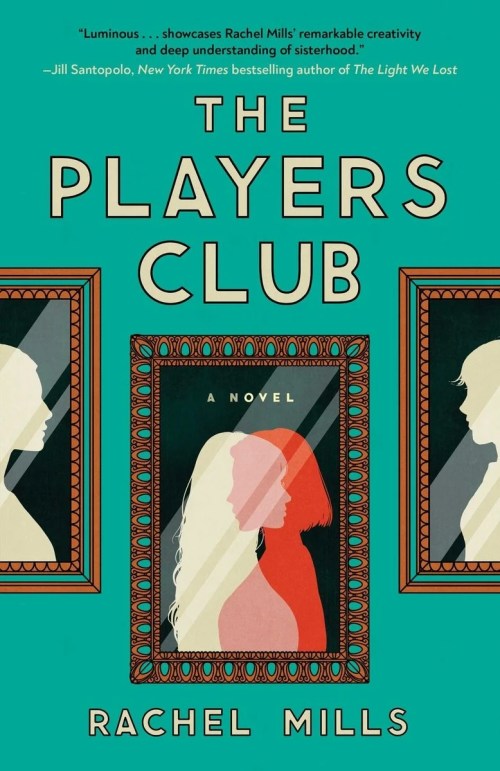
The Players Club
By Rachel Mills
Atria Books
Published May 19, 2026


