


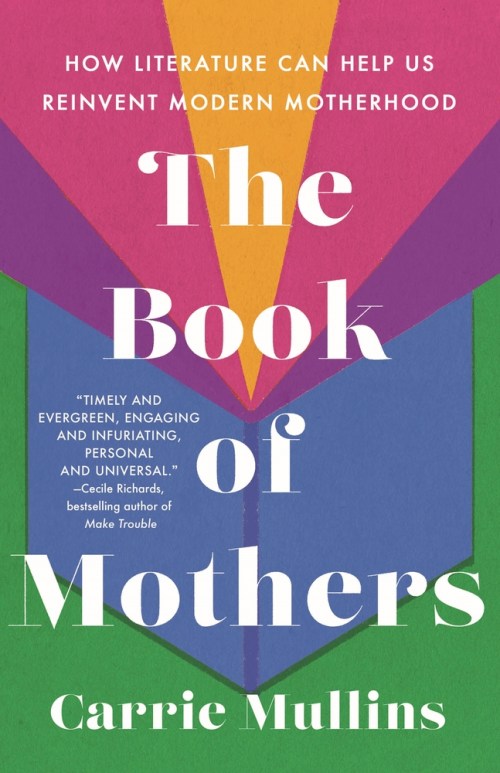
When it comes to modern motherhood, there exists a glut of seemingly helpful advice. From parenting books to well-intentioned TikTok videos, almost every question can be answered no matter how minute. But when it comes to the broader questions—from consumerism to childcare to why and how to mother—author Carrie Mullins suggests looking to the annals of classic literature for guidance. In her collection of essays Book of Mothers, Mullins carefully analyzes texts spanning from the early 1800s to the early 21st century, seeking models of motherhood and all their flaws. Woven into these essays are elements of Mullins’s own parenting journey, as well as savvy cultural criticism. The result is a complete body of work that does not always offer answers to the questions it poses, but does make a case for nuance in how we consider mothers both past and present, real and fictional.
While Mullins’s book spans the broader theme of motherhood and literature, each essay is self-contained, and readers may find themselves drawn to one or another due to their familiarity with a given novel. Indeed, an essay on the notorious Mrs. Bennet in Jane Austen’s Pride and Prejudice appears, on the surface, more broadly appealing than an incisive look at the little known 20th century novel Mrs. Bridge. However, this does not always correlate with the quality of the essays themselves. Indeed, Mullins’s exploration of Mrs. Bridge, a novel-in-vignettes about a timid housewife struggling to find purpose in her domestic sphere, is one of the highlights of the book. By presenting both the structure of the novel as true to the scattershot nature of motherhood, as well as making the case for women’s rights not always marching on a linear forward path, we gain a greater understanding of how modern mothering may be easier in some ways, but is no less under threat from outside societal forces. Meanwhile, the chapter on Mrs. Bennet benefits from familiarity with the subject material, but its frequent comparisons to reality television seem to distract from the broader message on mothering in an increasingly social age. Indeed, the best of Mullins’s essays are entrenched in deep textual analysis, such as her take on destroying the Angel of the Home in To the Lighthouse and understanding the point of view limitations in Daisy Buchanan’s mothering in The Great Gatsby. Because of this careful insight and very readable prose, Mullins’s collection is both academic and accessible, and can appeal to those familiar with the novels and those who are not so.
Carrie Mullins frequently includes snippets from her own motherhood journey, including giving birth in the throes of the COVID-19 pandemic and caring for a child with neonatal illness. While these can be thought of as further distractions from the literary, this adds much-needed personal stakes to the book. While not a memoir, by including aspects of her own life, we as readers feel the impetus Mullins no doubt felt to find guidance. This is most apparent in her chapter on Nella Larsen’s Passing and the anxiety of motherhood. By bookending the essay with snippets of her own fraught motherhood journey, we understand the stakes in creating this treatise on anxiety and understanding both its necessity and its undue burdens on the self. The book might even benefit from more of these personal asides, as they ground their surrounding essays in the real world, thereby blurring the lines between fiction and reality to create more universal portraits of motherhood.
What must be acknowledged, if not commended, is Mullins’s attempt to look at a diverse set of novels written by men and women, white people and people of color alike. She is also careful to include race-specific data when crucial, such as a discussion of black maternal mortality in her essay on The Color Purple or the unemployment of black mothers in the COVID-19 pandemic. If Mullins made it a point to include a few more lesser-known novels, what insights may we have gained? Instead of Pride and Prejudice and the Harry Potter series, would we have learned more about motherhood from Arundhati Roy’s The God of Small Things, or Elizabeth Acevedo’s The Poet X? We can only speculate. However, one must acknowledge that the book retains its broad appeal by its inclusion of these more familiar books. In short, come for Pride and Prejudice, stay for Mrs. Bridge.

Whether you are a mother or not, Book of Mothers offers a well-researched, highly cerebral take on the broad strokes of motherhood, seeking to include rather than exclude. It is compassionate in tone and nuanced in delivery, and literary nerds will find its analysis more than appealing while those seeking parenting guidance may find what they are looking for as well. Mullins is careful not to prescribe solutions, but she does posit options. Would we benefit more from a communal parenting style rather than a highly individualistic one? Is the push to fashion our ideals based on the items we buy doomed to ruin us in the end? The takes are broad and largely uncontroversial, but how we arrive at them is wholly interesting and unique.
NONFICTION
The Book of Mothers: How Literature Can Help Us Reinvent Modern Motherhood
By Carrie Mullins
St. Martin’s Press
Published May 7, 2024


