


Who’s up to the task of being a man? Certainly not men: this year, the Institute for Family Studies asked 2,000 unmarried men under thirty what the primary role of a man was in the world—they mostly settled on strength, responsibility, and leadership—and nearly half of those men reported they felt like an all-around failure.
Manhood is a tall order: a position that promises high autonomy, but places higher expectations on what you do with it. There are the stereotypical roles: breadwinning, being the romantic initiator, growth year over year. But what it ultimately comes down to is knowing what you want—desiring—and having the conviction to go after it.
There’s some clear desire fatigue among men. They’re in the significant minority of college graduates by gender—outnumbered in the overall workforce too. And, not for nothing, 60% of the men interviewed by the IFS were not in a romantic relationship—and the same amount reported a reason for their perennial bachelorhood: dating is too hard. And maybe by extension: wanting is too hard, much less going for it.
These numbers likely come as no surprise, especially to the young, metropolitan, and firmly-online among us. Sexual fear has taken hold of the single and once-ready-to-mingle in all sorts of unforeseen ways over the last fifteen years: #MeToo and the ever-murkier waters of consent, the self-pimping design of dating apps, the unlikely political presence of the incel, the 80/20 rule. Knowing more about each other’s psychologies has estranged us like never before—and on both sides of the gender divide, opting out entirely seems pretty tempting. Surely there must be another way than actually getting to know these freaks.
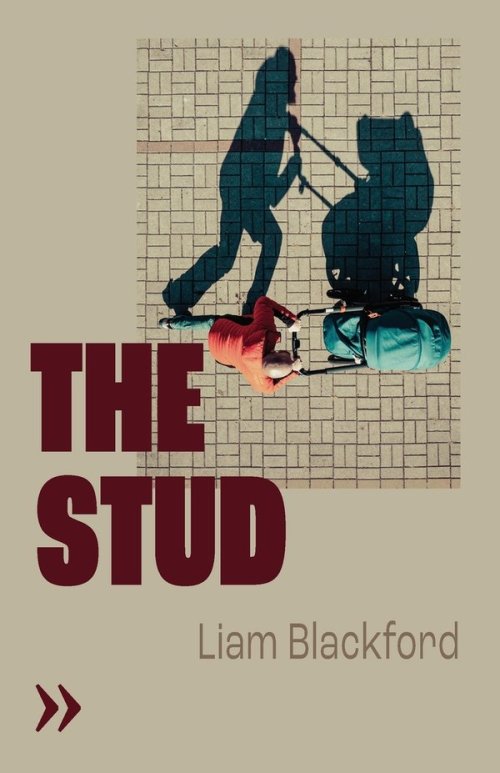
Australian writer and poet Liam Blackford’s debut novel The Stud is a stunning acceleration of that possibility. It is a black hole of desire, a book full of people contorting themselves into disturbing shapes to secure the perfect life with as little friction—that is to say, with as little input from other human beings—as possible. Love has come to die in Blackford’s dystopia. It’s dazzlingly provocative, and horrifyingly plausible.
In a nearby future, Australia’s largest and wealthiest state has broken off into its own hyper-liberal republic. Facing a disastrous birthrate crisis, the Westralian government has subsidized child-rearing by every possible method. Not just stipends per child and medical debt relief, but publicly-funded in vitro fertilization, training programs for surrogate mothers, sperm donor solicitation, and The Stud’s central arrangement: so-called “mother-leader-father-labourer” homesteads where multiple women hire a single man to live with them, keep them all pregnant as often as possible, and help raise every resulting child. In raunchier terms, a stud house.
After years of dead-end dating, Martina announces that she’ll be moving into one. Nobody bats an eye: it’s simply another notch in the belt of women’s liberation, the freedom for women to fulfill the duty of childbirth among a dwindling population without having to sacrifice their careers.
The Stud‘s women are high-powered careerists in law, architecture, and advertising who’ve been driven to their wit’s end by the male species’ total failure to deliver what modern women like them need. Men are proven creeps, or threatened by success, or utterly stupid. No matter what form they take, they’re asleep at the wheel: so step the fuck aside. Martina’s live-in “stud”, and the parade of feckless men elsewhere in the novel, are delegated to the role of useful idiot: competent stay-at-home fathers at best, prostitutes at worst. When we’re granted access to the mind of Martina & Co’s stud Luke, we aren’t peeking into the psyche of a loving husband and father, but a sex worker tailoring his strategy for maximum return with each client.
The novel’s greatest success is in how seductively functional this inverse Handmaid’s Tale can seem. Despite your reservations, you have to admit that it works. It’s nice, even, to have the roles so clearly defined, the responsibilities so well negotiated. Every time the arrangement starts to seem sickening, Blackford doses you with something sweet: a genuine, tender moment between stud-father and daughter; a hint at a possibility of love within the transaction.
Blackford’s prose is unfussy, but propulsive, coating its vulgarity in a layer of familiar and sugary progressive politics. The matter-of-fact narration and rote conversations between characters render the man-made horrors on display normal, even natural. Its closest cousin is Michel Houellebecq’s Platform, similarly concerned with the commodification of sex and outsourcing of romance, but Blackford’s icy third person lets the reader assess the damage, where Houellebecq can’t resist issuing judgement himself.
The Stud’s women flag their support for the booming surrogacy industry loud and proud, but can’t see it for the class crisis that it is; Westralia’s richest man is a transgender OnlyFans model and cage fighter who’s birthed a few kids himself using the public birthing infrastructure his mega-company helped build; the Australians left behind in the East are fawned-over charity cases regularly trafficked into surrogacy for Westerners. Signaling the right values, but subverting them in private, is the modus operandi of the world.
The scope of the nightmare is so expansive it’s impossible to breach it all here—but the culture of constant optimization for maximum productivity feels so familiar that even the novel’s wildest stunts feel nauseatingly real, and lends a credibility to the novel’s grotesque sidelining of men to the realm of vapid sex object. Which, to women, may sound familiar. But the women of The Stud carry a smug, self-assured air about them as men are pillaged for their sex organs and gradually abandoned as legitimate options for partnership—no better than men ever were. Especially as we’re granted access to these women’s private lives, where their empowered mentality crumbles into simpering neediness when the pressure of their lives becomes too much to bear. Which, to men, may sound familiar.
By extension, there’s a way to read The Stud as a misogynistic parable, or at least a gender essentialist one: a suggestion that women, given the opportunity to assume the traditionally masculine position of power and agency, will inevitably discover that they’d rather surrender it.

There’s an infamous Sex and the City scene, wherein Charlotte says that thing that independent women are never supposed to say: that what women really want is to be rescued by a knight in shining armor who will make all the troubles of the world go away. “I’ve been dating since I was fifteen,” she says, dejected. “I’m exhausted! Where is he?” When Carrie asks whether Charlotte’s ever considered that she might need to be her own white knight, her face sinks even more: “That is so depressing.”
Your initial reaction to The Stud‘s provocations might come down to how much you buy into that sentiment: that at root, women have an innate tendency to avoid steering toward their own desires—away from what it means to Be A Man. But my hunch is that Blackford isn’t interested in taking women to task for false behavior in a postfeminist world—but rather diagnosing man and woman alike with a desire deficiency. Not one person in The Stud is acting authentically. Nobody is going after what they want. Everyone is taking the path of least resistance, and everyone thinks that something being easy must mean that it’s good.
At the heart of The Stud is not a battle of the sexes, but a very modern human struggle to accept the burden of agency: to make choices that could result in consequences, to brave fear and risk rejection, to open yourself to a cruelly unoptimized, unfair world full of people who will hurt and disappoint you in ways you couldn’t possibly plan for.
Blackford’s novel isn’t prescriptive, or even especially concerned with warning its readers of the path they’re on. Instead, he lays bare our unshakeable need for each other, our dependence on forces larger than ourselves—and the systems we’re building to artificially free ourselves from those needs, systems that allow us to scrap one another for their most useful parts to use in our own private designs. In The Stud, men seem on the verge of giving up control for good. But women are giving Manhood a go, and finding that having it all isn’t worth much when you never really wanted any of it in the first place.
FICTION
The Stud
By Liam Blackford
Verdurin
Published November 18, 2026


