


Masculinity has been quite a hot topic over the past few years. Between online looksmaxxers and the so-called “Department of War” struggling to rebrand and constantly narrow the scope of who can serve in the military, everybody’s got something to say about what it means to be a man. Many of these definitions are contradictory at best, fantastical at worst. Some traits of performing masculinity have become shorthand for this or that political affiliation, such that just being a person can be fraught.
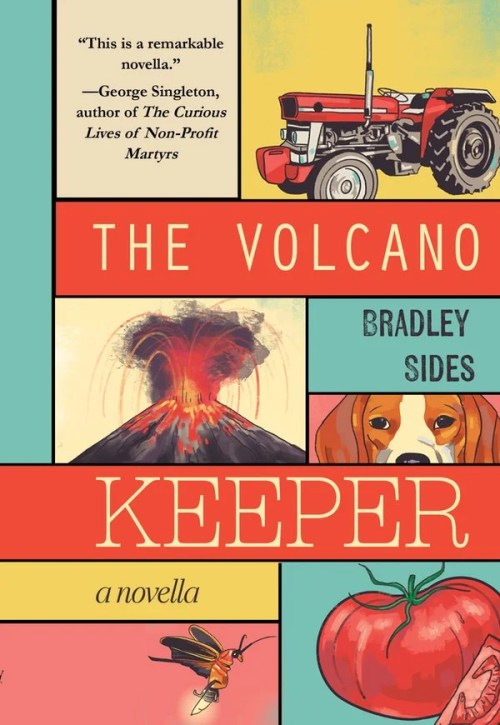
Enter Bradley Sides and his new novella, The Volcano Keeper. One part The Giver and one part Mary Oliver, The Volcano Keeper follows Charlie Melvin as he comes of age in his rural Alabama hometown. The book opens with a young Charlie enjoying a late summer watermelon with the grandfather he idolizes. Though the opening vignette is a little over two pages and the story it begins is deceptively simple, the reader is invited to participate in the book’s emotional journey. Charlie’s juicy, sticky fingers ground his joy, and an instant later, his devastation at the news that his grandfather is dying. His grandfather tells him to be brave and promises that he’s destined for something.
A few vignettes later, Grandpa Clarence passes away, his death marked by a strange rumbling beneath the earth. A volcano sprouts from the farm he left behind, extra strange in the Alabama countryside. The book follows Charlie over twenty years as he grows into the kind of man he hopes his grandfather would be proud of. Charlie grapples with duty and obligation, the family and the self, the grief of death and the ecstasy of life.
The volcano becomes an ever-present reminder of life’s cyclical nature, its rumble a knell. Charlie feels responsible for caring for the volcano, which to him is a totem of his grandfather and a symbol of his duty to keep the memory of those since passed alive.
The prose is beautiful. Tender but not sentimental, poetic but not obscure. There is a simplicity and a truth to the descriptions and the invocation of the natural world to tell this uniquely human story. Charlie does not need to escape to the city to reckon with the colors, the quiet, and the vibrancy of the land he comes from. He does not resent the duty bestowed upon him to keep the volcano, or the memories of those who came before, alive.
The Volcano Keeper is incredibly short, easily digestible in one sitting, as I did the first time through. As I revisited the book over the past few weeks, I’ve read most of the vignettes in isolation, out of context. Like poetry, like scripture, the words provide something new to glean each time. The language is simple, the poetic details visceral and experiential. This novella could easily appeal to readers of all ages and walks of life.
I’m a city boy now, and have been for decades, but I grew up on a farm outside of a tiny rural town. The memories of my own life come flooding back each time I visit the Melvin Volcano. Rural life experience is by no means required to appreciate the weight of Sides’ descriptions and the emotional truths laid bare within them.
As a former high school English teacher, I would place The Volcano Keeper in the hands of underclassmen, before the future comes knocking and demands to know what their life will be. I would recommend this book to writers, particularly prose writers interested in influencing their work with poetic imagery and sensibilities, since Sides’ prose is so deft and economical.
A recurring mantra throughout the novella sums up the book’s call to action perfectly: “The sun rises. The sun sets. Everything in between is lost.” That is, unless we heed the call and remember.
FICTION

By Bradley Sides
Regal House Publishing
Published October 20, 2026


