


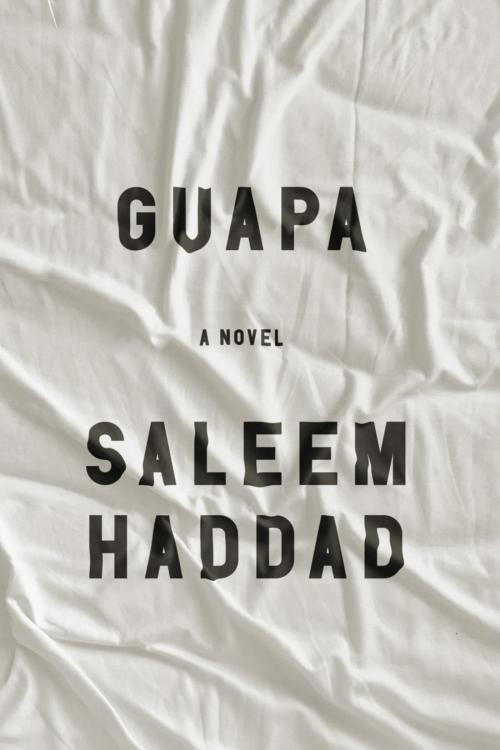
It’s a salient moment for a re-release of Saleem Haddad’s Polari Prize-winning Guapa, a knotty and frank story of queerness in the Arab world. Originally published at the dawn of the first Trump presidency, now celebrating its tenth anniversary at a violent boiling point in the Middle East, the gay lives at its center now feel even more tentative—already composed of precious stolen moments, now threatened with oblivion.
Guapa follows the politically and personally tormented Rasa over a single twenty four hours in an unspecified Arab country in a state of upheaval. Rasa’s nation is finding its footing under a new president installed by the American powers that be: a figure of hope to the upper class who’d prefer to move on in relative comfort as soon as possible, and the face of humiliation to the local socialist and Islamic revolutionaries whose victories have been few.
Rasa, a gay man who spent his college days studying abroad in the States, finds work as a translator for the Western journalists covering the conflict in his nation between protests against the president—quite literally stuck between worlds.
On either side of the geopolitical divide lies a catch-22: his country is his blood and his pride, but there’s no place for open queerness. The West welcomes his sexuality with open arms, but can’t accept his Arabness. Cruelly and naturally, there are problems baked into this problem: the deepening class divide, growing distrust between Arabs and Arab-Americans, the fall of left-wing ideology, the fragmented Middle Eastern gay underground.
When Rasa’s traditional grandmother—the woman who raised him—catches him with his lover in the book’s opening pages, we get Guapa’s go-to gut punch. No matter how any of these conflicts resolve, nobody involved is creating a future where someone like Rasa has somewhere to call home.
Guapa is a success for its lush and aching portrayal of gay love in the Arab world—how love both grows and crumbles when it can bear no witness—but most urgent for 2026’s new readers is its dissection of class and identity, especially as freedom to queerness is used as a defense of Zionist violence in the Middle East. They’d kill you for being gay, so why would you stick up for them?
Haddad provides rich, personal insight: the Western treatment of Middle Easterners as alien religious fascists isn’t to stick up for anyone’s human rights, much less that of queers, but to dehumanize everyone, including the queers waiting to have a life even half as free. The joy and privilege of open identity is exactly why people from all walks of life deserve the chance to shape it in their own way. The imposition of American, Judeo-Christian-approved queerness in the Arab world is its own breed of tyranny.

Although the politics of Guapa can occasionally get in the way of storytelling—Haddad’s characters are sometimes too transparently designed as vehicles for certain social messages—the conflict at the heart of the novel taps into the emotional truth of our present moment, and forces an uncomfortable look at our assumptions of strangers on the other side of the world.
It’s tempting to balk at the hidden lifestyle Haddad’s characters proudly live—to think that they don’t even know how good things could be, what more they deserve. But true care for Guapa’s queers is accepting them, allowing them to find their own freedom in their own time; to have faith that if they can face themselves, they can face their world.
FICTION
Guapa
By Saleem Haddad
Other Press
Published on August 11, 2026


