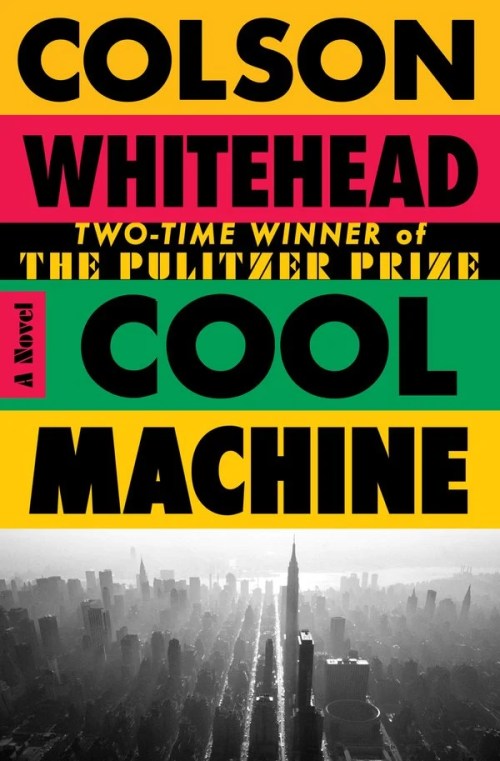
Cool Machine is the final installment of Colson Whitehead’s Harlem Trilogy heist. This series portrays the reckoning of career criminals who can’t turn off their thieving instincts. Whitehead separates the book into three sections of “jobs” that take place in the ’80s. The existential crisis of becoming a normal citizen is a theme throughout the book. The main character grapples with staying “clean” when it comes to crime. He’s a part-time fence: someone who knowingly acquires stolen goods to sell for profit.
Ray Carney has a thriving furniture store. He is about to be named Northeast Regional Dealer of the Month for August 1981. The store nearly burned down thanks to his dangerous side hustle. Still, by chapter five, long after the rebuild and getting the business back up and running, Carney narrowly escapes a shootout and is somehow still compelled by the rush that comes along with being a crook. He survives and can’t stop thinking about the story Uncle Rich told him before bullets started to fly. Once a thief …
Uncle Rich has pulled off jobs with Ray’s father. Now that he’s older, he evokes the “one last score” concept, with the understanding he needs to think further ahead. Most thieves don’t retire but he’s strongly considering it. Uncle Rich is strategizing in the opening chapters to steal material worth millions to companies responsible for connecting the city’s cable television infrastructure. He’s literally stealing the future of technology. While planning the heist, Uncle Rich asks Ray two questions: Who do you want to be? And what is truly of value to you? Ray wrestles with his answers for the remainder of the book.
Does he value family? Ray has a wife and adult children. Land? He has a nice home in gentrified Harlem and a remodeled furniture store that’s doubled its footprint since its inception. Ray questions why he can’t let the crooked life go. The moment his children and wife are out of the house, he immediately falls into a job that could get himself killed. But living to tell the story was part of the luster.
The second job takes place a couple years later and stars Pepper, another of Ray’s crooked predecessors. He still hasn’t thrown in the towel, though he is taking milder jobs. Ray’s wife set up one of her art-collector clients with Pepper as a body guard for an art deal. It’s a legitimate, more manageable gig given his age and experience and his growing digestive trouble. In fact, Pepper’s criminal instincts tell him the shady art sale that’s going down is fishy, but his intestines betray him by sending him to the bathroom at a critical moment. The sale goes south and kicks off a kind of search and rescue of $80,000 and a priceless African mask. Pepper has no concept of artistic value, yet he’s curious about the mask’s power.
The final situation is also a search and rescue that puts Ray on the scary side of murder. As is wont to happen, a deal goes bad between mobsters, politicians, and a particular lawyer who employed Robert, Ray’s cousin’s son. Freddie was Ray’s best friend and cousin who he thought of more like a brother. Ray blamed himself for Freddie’s death. So, when Robert comes up missing and the lead suspect in the crime, Ray isn’t going to repeat his past mistake. He owes it to Freddie to not let Robert succumb to the pitfalls that Ray and Freddie once navigated.
Colson Whitehead’s chronicling of the crook Ray Carney is thick with the themes of value and heritage. In part one, Uncle Rich’s existential questions of value don’t come from a crook stealing coaxial cable that would change how people experience at-home entertainment. His real object is Jesse Owens’s 1936 Olympic medal. It’s up for auction and Uncle Rich thinks it is more valuable than any auction could dictate. So, he plans to steal it. Part two shines light on Pepper’s colleague LJ, a woman tied to the mask sale by an organization determined to return cultural artifacts to their places of origin. It’s what she calls restitution work, but what Pepper calls sweeping the beach.
By the time Pepper tracks the mask down, a lot of blood has been shed and a lot of money has been spent. But he finally understands the principle of the matter. Also, LJ took care of him when he had the lapse in health that nearly cost him his job and her the mask. She could have left him passed out in the street, but she instead took him home until he could get on his feet. Pepper arguably learns the value of his own life and that of companionship. He reappears in the third section as a much different man. He has a life partner, he’s upgraded his diet, and he wears a scar from having part of his intestines removed.

Part three is where Whitehead brings his themes together that add up to one major concept: legacy. Ray has inherited his father’s criminal tendencies, but not so much so that he’s willing to sacrifice all he earned in his life—what he values. Ray didn’t learn Freddie had a son until his funeral. From that moment on, it’s important for him to look after the boy.
Now a man, Robert has inherited his father’s freer spirit, but not his lust for crime. Still, crime seems to find him anyway, at the wrong place and the wrong time. He knows Ray and Freddie were running buddies and that Ray can help. But as Ray continues to mull over Uncle Rich’s proposition, he knows he’ll help Robert no matter what because he was Freddie’s legacy. Ray’s children don’t want to take over the furniture business, but he feels taking care of Robert will pay homage to his friend and, in a way, carry on his own legacy, too. Some jobs are for money, but some are for self. It’s a gamble to save Robert, essentially bidding for his life, but win or lose, he knows pulling it off will make for a story among his contemporaries that will etch his legacy in stone.
FICTION
Cool Machine
By Colson Whitehead
Doubleday
Published July 21, 2026