


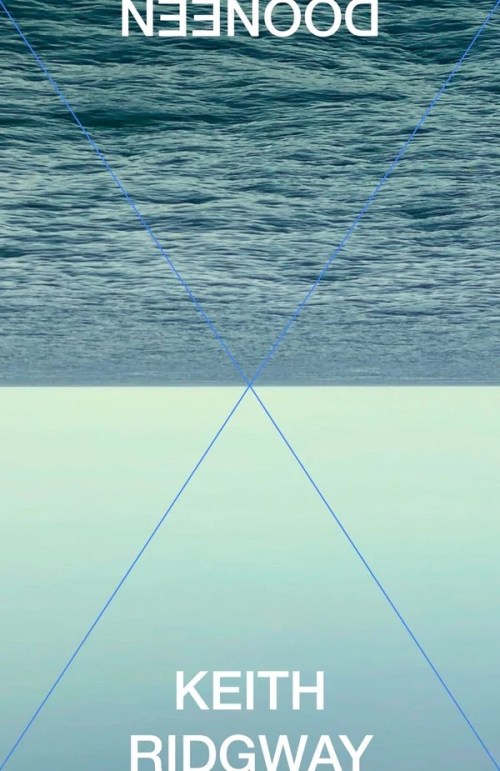
Keith Ridgway’s novel Dooneen follows writer Bartholomew “Mew” Port, a Dubliner returning home to participate in a literary festival, where he instead finds himself in the midst of a great rebellion. Having left his love, Mahmoud, back in London, Port’s mind constantly returns to “Mootie” as both his visit and the city he once called home unravel hideously.
Dooneen takes place in an unspecified future where one can walk into the trees in one city and appear in another location entirely. In this case, that other location is a Dublin that has replaced cars with trams and moving sidewalks. Yet there are still cobblestone streets, pubs, and a disquiet caused by an imbalance of ownership and a distrust of those not considered “real” Dubliners. Rather than the future, Dooneen seems more like an amalgamation of past and present. Various organizations, referred to by a slew of acronyms, have taken up against one another in a way that of course recalls the Troubles, and the working class take action against greedy landlords and a government wholly dismissive of their hardships in ways that gesture toward Occupy Wall Street and Black Lives Matter. As someone who grew up in Dublin but has since built a life elsewhere, Port is disconnected from the woes of his old city and spends much of his time entreating anyone and everyone around him to explain the unspoken truths that guide their daily lives. As one woman he meets at a political rally says to him, “It’s the same everywhere,” and similar unrest is almost certainly occurring in the London he left behind. Juxtaposing futuristic elements against familiar historical conflicts suggests that not only is it the same everywhere, but everywhen; the passage of time alone is not an avenue to progress.
The first half of the novel does something quite wonderful, using Port’s disorientation to create a Kafkaesque atmosphere reminiscent of The Trial. We feel as confused as Port does as he wanders from place to place seeking answers, only to be angrily tossed from a pub or assaulted by guards outside of a government building. Port knows next to nothing about what is happening around him, yet uses almost every inopportune moment to blurt out invasive questions about an event of which he has only a tenuous grasp. It cleverly smacks of bandwagoners and those who believe they are on the right side of history without truly making the effort to know for sure. Even after he is sucked into the working-class side of the fight, Port does not develop any firm convictions about who is right and who is wrong, and his lack of certainty ultimately puts others in danger. He speaks to Mootie in an epistolary way throughout, with his account of events effectively a long letter to his beloved recording all the moments in which he uses the refrain of Mootie’s name and laughter and their joyful memories as a shield against the bitter reality confronting him and an anchor to the life that had kept him blissfully unaware until now.
Ridgway is highly adept at conveying the lived realities of being human, like how our fearful minds boomerang back to the people and memories that make us feel safest. On the march to the climax with his new comrades, he imagines the sky as a living thing: “it rippled like skin — sensual, warm — and looked back at him. He could see its eyes.” He imagines it crushing him or picking him up, “flick[ing] him off Ireland like a crumb off a table. . . But he could do what he wanted with the sky. It was his to think of.” Port’s writerly reliance on observation and the figurative allows him to romanticize the truth of trooping through the dark toward an unknown future.
Port’s point of view is primary, but Ridgway does steer us into several other characters’ heads during the latter half of the book, sometimes one right after another. In some cases, we gain insight into what these other characters think of Port, but mostly we learn about experiences particular to them that Port remains unaware of. While these other perspectives reveal truths that paint a more vivid picture of the state of Dublin in the novel, learning these things through Port would have been more rewarding than their being revealed through people who are already well aware of how dire things are and have always been, beyond the bodies now falling at their feet. It could be that Ridgway sought to keep Port’s emotional distance from the ever-escalating events as palpable as possible, in which case the changes in perspective serve their purpose well.
Dooneen is a very timely exploration of what it means to be a citizen of this world–whether your eyes are open, closed, or blurred by an ignorance you’ve either willingly adopted or had foisted upon you by those in power. Despite your best efforts, Ridgway seems to say, there is peril in both acknowledging the world and in hiding from it. Even when his own actions lead to tragedy, Port chooses the shelter of his love until the bitter end–the one thing that he knows through and through, and trusts could only ever put himself and one other at risk. But when used as a tool of separation from a community in pain, Port’s love for Mootie becomes another dangerous weapon in a fight full of them.

FICTION
Dooneen
By Keith Ridgway
New Directions Publishing
Published July 21, 2026


