


Rowan Beaird’s sophomore novel, Tenderness, begins with an absolute banger of a first line: “Shay was no longer in the cult, but still, it made her wedding guests nervous that she was bringing them to an island.”
So right off the bat, the wedding guests aren’t the only ones who are nervous. We readers are too! Is the bride actually free of this cult? Is the cult going to interfere with the wedding? Where is this island and how does one leave, if one must? It all adds up to a biting sense of unease that engages us immediately: A master class in how to do a first line.
But the rest of the novel is pretty great too. Tenderness is an atmospheric mystery set over five days of a 1976 summer wedding weekend. Narrated by Shay’s brother William, her former college flame Joel, and Shay herself, the novel explores questions of faith, class, and power structures, but it never quite lets its readers get comfortable…in the best possible way.
I recently spoke with Beaird over Zoom about her new novel, cult novels generally, and how the 1970s are a distant mirror to today.
This interview has been edited for length and clarity.

Greg Zimmerman
Though the “cult novel” is a strong and growing subgenre of fiction these days, I think it would be oversimplifying to call Tenderness a “cult novel.” There’s so much more going on here! But Shay being in and then leaving Synanon is a major plot point, so I’m so curious what drew you to this subgenre generally, and what was it about Synanon specifically that made you want to base a novel on it?
Rowan Beaird
I’ve always been fascinated by cults. And I think when I was younger, it was for the more salacious aspects of them, the aspects of cults that make headlines: The bizarre belief systems and practices, the acts of violence. But as I did more research into cults, and as I got older, I discovered that most people who join cults have very similar lives to my own. They come from middle class backgrounds, they’re college educated, they have relatively stable family lives and circles of friends. But they discover a cult, or are discovered by a cult, during a moment of crisis in their own lives. Typically during a point when they’re between institutions, so when they leave a marriage, leave home, leave college. And I thought about all of those points in my own life, when I would have been really vulnerable to an organization like Synanon. I think that as a writer, those moments of crisis and vulnerability, those are the moments where I’m interested in meeting my characters and joining my characters’ stories. And so that’s what initially inspired me to write a cult novel.
Synanon is particularly interesting to me because it’s an organization that started with such noble intentions. It was founded by this man, Charles Dederich, who had a very complicated history, but he created Synanon as a sort of unofficial sister program to Alcoholics Anonymous to help drug addicts get clean. Some of Synanon’s tactics were somewhat brutal in that they made addicts go cold turkey, they subjected them to a really early form of attack therapy that they called The Game, but they helped a remarkable number of people get clean. And there’s still to this day a lot of people who say that they wouldn’t be alive if it wasn’t for Synanon. The actual original name of the organization was Tender Loving Care, which is part of where the title of my novel comes from. So I was so fascinated that this organization that started from a place of love and of tenderness could devolve into an organization that perpetrated such violence and caused such harm to its members.
Greg Zimmerman
So interesting. Yeah, The Game sounds like it’s really sort of the cornerstone of what makes it a cult. It sounds like they just yell insults at each other.
Rowan Beaird
They just scream at each other! There is some footage where you can actually watch people, it feels odd to say, play The Game. The word “play” doesn’t feel right in that sentence, but they start with such fascinating questions, where they’ll open up and say, ‘Okay, who’s the most boring person in this room? What made you really angry this week?’ And then there are these sorts of explosive conversations that happen. So yeah, it’s such a fascinating aspect of that cult.
Greg Zimmerman
Shay’s younger brother William is sort of grappling with his religious beliefs, as well. And I think one element of novels about cults is trying to draw some parallels and distinctions between what is considered a cult and what is accepted as a religion. It’s subtle here, but I thought you handled it really well. Why did you want to include this theme in your story?
Rowan Beaird
My religious upbringing is somewhat similar to Shay’s and William’s. When my family moved from Chicago to the suburbs, when I was in grade school, we started attending an Episcopal church, but it soon became really only something we did when it was Christmas or Easter. So I never had a really strong religious foundation in my own life. Growing up, I was more interested in reading books about the Greek gods than I was in reading the Bible. For many years of my life, I was a proud atheist. But even during those stretches of time, whenever I was at a moment of grief or crisis, I would still find myself praying and turning to God.
I’ve always been really fascinated by that human impulse. And so, I started to think about the characters of Shay and William, who are in a country in the 1970s that’s in its own crisis, where religion was really falling out of favor.
Shay and William, although they’re two distinct characters, in many ways, they’re mirrors of each other, and they’re both going through a period of immense grief. They’ve lost their father. And in that grief, Shay has in many ways lost her own sense of self. And William, the one consistent grounding relationship in his life has been that with his sister, Shay, and he’s starting to lose her in the same way that she’s starting to lose herself. I started to think about these characters who are feeling so unmoored from one another, from their country, from their friends and loved ones, and where those sorts of characters would turn in a moment like that. I came back to that memory of myself in similar moments, still somehow turning to God, even though I didn’t hold that as a fundamental belief. And so I wanted to explore how William would turn to faith, would try to find meaning and belonging in different religions and beliefs, and how, in a somewhat parallel way, Shay would find an organization like Synanon. I think people often flippantly say all religions are cults, and I don’t believe that, but I do believe they share some fundamental characteristics, and that people are often drawn to them for the same reasons.
Greg Zimmerman
So speaking of creating intrigue, I think an undefeated strategy for heightening the stakes and the narrative tension in a novel is to set a stopwatch and provide a built-in deadline. Here we have a wedding weekend on a remote island with a bunch of menacing hints right off the bat (Aunt Eleanor is dead in the first few pages!). There’s plenty of interesting backstory to fill in our gaps, but what were some of the challenges for you as a writer for setting the novel over just five days?
Rowan Beard
I really had to approach it in the way that I’ve learned to approach writing short fiction. In every short fiction workshop that I’ve ever been in, at some point, the instructor asks, why are we joining this character or this group of characters on this particular day, out of all the days of their lives? I had to answer that for each of my three characters. And of course, there’s the obvious answer of, well, they’re all being brought together for Shay’s wedding weekend, they’re all traveling to this remote island. But that question obviously had to be answered on a much deeper emotional level, and to be able to communicate exactly where these characters are emotionally, and where they end up over the course of five days, required an incredible amount of precision.
Right now I’m writing a novel that takes place over the course of 25 years, and I do not want to suggest that is any easier because it’s a whole new host of challenges that I’m grappling with, but one thing that I’ve noticed is, for example, is if I have a character who experienced heartbreak, and then we leave him for a year, because there’s some exposition and time passing, you’re giving the reader the ability to fill in some of the gaps for you, to project some of their own experiences.
When it’s over the course of five days, you as the writer have to communicate every shift. You’re not giving the reader room to make those sorts of projections and assumptions, so you have to communicate those changes, give the reader enough backstory so that they understand where this character is coming from and everything that has influenced their life up to that moment so that their actions make sense, while also not losing track of that ticking clock.
So much of the editing of this book was other wonderful readers and my editor at Flatiron telling me that I was going too deep into the past at certain points, and that the ticking clock was becoming fainter and fainter. I deeply appreciate you calling out how I dip into backstory, because a lot of the work of this book was giving readers enough of a foundation for who these people are, but then immediately returning to the action, so that you never lose that sense of momentum.
Greg Zimmerman
Oh I love that. I think one of the most common craft questions is, what is a good time to put in backstory? And nobody has a good answer for that.
Rowan Beaird

Yes, it’s so true! There’s no answer! And I think that’s because you’re always working on a paragraph-by-paragraph basis. It’s remarkable how there would be certain sections where a reader would say, you actually lost me just in this paragraph. That’s the level of precision that you need to make this work.
Greg Zimmerman
Okay, enough about craft. Let’s talk about class. So Shay’s family is a Chicago working class family, and Andrew’s (Shay’s fiancee) family is the opposite. They’re an East Coast blue blood rich family. And Joel’s family and Shay’s family are also very different, but Joel has gone his own way and gone into publishing rather than his father’s real estate business. Shay and William both seem to get along better with the people on the island than with Andrew’s relatives. Why was class distinction such an important element of telling this story?
Rowan Beaird
It’s funny, I was an English literature major, and I feel like whenever we were discussing British novels in college, class was always paramount, but when discussing American fiction, it came up a lot less frequently. I’ve frankly never understood that as a writer, because one of the first decisions that I make for my characters is what class they were born into, and what class they’re currently occupying.
I don’t think class tells you exactly who that character is, but I think it tells you how they move about the world. You know, somebody like Andrew or Joel, who were born into a very comfortable economic situation, who never had to think about money or what opportunities would be open to them or not open to them, has a very different way of seeing the world compared to someone like William and Shay, who were very conscious of their father’s paycheck, and what sort of freedoms they had because of it.
In the same way that William and Shay are mirrors of each other, I think Shay and Joel are mirrors of each other in their own ways, in that both of them are trying to pull away from their families and forge their own paths. For Joel, as you said, that means letting go of his inheritance. For Shay, that means finding the sort of security that she didn’t feel when she was growing up. For both, there’s so much more than money involved in this, so much more about their families that they’re trying to escape, but throughout the book, these class differences often dictate how characters connect or don’t connect with one another.
Greg Zimmerman
Very good. Okay, so you mentioned earlier too that the 70s were a turbulent time, as things are now. But like your first novel, The Divorcees, Tenderness is also set in a very particular moment of history where conditions were just right to create fertile ground for this particular story. Why did you set Tenderness in 1976?
Rowan Beaird
Originally, it was because I wanted to join Synanon at a very particular moment in that organization’s history. For most of its history, Synanon was widely lauded and celebrated. I mean, senators praised it publicly, Jane Fonda would attend their parties. But in the 1970s, it started to reach an interesting tipping point as an organization, where it was no longer a rehabilitation program that you joined for a period of time, but an established religion that anybody could join. So, when Shay joined, I didn’t want it to be a decision that immediately rang alarm bells for people in her life. There still wasn’t widespread media coverage of what was actually going on inside the organization, but whispers were starting, and once inside, she’d start to realize the violence and abuse that was actually going on inside its walls.
Then, once I decided on 1976, and the more research that I did into the 70s, the more I came to believe that America as we know it and are experiencing it right now in 2026 was born in that decade. It was such a time of distrust and dislocation. There was a horrific, unpopular war going on in Vietnam. Watergate showed us that presidents could be criminals. There were energy crises, and a widely shared belief among several climate scientists that a mass freeze was imminent, and hundreds of millions would be dead from starvation within the decade. There was the advent of major technologies—modern personal computing happened in the 1970s. I was just recently listening to some interviews with Harvard students in the 1970s, where all they’re talking about their fears that they’re not going to get jobs because they’re going to be replaced by computers, which is obviously exactly what we’re experiencing today with AI and our graduates.
I’m always fascinated when history provides a perfect mirror to our current moment, to realize that the tumult that we’re experiencing has been experienced before. I feel like I lucked into the 1970s because of the history of Synanon, but given the story I wanted to tell, about belonging and love and what prevents us from finding both, I couldn’t imagine the book taking place in any other time.
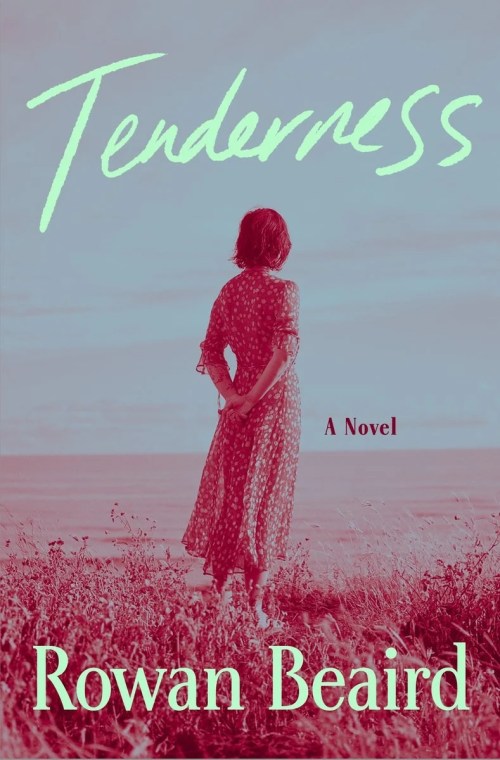
FICTION
Tenderness
By Rowan Beaird
Flatiron Books
Published July 21, 2026


