


Dilo’s belly rumbles with hunger and her baby cousin Maysha won’t stop going to the bathroom behind the couch or wandering around with food, smearing her face. Her mother Mary, with all the biblical intonations of the name, keeps her gold bracelet underneath the bed in a suitcase next to all the passport and birth certificate documents. Her aunt Anji, who knows how to hustle, probably hustled before “Hustle Baby” Dilo was born, worked with the rebellion in Sri Lanka during the Civil War as the rest of her matriarchal family tried to survive.
Priya Guns’s Hustle, Baby spins a coming-of-age tale told through the perspectives of Dilo, her mother Mary, Aunt Anji, and the occasional peppered thought from toddler Masha. The story begins with Dilo, like a ball at the top of the hill, to set the plot into motion: she wants there to be food on the table and rent paid; she sells snacks on the street, earning her the name “Hustle Baby”; and she knows when, despite her mother’s piousness, Mary is getting played by a local “investor” Mark.
A combination between Gold Diggers by Sanjena Sathian and “A Good Man is Hard to Find”, a short story by Flannery O’Connor, Hustle, Baby tells what happens when you buy what a hustler is selling. One day in the Z-Mart, after shoplifting plans go awry, by a stroke of luck, Mark appears with an offer to make the family rich: he can get them a 20% return, and miraculously he does. Mary, besotted, indulges in the fruits she misses from home, spending money they might not have, while Anji suspects Mark is a snake, using her sexuality and showmanship to bring on a group of highbrow investors from the church to expand the business and make the family’s rent. Dilo bears witness. Gold Diggers offers a magical realism coming of age, through the lemonade brewed by the gold jewelry of peers stealing their determination and imbuing it in the drinker.There’s no magic realism in Hustle, Baby.
But when Mark’s ragtag group of investors set up shop in Mary and Anji’s home with a computer, the one rule is don’t talk to strangers online. Hustle Baby Dilo wields the computer when no one is looking. She chats with John Gotti, who asks to be her girlfriend, and how she got that nickname, and if maybe she could send him some pictures.
With similarities to Fredrik Backman’s Beartown in the final sequence, the plot moves steadily following a pacing adjacent to Mark’s investment practice, which results in both a violence and a reckoning for the false salesman who entered the family’s home.
Pew. Pew. Pew.
Onomatopoeia, used sparingly and introduced early, punctuate investment conversations in the kitchen as Mary and Anji argue about the right way to pay their rent by a December deadline and the dangers of Dilo wielding a nail gun for target practice.
Ultimately, Hustle, Baby could be interpreted as A Tree Grows in Brooklyn set in Ontario, led by a cast of family members and their life as Sri Lankan refugees, where the “hustle” becomes a short game repeated to avoid eviction after surviving conflict. Guns creates a sense of narrative distance between the familial ties of mother, daughter, sister, and aunt, who despite living in the same home experience their lives as immigrants differently. Among the three narrative perspectives, Dilo stands out as the front runner due to her understanding of the household matriarchs and her coming of age, punctuated by the secrets the women keep from each other.
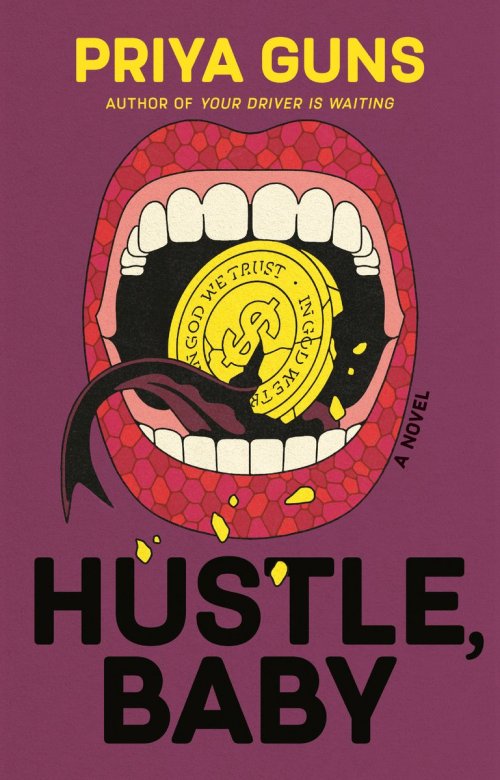
FICTION

by Priya Guns
Doubleday
Published on July 14, 2026


