


There is a very specific cultural muscle memory that activates when a former boy band walks onstage. It doesn’t matter if you are now divorced, professionally sidelined by a Gen Z intern, or hovering uneasily at fifty. The scream is still in your body. The choreography is still in your bones. Nostalgia, Emma Straub suggests in her latest novel, is less a feeling than a reflex, something that lies dormant, “the way chicken pox stayed quiet for decades and then bloomed into shingles.”
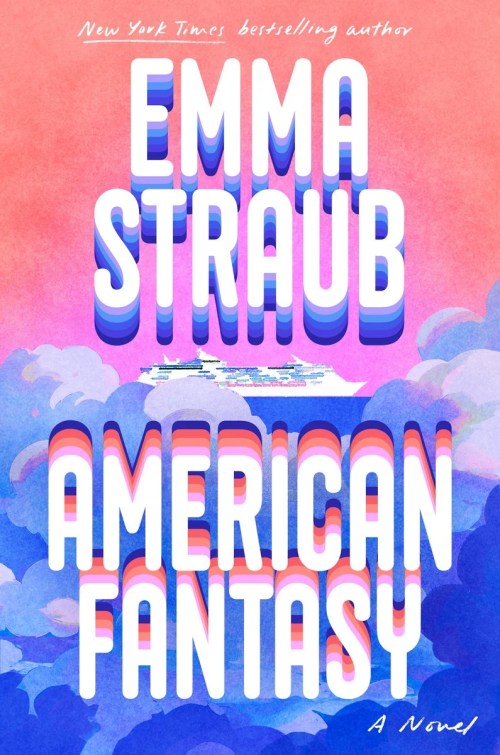
Straub’s story unfolds over four days aboard the cruise ship American Fantasy, where the five members of ‘90s sensation Boy Talk reunite for a themed nostalgia voyage. Thousands of devoted fans, named the Talkers, filled the decks for photo ops, karaoke contests, beach games, concerts, and the opportunity to brush hands with the men who soundtracked their adolescence. Among them is Annie, newly divorced and reluctantly attending without her sister, the true superfan who can’t make the trip because of a broken leg. Annie feels out of place at first, suspended between embarrassment and longing. But as the cruise progresses, she finds herself reconnecting with a part of her younger self she had quietly packed away. And this is what becomes the novel’s emotional center.
Straub’s most compelling achievement is her ability to capture the sanctity of shared obsession: “This was why people turned to religion or watched the Super Bowl at a sports bar,” Annie reflects. “It felt good to be a part of something where your passion was celebrated instead of mocked.” The cruise becomes a floating cathedral of arrested adolescence, complete with merch, ritualized photo lines, and everyone’s least favorite, unspoken hierarchies. The experience is described as “like donating blood…only instead of blood, it was energy.” The band survives on the devotion that women have shown for decades. The main character understands the quiet ache of realizing that something once formative still matters, and Annie’s perspective is sharp, observant, and tinged with self-conscious humor, which anchors the book emotionally.
The setting itself is brilliantly conceived. The cruise functions as a floating laboratory for parasocial relationships. The novel is particularly incisive about fame: “Fame and money operated separately, as did fame and respect,” Straub writes. “Serial killers were famous – didn’t mean you wanted to be one.” Boy Talk’s celebrity is both sustaining and suffocating. Now middle-aged, they must reprise the choreography of youth for women who have “matured” alongside them. No one feels this tension more than a certain Keith Fiore, the sensitive “ordinary” one, who begins to unravel under the weight of it all. “The Talkers weren’t touching him; they were touching the idea of him that was somehow housed in the same flesh as the actual him.” It’s one of the text’s most perceptive lines, a succinct diagnosis of parasocial culture, the same culture that once sold teenage girls and boys the fantasy that they, too, might be chosen, might be written into the story. The machinery of desire hasn’t changed all that much; rather, it’s aged alongside its audience.
Yet where the book shines conceptually, it falters in execution. Much of the narrative operates at the level of observation rather than dramatization. We are told that Keith, the most introspective band member, is deeply unhappy with the endless performance that he and his friends have been putting on. We are told that this brother, Shawn, is domineering, that Corey is spoiled, and that Scotty has wrestled with his identity. But these tensions often remain abstract, passages that dissipate almost as quickly as they appear. Instead of unfolding through escalating conflict, we see them broken into fragments: a cigarette, a half-confession, a stolen glance, and a fight that fades, stalls at articulation.
This creates a pacing issue that becomes increasingly noticeable. The book has emotional stakes, a band at a crossroads, a man in need of a friend, a woman rediscovering herself, but for much of its runtime, the story drifts. Major tensions emerge late and resolve quickly, giving the impression of narrative compression rather than inevitability. The book is filled with sharp cultural commentary and memorable lines, yet it can feel slight, as though its most compelling ideas are sketched rather than fully realized.
Still, the novel’s cultural timing is astute. In an era shaped by reunion tours and fandom economies that rival those of small nations, Straub interrogates what happens to both idols and devotees as they age. What does it mean to remain frozen in someone else’s adolescence? Who are you when what defines you no longer fits? The cruise exists in “a bubble of space and time…a zone free of embarrassment and shame, except for her own,” Annie relates. Nostalgia here is transactional. The band performs youth; the fans resurrect theirs.
Most importantly, this is not a traditional romance, despite hints that it might be. Any connection that develops is less about sweeping passion than recognition, the fragile relief of being seen as a person rather than an icon. Straub is more interested in writing about midlife identity than fairy-tale fulfillment, and it’s done magnificently. Its most resonant moments are not slow dances on the top deck or climactic fights, but Annie’s quiet recalibrations. Throughout the book, she mirrors the band’s fear of obsolescence. This means that the book itself resists a sweeping romance and instead offers a fresh perspective on reclaiming youth while recalibrating one’s identity.

For readers drawn to cultural commentary and the sociology of fandom, American Fantasy offers humor, melancholy, and moments of piercing recognition. For those seeking sustained drama or fully excavated romance, the voyage may feel curiously weightless. Like nostalgia itself, it is intoxicating. And just a little unsatisfying.
FICTION
American Fantasy
By Emma Straub
Riverhead Books
Published April 7, 2026


