


Emily Hunt Kivel’s new novel Dwelling is, without a doubt, nothing like I expected it to be. Now, reader, don’t be afraid, as I can just as confidently say: it’s better.
The world presented in Kivel’s debut lives in a world not so dissimilar from our own, a world where housing is rapidly becoming less and less affordable. If I was Kivel’s publicist, I would be absolutely punching the air that this buzz around Zohran Mamdani has taken off as it has, with the entire world turning its eyes to the Democratic Socialist who dreams of a New York City that is rent-controlled. Now, I may live in Chicago and not the Big Apple, but it’s not hard to see how helpful policies like that would be for renters both young and established alike.
Of course, I’m not here to talk to you about New York City politics, I’m here to talk to you about Dwelling. But in some ways, there is extreme crossover, and you’ll see what I mean. In Dwelling we find Evie Costello, a twenty-something who has been evicted, along with most of the rest of New York City, from her apartment, due to something the government calls “The Revitalization.” To no one’s surprise, this was a crock of horseshit. This policy was sold to the public as a way to improve apartment conditions and make it easier for people to buy, but what it was really a war on renters: their rents became unaffordable due to forced renovations, tax cuts were given to landlords who made their places vacation rentals, and of course, the buying market did not become more accessible.
So what is a girl to do? Nothing, but flee to the small town of Gulluck, Texas, where she has a long-lost cousin named Terry. Evie is an orphan (but not the super depressing “little-orphan-Annie” type, just the kind that had both parents die after she was an adult, the narrator assures us), and a sister, Elena, who has residence in an insane asylum and therefore no where to offer Evie to stay. Evie’s plan is to arrive in Gulluck, beg for Terry to take her in, and go from there.
Gulluck the town is quite strange, we come to see. It is described as such: “Gulluck is a secret. No one really comes to live here except the people who already do. No one really knows about it except the people who already know.” If you think that this is giving Harry Potter and the Room of Requirement riddle (“If you have to ask, you will never know. If you know, you need only ask.”), you would be correct! Everything about Gulluck is strange and unexplainable, and coming to embrace that is a huge part of Evie’s journey.
What surprised me about this book was the level it went to with the fairytale genre (which, looking back at the description I really shouldn’t have been). This book is special because it brings the magic to the real world, in a way that feels both uncanny and perfect at the same time. Evie’s story has hints of Jack and the Bean Stalk, Alice in Wonderland, Rapunzel, and so many more. Kivel’s brain is a thing that should be studied, because how one manages to intertwine the political strife, desperation, and chaos of our real, modern world, and create a story that feels so real yet has so many fantastical elements is beyond me.
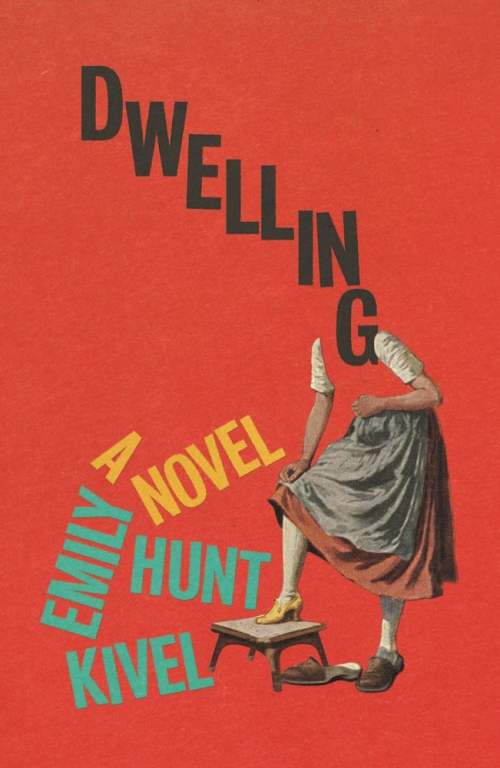
I really do feel that this is one of those books where the less you know, the better it will be as you read it. As you may have guessed from the cover, this book is about shoes; not just the shoes we wear, but the shoes that others wear as well. In the story the shoe-wearing is literal, but for us as readers, it’s metaphorical.
As Evie finds a strange, shoe-related place to live, she starts to think about this more and more, and we get to see her evolve from the woman she was in the beginning to the woman she becomes in the end. There’s nothing that I hate more than a stagnant character, but I think when we tell fairytales, there to an extent needs to be the ‘good’ and the ‘bad’ guys for them to be iconic fairytales. As I was reading I was a little worried that the magical characters were going to be this way, but instead, it was actually the magical ones who changed for the better, and the normal humans who wound up staying mostly the same. Whether Kivel intended this or not, I don’t know, but I felt as though it pushed me to think about how fantasy worlds and just generally better worlds involve change to pursue, and as humanity, ourselves, refuse change and remain stagnant, those fantastical worlds will remain ever out of reach.
Emily Hunt Kivel’s debut novel is a masterclass in how to tell a story: a story to challenge ourselves to believe in things bigger than us, a story urging us to not resist so hard going through the doors the open for us just because they’re scary, a story to think a little harder about what it means to be a hero. It is worth every penny you spend in dollars at the book store or in transit to the library; worth every second of time you spend reading it; and most certainly worth the feelings you will feel once you put it down and realize you’ve left Wonderland. Go read it, for the betterment of the world.
FICTION

by Emily Hunt Kivel
Farrar, Straus and Giroux
Published on August 5, 2025


