


Eliza Moss’ debut novel, What It’s Like in Words, follows Enola, an aspiring novelist in her late twenties. Enola is sweet, thoughtful, and talented, but also feels completely and utterly lost. Struggling to finish her novel, lacking direction in her professional life, and riddled with familial trauma, Enola meets “him,” an enigmatic fellow novelist at a writing group.
“He” is a literary fiction writer in his mid-thirties. He is crass, aloof, and haughty—smug in a way that could be seen as pompous and vitriolic under the guise of sarcasm. In short, He is the guy you hated in workshop—we all know the one.
But he’s also intelligent. He’s witty and confident. His bluntness only makes him more alluring, and as they begin their relationship, Enola finds herself intoxicated by his domineering presence.
The novel begins at the end of Enola’s relationship with the elusive writer. As Enola recounts their two-year relationship, Moss utilizes interruptions in the narrative in a knock at present-day Enola’s door or an interjection to change the color of the shirt “he” was wearing in her memory. Immediately, Moss introduces the frailty of one’s memory, posing the question of whether Enola is a reliable narrator and if we are in turn reliable readers, and foreshadowing the tone of the novel—intense, clouded, and unsure.
At times, What It’s Like in Words is a hard read. He does not wait long to show his true colors as he belittles Enola, her lifelong best friend Ruth, and all those around him. As he explodes over basic conversation and gaslights Enola into states of panic, I was desperate to shake Enola out of her trance and begs her to remember her worth. Despite breakups and breakdowns, Enola can’t find her way out of their poisonous cycle.
Interestingly, the majority of dialogue in the book is not within quotations; rather, the book is written as a stream of consciousness of sorts. The unique dialogue on top of a nonlinear narrative might seem frustrating, however I found it to be a beautiful structure to supplement Enola’s arc and recovery. The lack of set, concrete dialogue implies that she is unsure about the events preceding the opening of the novel because she has been so conditioned to believe she is always to blame. When she begins to understand the toxicity of her ex-lover’s behaviors, she transitions into quoted dialogue indicating the reclamation of clarity and assurance that had previously been stripped of her. The last fifty pages or so of the novel also makes use of another abrupt structural change that both upends the already tumultuous narrative stream and ties the timelines together. This moment is incredibly engaging and made me question my own understanding of the story.

As Enola is in the throes of abuse, she isolates, overthinks, and harms herself over and over again. She treats her loved ones poorly and begins self-destructing without a thought to those in her orbit. While it’s difficult to read, it’s not entirely difficult to understand. It is so easy to lose yourself in someone else and in the desire to be desired, and Moss emphasizes the importance of surrounding yourself with people who will remind you of your worth even when others seek to diminish it. Whether you’ve been in a relationship like Enola’s or you’ve been a friend like Ruth, it’s easy to find yourself somewhere in this novel.
What It’s Like in Words by Eliza Moss is an astute depiction of toxic relationships and the devastation often left in their wake. However, it is also a testament to the healing power of art, the importance of comfortable love, and learning to always value oneself, flaws and all.
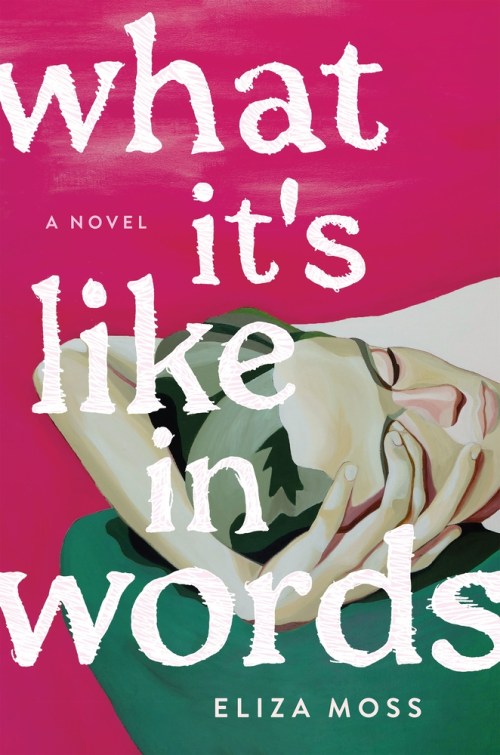
FICTION
What It’s Like in Words
by Eliza Moss
Henry Holt & Company
December 3rd, 2024


