


Edgewater Hospital, a focal point in the landscape of Bill Hillmann’s novel The Old Neighborhood, closed in 2001 and sat vacant until its demolition in 2017. The luxury apartment complex Anderson Point rose from the ruins, incorporating two former buildings. Cubic architecture contrasts with the brick and stonework of an earlier era. With gentrification happening throughout Chicago’s Edgewater neighborhood, one cannot help wondering what redevelopment replaces. Originally published a decade ago and newly revised with an introduction from Irvine Welsh, The Old Neighborhood offers a heartbeat from what came before.
The novel, narrated by nine-year-old Joe, begins at a local carnival: “There were the games, the shouts of the carnies, the swirling thunder of the Tilt-A-Whirl, lights flashing, pulsing; the colors of yellow, red, green, and blue exploding like fireworks against the walls of the church; the old nunnery; the high school; and the grammar school that encircled it all like a towering red-brick fortress.” Suddenly, a shot rings out. Joe and his new friend Ryan follow Joe’s older brother Pat and Ryan’s uncle Mickey as they chase the shooter into a Jewel. The kids stand at the door and hear a gruesome sound. Pat and Mickey run back outside the store laughing. Joe and Ryan go inside and find the body. Now they share a secret, and Hillmann launches the reader into a semi-autobiographical saga of a boy navigating the moral entanglements of Chicago street life in the early nineties.
Soon, Joe begins walking the neighborhood, making protection collections from businesses. Hillmann parallels this with the idyllic walks he used to take with his loving grandfather. A new kid named Angel and Joe get into a fistfight, but they move past it as boys often do, becoming friends—and with Ryan, they form a trio. The three hang at the windowsills next to the Edgewater Hospital emergency room. They sell drugs. They fight. They hope to join a gang when they get older. Circumstances get grim as the demands of the street pull them deeper into criminality.
Hillmann juxtaposes the components of Joe’s life: family dysfunction versus family vacation, violence versus the fear and remorse that torture him as he tries to find the right path. His family goes fishing in Michigan. He falls in love with a college-bound good girl. Physics fascinates him, and he wins a summer internship at Fermilab. At the same time, he enjoys his drug money and eventually stabs someone. Delinquency rattles against yearning and potential.
Rarely do you read a book about everything. Joe’s observations about family dynamics, class, and race read like an autoethnography by a teenager speaking his truth. He speaks as the youngest of a mixed-race family. He steals, deals drugs, and commits violence, all within the framework of his ethical code. Hillman builds a world of rival gangs, retribution, and survival, culminating in one case with an act of depravity made as an act of love—and does so with an authentic voice and meticulous attention to detail.
Writing guides hammer in the impetus to show and not tell. The prose in this story shows and shows, bringing Joe alive on the page. In scene after scene, the scope of Joe’s life in the Edgewater neighborhood raises a thought-provoking question: How do the flaws and hopes of Joe’s life reflect all lives? Even as he makes bad choices, the depth of description makes them feel undeniably human. Joe’s character feels visceral. We all might make the same mistakes when faced with similar situations.

The Old Neighborhood deserves attention. It gives voice to Edgewater’s past, most of which—the streets, the homes, the lake—remain unchanged despite the partial facelift it has undergone. The geography has a story, along with those who lived there. The novel makes this real. The Ashland bus surges past as Joe, Ryan, and Angel run toward an apartment fire. Today the Ashland bus still surges, just with different passengers and different kids growing up in Edgewater making their way. The Old Neighborhood enriches the city by reminding us that despite a changing facade, the struggles of the past do not differ from our own.
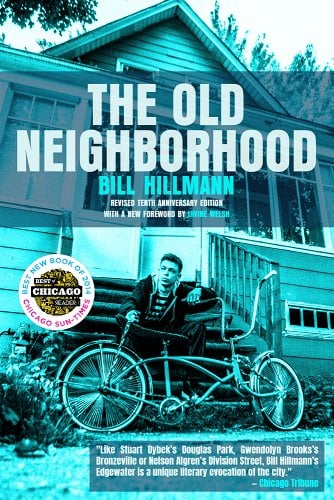
FICTION
The Old Neighborhood
By Bill Hillmann
Tortoise Books
Published November 12, 2024


