


I know everyone groans when they hear a Gen-Zer say this, but I’ve always had a fascination with old TV shows. Growing up, I used to watch reruns of classic programs from the Network Era like Perry Mason and Bonanza with my parents every weekend. My mom used to light up when she unraveled the mystery two-thirds of the way through the episode, as if she hadn’t seen it ten times before. I didn’t particularly love old westerns, but the look on my dad’s face when the tinny zing of a cowboy’s gun went off was worth cheesy dialogue and far too frequent horse chases.
Meet the Newmans seeks to capture that type of joy. It’s 1964, and Dinah Newman is the matriarch of the golden family of television. For a decade, Dinah, her husband Del, and sons Guy and Shep have starred in a once widely popular, but now outdated, All in the Family-esque program centered around their lives. But the screen doesn’t mirror real life—Dinah feels suffocated, Del struggles to keep the show relevant, boy-next-door Guy is hiding a big secret, and rockstar heartthrob Shep is quickly spinning out of control. When Del, the sole writer of the show, is in an accident, the family and program are suddenly put in jeopardy. Dinah hires aspiring reporter Juliet Dunne to help her write the season finale, and in finding a new voice for the show, Dinah finds her own.
Bold, unconventional, and full of heart, the novel is a must-read for TV lovers and readers alike.
I sat down with author Jennifer Niven to talk all things Meet the Newmans.
This interview has been lightly edited for length and clarity.

Angie Raney
I know you worked as a journalist, screenwriter, and producer for ABC. How did your experience in newsrooms and writers’ rooms inform Meet the Newmans?
Jennifer Niven
I worked with House of Blues, and I would interview all of the artists who came through, which was really fun. I got to be in green rooms and talk to the people I listened to, and met people I hadn’t listened to, but who were equally as fascinating. One of the things that was interesting was that it was very much a boys club in a lot of ways.
Angie Raney
In what ways has that culture changed?
Jennifer Niven
In the 60s, as opposed to when I was working in the late 90s, there were certain things that women weren’t allowed to report in terms of sexual harassment. Thankfully, that wasn’t the case when I was working in those spaces. So, there have been changes, but there also haven’t been enough changes, definitely.
Angie Raney
As it is a book very much about womanhood, I was curious—what prompted you to write chapters through male perspectives?
Jennifer Niven
When I first started the book, the boys and Del had more to say, and I feel like I saw Meet the Newmans more as an ensemble family piece. It is a family piece to some extent, but Dinah became more and more vocal as I was writing, which I loved, because she becomes more vocal throughout the book.
That said, I still felt like—especially with Shep and Dell in particular—the Newman men had things to learn about and navigate regarding women. So, I loved the idea of Dinah growing and changing, but I didn’t want to let go completely of Del and his sons because they were really fun to write and I felt their voices belonged there. I really wanted Dinah’s voice to shine through and be the main one, though.
Angie Raney
I think that’s so valid because womanhood ultimately doesn’t just affect women themselves; it also affects society’s idea of masculinity. Was there a hardest character to write?
Jennifer Niven
Out of all of them, I’d say Del. I wanted readers to sympathize with and like him, and I didn’t want them to view him as this person who’s been holding Dinah back or misleading her in any way. But, I also wanted him to have some growth, even though he’s really not in the book all that much.
I also loved writing Shep [the rockstar heartthrob of the Newmans]. His character feeds into my inner teen girl [laughs].
Angie Raney
Oh yeah, me too. One Direction was my everything [laughs].
Jennifer Niven
I’m so glad you get it!
Angie Raney
It’s interesting that you use the word “sympathy” for Del because I wrote that down in my notes too. I found Del to be a pretty hard character to feel one way about—to absolutely like or dislike. For better or for worse, he’s a good man trying to catch up with the really fast-moving time.
Meet the Newmans utilizes interstitials between chapters, including everything from recipe cards for sour cream coffeecake to newspaper features of the Newman boys. How did you decide what inserts went where?
Jennifer Niven
I think it was just by feel and intuition. Early on in the book, we’ve maybe heard Dinah talk about her sons, but we haven’t actually met Guy and Shep. So, if I’m not ready to introduce them yet, I can put an article here about “Which Newman boy are you going to choose?” to break it up and introduce them in a way, but then get right back to Juliet or Dinah’s narratives.
I also wrote them separately, so they existed in their own separate folder. I then reread the book and tried to decide what felt good where. My editor very wisely suggested that we make the ones that are there matter and count more than if there’s just one between every chapter. But, I loved writing those articles—they were just so much fun to write!
Angie Raney
Your 2015 young adult novel, All the Bright Places, is banned in many schools because of its heavy subject matter. In October, your newer young adult novel, Breathless, was a part of Lit Hub’s Most Banned Books of 2025.
Meet the Newmans is full of social commentary on sexism, racism, and bigotry. Have you always been drawn to what some think are “subversive” or “controversial” topics?
Jennifer Niven
No, not at all [laughs].
Anyone who knows me knows I’m such a people pleaser. I had written seven books before All the Bright Places, two of which were nonfiction, so I didn’t have to make a statement with those. And then I did All the Bright Places, and it was really scary to write that because it was so personal.
I realized that, without meaning to, though, I was becoming an advocate for the mental health of teens. I take that very seriously, and I feel very honored by that, but it was completely unexpected. I got a lot of flack from adults when the book first came out, but meanwhile, their children were writing to me saying, “Thank you for letting me know that I’m not alone.” One reader said, “Will you please keep writing for people like me who feel like they don’t have a voice?” and I thought, absolutely.
So, I’ve just kept on doing that. I don’t post about politics on Instagram for the most part, but I do have things to say. I think with the last election, too, I really have things to say about women’s rights.
Angie Raney
I myself read All the Bright Places, as well as books like Looking for Alaska and The Perks of Being a Wallflower when I was 15. I think it was so incredibly formative and important for me as a teenager to read pieces that honestly discussed the topics of suicide and mental health. So, meeting you ten years later, I just want to say thank you for sharing these types of narratives with the world and for being so honest about real issues.
Jennifer Niven
Well, that means so much. It taught me a really good lesson about talking about things that are really important to me.

Angie Raney
What does that push back feel like when people say you can’t talk about certain topics? Does it make you want to keep writing about them?
Jennifer Niven
The surest way to get me to do something is to tell me I cannot do it [laughs].
Angie Raney
There’s a moment before the women actually turn in the final script of the Meet the Newmans finale when Dinah says that she wants to keep it to herself for a little bit longer. Where do you stand on art remaining the artists’ versus it becoming a part of something bigger once we let it go?
Jennifer Niven
Especially when talking to debut authors, I always say do the best you can by the work. Do everything you can. Put your heart and soul into it. Then, when it comes out, don’t read reviews directly. Remember that it belongs to the reader.
I do think of my books as my babies. You’re sending them out into the world, which is very scary, but I’m so happy to see them being read. I love it when readers have insight or opinions that I didn’t think of. I think it’s great that we all come to reading and to books with our own experiences and tastes. Not every book is for me, and not every one of my books is for everyone, but I respect that people read and form opinions, and that’s where I think it really does belong to the reader once it’s out in the world.
Angie Raney
I won’t give anything away, but at the time of the epilogue, the Vietnam War draft is right around the corner. The assassinations of Malcom X and Martin Luther King Jr. had occurred just a few years prior. All of this is to say, the world around the Newmans is in political turmoil. Meet the Newmans has a bittersweet, if not happy, ending though. Was there ever a different conclusion for any of the characters that wasn’t as positive?
Jennifer Niven
Well, I actually was going to [spoiler redacted].
Angie Raney
Oh my god—I just got chills!
Jennifer Niven
But the overall tone of the book is hopefully one of joy, and I wanted people to feel the joy that I felt when I was writing it.
Angie Raney
Speaking of joy, you incorporate your real-life great aunt Sally in the novel through a letter to Dinah. She sounds like a very wonderful, wise woman. What do you think she’d say about the book?
Jennifer Niven
She was gone before I was born, but the stories about her are so entrenched in family lore that I grew up feeling like I knew her. So, I think that she would be delighted. She would be very proud, and she would be cheering Dinah and Juliet on, especially Dinah, because I think she would relate to her in a lot of ways, even though Sally never had children. She also—having taken herself to college in her 40s—would have probably had a few critiques, but I would have happily welcomed those [laughs].
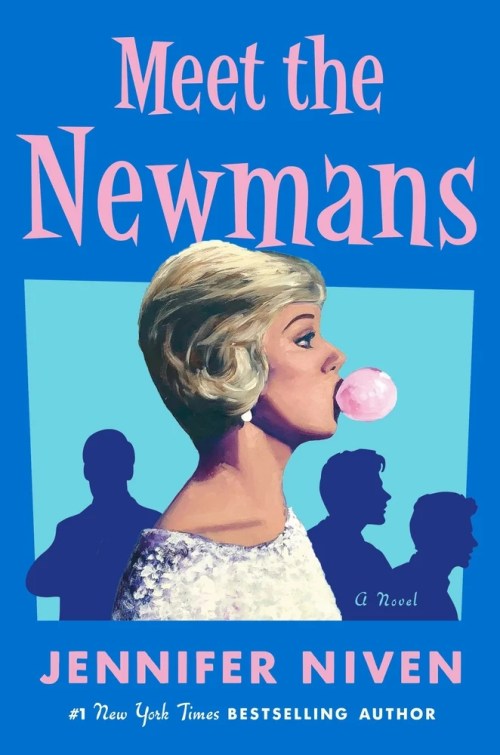
FICTION
Meet the Newmans
By Jennifer Niven
Flatiron Books
Published January 6, 2026


