


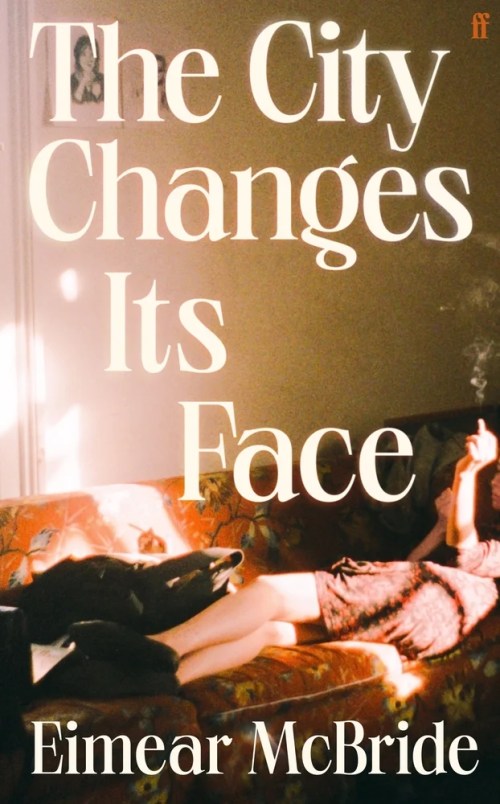
Nine years after The Lesser Bohemians hit shelves, award-winning Eimear McBride returns to her two bewitching characters: student Eily and her older lover Stephen, both haunted by the nightmares of their mutual pasts. In that first novel, two hurt people fought through their traumas to open up and fall in love; in The City Changes Its Face, their story picks up not long after it left off.
In this sequel, the past and present are coming together too fast: Stephen’s daughter, Grace, long kept away from him, is coming to visit, and she’ll have to learn the bloody, damaging details of his past—the violence he experienced and the substance abuse he nearly drowned in. Several months later, Stephen and Eily have a tense conversation in the haze of late-night London. Something happened inbetween the two events, between Grace and this conversation, but what happened is unclear, perhaps still to both of them as well as to the reader. Over the course of the novel, it all unspools.
McBride’s dream-like style, floating through the streets of London, continues to be the star that keeps her stories moving forward. Language rolls and dips, reminiscent of Virginia Woolf’s experiments in The Waves; dialogue disrupts the torrent of anxious thoughts in minds that never stop moving.
Occasionally, the book leans on its style more than it should. A film serves as a way for the characters to see Stephen’s past externalized; whether the entire film, transcribed through Eily’s perspective, was necessary, is unclear. Two trauma-laced actors both turning towards writing may feel a little on the nose. McBride’s writing often depends on the stylizing of her tropes into something web-like and meaningful by way of language.
Eily and Stephen are certainly both anti-heroes, intensely flawed as they are by self-destructive tendencies; still, Eily’s childishness around Grace and the conflict it causes overwhelms what’s arguably the more prominent storyline of the novel, a hinted-at breakdown that Stephen is determined to know more about. As first love turns to messy, committed openness, the book returns to the themes of the first, but only dips the readers’ toes in. Style and plot choices leave the reader slightly outside; where Lesser Bohemians plunged them into Eily’s body, the sequel has them delicately following the two down the road. The impact, then, is not the same as the first book McBride gave readers, and so lacks some of the gritty corners and dark shadows of that first, trying to reproduce it in the film, in Eily’s emotional swings, in big reveals that ultimately fall flat. While McBride’s style is still exquisite, other elements of execution needed more work for this sequel to have a satisfying arc.
FICTION

by Eimear McBride
Faber & Faber
Published on August 26, 2025


