


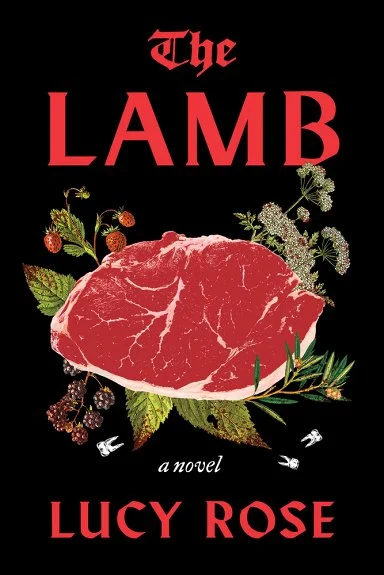
Stepping into the world of The Lamb is akin to entering into a gothic, fairytale land existing quietly in the realm of the present day. From the opening lines to the very last, Lucy Rose’s debut had me fully immersed and always hungry for the next page.
A modern day horror, sitting quietly in a wood, is the unassuming house that holds Ruth and her daughter, Margot. This mother-daughter pair is dysfunctional in their relationship, owing partly to Ruth’s lack of motherly instincts, and partly due to their diet… humans. As innocent travelers pass through their wood, this pair lures them home, drugs them with hemlock, and finishes the job to have them prepared for supper the following evening. Their victims are known as “strays”, wanderers without people to look for them or care that they’re missing. But when a stranger arrives and remains uneaten, seducing Ruth into a trance-like, lustful relationship, things begin to change rapidly for the duo. As Margot begins to mature, her feelings towards their meals begin to shift, and her mother’s feelings towards her begin to take a terrifying turn.
Though dark in nearly every aspect, what I appreciated most about this novel was its insistence on light. Even amongst the worst moments in the story, there are characters surrounding Margot who usher in hope for her—namely, her bus driver, who asks how she’s doing every day on the way to school. As her home life becomes worse and worse, it was nice to read those hopeful characters pushing her forward through so much darkness.
Rose delves deeply into the relationship between mother and daughter, focusing on what happens to children when their parents never wanted them in the first place. Margot and Ruth are complex, and the writing beautifully brings us into that dynamic. Ruth isn’t always hateful towards Margot, and Margot isn’t always resentful towards her mother. There are moments of peace that pass between them, and moments that, though circling happiness, never quite are. But just as quickly, these moments shift to cruelty and we are reminded how painful it is to be a child of an abusive parent who resents their child for stealing away their agency and freedom. Rose does an impeccable job of carrying this relationship through the entire novel.
I’m often hesitant to read a book told through the eyes and voice of a child. I think it can be hard to be convincing and limits the things a narrator can conceivably think and say. That being said, it is done incredibly well in The Lamb. Margot is observant but not overly so for her age (10). She is empathetic but still confused about her wants and needs because of her home life, and she has a sense of right and wrong that she is constantly at war with, just as any child in her situation would be. There are many moments sprinkled in that feature Margot reacting as a child would to situations where it would have helped her character—and even on a more broad level, the plot—to do something different. Sticking to the child point of view is not easy to do as a writer, and Rose does it fantastically.
This book does not shy away from the horrific parts of people, and that does include some gore, but it mainly contains psychological horror surrounding the idea of cannibalism. It took a while for me to be able to overcome the stomach-churning descriptions of their meals, especially when we meet so many of the strays that wander in. Don’t let this discourage you, though—there are important lessons to be learned within these pages: lessons about when to stop, when to speak up, when something is worth fighting for. Lessons about hunger, and rage, and regret. Lessons that Margot will have to learn before it becomes too late.

Tucked away in this wood is a story of enchanting hunger that will leave you deliciously sated and horribly heartbroken. In the hands of Lucy Rose, you’ll never go hungry.
FICTION
The Lamb
By Lucy Rose
Harper
Published February 4, 2025


