


In 2019, I was coming out of a nasty sinus infection. I kept waiting to get better, but I didn’t. I kept having bad symptoms, but when I told doctors, they said I was simply anxious, or out of shape. As my brain fogged and sharp pains ripped through my chest, I asked questions and received no answers.
The protagonist in Garth Greenwell’s Small Rain knows what I experienced. Laid low by a pain in his abdomen so strong that the pain itself becomes a sort of place to occupy, bending time, he finally goes to the hospital and is swept immediately into its regimented and yet timeless system of tests, studies, visits by doctors at all times of night, where an emergency stretches out into waits for machines and holds on medication.
Greenwell pulled from his own health crisis to write this novel, and it shows. The unnamed narrator knows so intimately the complicated, infuriating minutiae of illness. An artery has torn—certainly that’s urgent—yet it seems like no one is moving fast enough, you are only one emergency of hundreds, and it all becomes tiny, stretched moments of IV pricks and walks to the bathroom.
Illness, as Susan Sontag taught us, is its own world: “Everyone who is born holds dual citizenship, in the kingdom of the well and in the kingdom of the sick…sooner or later each of us is obliged, at least for a spell, to identify ourselves as citizens of that other place.” The boundary between health and illness is thin as an artery wall. Our narrator has busted through to that other place.
For many of us, the Covid-19 pandemic was the first time we confronted this thin wall between the two kingdoms, a wall that was, and is, as thin as an N95. This novel takes place in the teetering of Covid-19, the space when the pandemic was raging but we were insisting on trying to go back to normal anyway. It was the first time many people realized that any of us are on the verge of being at healthcare’s mercy at any time, no matter how healthy we feel or think we have been.
Our narrator keeps repeating one word: lucky. Doctors call him lucky—he almost died, but even that is a miracle, that he didn’t. Like so many entrants into the kingdom of the ill, it’s hard to believe what’s happening to him, hard to believe how quickly things can change. We like to believe it’s more than luck that keeps us in our kingdom. We set ourselves boundaries to avoid being overwhelmed by the world and its disasters, and one of those boundaries is believing that we are healthy for a reason other than luck.
But another boundary is between us and our body, a boundary that suddenly emerges when you get sick. You study, consider things you’ve always taken for granted. Peeing. Showering. Bending over to fix a blanket.
When I first got sick, I alienated myself from my body. For so much of my life, I had been one united entity. I had a cold. I was injured. All of a sudden, it was alien. Incomprehensible. My body was doing something, and I didn’t know what, or why. My body was hurting me. My body was broken. It broke us into two: like a roommate I didn’t understand. Things happen to you when you’re in that state—you are moved, prodded, medicated, bled.
Doctors have conversations with your body, decide things, without ever telling you. You’re not meant to converse with your body—you’re meant to stay silent and let it happen to you the way the doctors need it to. At one point, the narrator notices his blood pressure blowing through the levels his doctor wanted him to stay at; a nurse argues with him about it then disappears as he watches the numbers creep up in a deadening haze. Let us worry about your body they say, but what if you can’t actually trust them to? How can you advocate for your body as it hurts you?

Time and time again, the narrator tries to be passive, a word he keeps using. Doctors tell him to stop intervening, stop working, just relax. He is not meant to be an active fighter. It is the doctors against whatever illness rages in his body. He might as well not be there. At times, doctors are surprised to hear him speak. He makes a sound of pain and they push through.
I was finally diagnosed by doctors, but it wasn’t the end. It was just the beginning. The protagonist in this novel reevaluates his entire life through a new mind, a mind carved in just days by the harsh boredom of the hospital, the slowing of time, the ability to do nothing but sit in pain and think, thoughts drifting from one place to the next. He lives in a new world now, a world in which his body operates in ways he did not know it could. A world in which his body is no longer comprehensible to him, and yet is comprehensible in ways he never knew of before. He knows now that a tube exists from his arm all the way through his chest. Knows that a little piece of aorta is weaker than it should be. Knows how to measure his dizziness, blood pressure, the signs from his body that he’ll have to monitor and try to comprehend for the rest of his life. Just as the narrator thinks of language, translation, he will have to try and understand the signs his body sends him. He is in the kingdom of the sick for good now.
As am I. Every pain is a negotiation, a conversation with my body about whether we need to consult someone, whether it can wait or not, whether it is emergency or normalcy. All of us can cross into this kingdom at any time, and likely will at some point in our lives. Greenwell captures an entry into that world perfectly, in this novel that is hazy, slow, thoughtful, and yet suspenseful, dreadful, and anxious, cementing his place in the literature of chronic illness while putting another poetic, rich work of fiction on our bookshelves.
FICTION
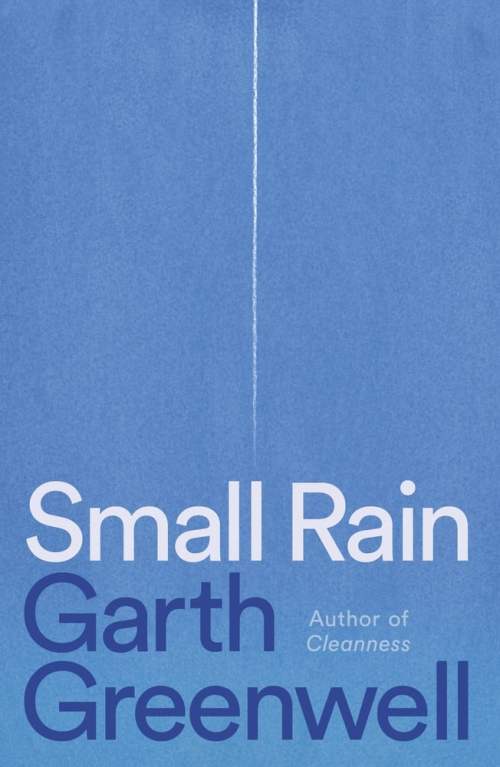
Small Rain
By Garth Greenwell
Farrar, Straus and Giroux
Published September 3, 2024


