


During a recent trip to Mexico City, I took a certain comfort in confirming the presence of titles from a handful of Spanish language authors on the shelves of the city’s many bookstores whose works I recognized but haven’t been able to read in English yet. Juan Emar was one of those authors. A walk through the Zócalo and the Templo Mayor ruins with a friend who grew up nearby turned into a conversation about translating the many Spanish language authors whose work has only been translated into English within the last decade, and the many more who haven’t. While impressed that I even knew about writers like Álvaro Enrigue and Sergio Pitol, my friend was less impressed by everything I had inevitably missed reading them in English. When I asked how I could rectify my errors, my friend answered honestly, “You need to learn Spanish.”
He’s right, of course. But for those of us who continue to read, write, and think primarily in English, translations like Megan McDowell’s forthcoming edition of Juan Emar’s short story collection Ten (Diez) might just be the next best thing. The pen name Juan Emar used by Chilean writer and critic Álvaro Yáñez Bianchi throughout his lifetime is a rendering of the French phrase “J’en ai marre” meaning “I’m fed up.” Bianchi/Emar split much of his life between Paris and Santiago, keeping him close enough to each city’s respective literary scenes to comment freely on both. Of the five book-length works the author published during his lifetime, four debuted between 1935 and 1937 with only a tepid response from critics. Of these, only Ten and Yesterday have been translated into English (so far). The fifth, Umbral, comes in at over 4,000 words in Spanish and is considered by many to be his master work. Emar’s strange, perspective-warping episodes must only get weirder in another language.
A parrot responds to an insult by attacking its owner’s uncle (“The Green Bird”), a ritualistic empire of mystics is contained in the stone of a ring (“Papusa”), a standoff with a cat leads to existential questions of balance in the universe (“The Damned Cat”), and long passages differentiate the habits of vampires and werewolves from other nocturnal threats (“Chuchezuma”) in the fantastical premises of Emar’s stories, which are as funny as they are grotesque. Sentences like, “The tench fava smells of interplanetary distances” conflate the sensory stimuli of plants with cerebral ruminations on time and space to create a kind of mind-body synesthesia that is both enchanting and disorienting. Such chaos at the sentence level is merely part of the illusion contained within the collection’s precisely ordered factorial structure, comprising ten stories presented in four parts titled “Four Animals,” “Three Women,” “Two Places,” and “One Vice.”
McDowell, whose translations have been nominated for the International Booker Prize no less than four times and won the National Book Award, the English PEN award, and two O. Henry prizes, among others, lives in Santiago where she’s worked on recent translations of living authors like Samantha Schweblin (Seven Empty Houses) and Alejandro Zambra (Chilean Poet, My Documents). Emar comes highly recommended by the likes of his fellow Chilean writer Zambra, whose foreword introduces McDowell’s recent translation of Yesterday into English, and César Aira who introduces McDowell’s translation of Ten (Pablo Neruda wrote the introduction to the 1970 edition of Diez). Zambra, a frequent collaborator with McDowell, claims to have read his first Juan Emar story at 14 and discussed the author at length in college. Arguably, such weighty endorsements for Emar’s work shouldn’t be necessary to rescue a writer with such a devoted cult status as Emar from the obscurity he’s fallen into outside of places like Chile, but such references will undoubtedly help introduce Emar’s writing to audiences who may be more likely to have read the work of Emar’s admirers.
Emar’s stories also benefit from being a kind of literary counterpart to the surrealist paintings of Salvatore Dali, Joan Miro, and Leonora Carrington (who embraced both painting and writing) that coincided with his own literary projects. When the stories in Ten were originally published in 1937, the departure from the realism of the time must have seemed more radical than it reads today. Yet, for all the radical futurism in Emar’s writing, his stories also reflect the sexist tropes of women as objects of desire and trepidation that by now have been all but reduced to cliche after nearly a century of obsessive repetition on the theme. The final story in the collection, “The Vice of Alcohol,” begins “Last night, from my bed, I heard the hoarse cry of a woman taking pleasure.” Its penultimate passage begins, “I savaged her with a whip made of horse leather.” While the explicit explorations of sex and bondage in stories like “The Vice of Alcohol” and “Papusa” may feel more gratuitous and even repugnant than intentionally subversive now, the effect of including such themes of sexual desire and repression would have been right in line with the notions of combining conscious and unconscious realities into a hyper conscious reality, the surrealism of the much greater artistic movement of the time.
This being my first time reading Emar, I couldn’t stop thinking about what I was missing, what more I might have picked up on if I was able to read his work in its original Chilean Spanish. Inevitably, there may always be something lost in the gaps between the words an author chooses and the concepts they invoke for readers. Less so when the interpretation of a skilled translator like McDowell is at work. But language, any language, relies on a certain understanding of the culture to which it belongs. To fully understand what Emar was getting at in 1930s Paris requires a knowledge of more than just Spanish.
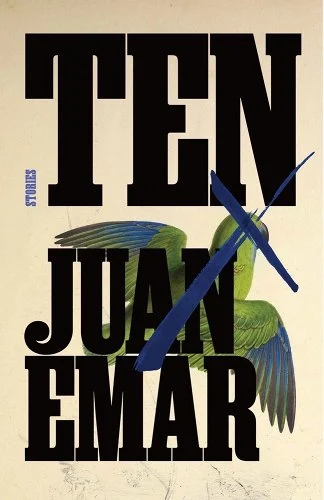
FICTION

Written by Juan Emar
Translated by Megan McDowell
New Directions Publishing Corporation
Published on September 30, 2024


Umbral is 4000 *pages* in Spanish, not 4000 words.