


The rich-people-have-a-wedding plot is not a new device. Some recent standouts in the genre include Grant Ginder’s The People We Hate at the Wedding, Diksha Basu’s Destination Wedding and Sloane Crosley’s The Clasp, or the somewhat lighter novels in the Crazy Rich Asians series from Kevin Kwan. Weddings are naturally filled with drama, and even the ones that run smoothly and where everyone ends up married to the intended people often have drama. Alison Espach’s new novel, The Wedding People, is no exception, delivering a messy entanglement dappled with wry wit and occasional misfortune.
Set in the once glitzy, old-money Newport, Rhode Island, The Wedding People unfolds during the a week-long celebration for Lila, a young heiress, and Gary, a widow and doctor who treated his bride’s father for cancer before his death. The recently divorced Phoebe, who knows neither the bride, nor groom, has booked the lone vacant room in the hotel arriving as the party guests begin checking in.
The novel opens with Phoebe arriving at the hotel. She is an academic who’s research, ironically, focuses on British marriage plot novels. She has chosen this hotel to kill herself using the cat painkillers from her dead cat. Bridezilla Lila meets Phoebe in the lobby. Lila is passing out chocolate wine, a wedding favor for the guests. Lila realizes Phoebe is not a wedding guest, and this fact upsets her since all the hotel guests were supposed to have been here for her, and then even more upset when she learns of Phoebe’s plan to commit suicide. Lila convinces Phoebe to stay alive; a body would ruin her wedding week. Soon after, Phoebe is drafted to serve as Lila’s maid of honor. The novel unfolds over the week leading to Lila’s wedding.
The novel is filled with playful, comedic bits. Often these reappear, such as the case with the coconut pillows. When Phoebe arrives at the hotel, Pauline, the hotel manager, offers her a coconut pillow. The pillow is particularly soft and scented like coconut, with the scent of coconut intended to bring comfort to the sleeper. Phoebe is not comforted, but Lila, on the other hand, finds the coconut pillows a necessary luxury. The coconut pillow resurfaces over the course of the novel with various characters offering opinions. The whole concept of the coconut pillow seems like such a perfect parody, I dared research their existence, and was shocked to learn they are a real product.
But these details layer an absurdity on top of the novel’s plot, providing the book a certain necessary levity. It’s a reminder the book is playful as much as it is literary. Espach speckles her wry humor throughout the novel, from the cat painkillers to the environmentally friendly penis straws, helping to offset the slow building of the novel’s plot.
While the opening of the novel is hurried and impactful, the pacing in the middle of the novel struggles to some degree. Phoebe’s arrival in Newport is punchy, with a hint of a mystery to help crank up the tension: “when she left St. Louis, it felt important to leave everything behind—the husband, the house, the luggage.” Espach leads us to have more questions than answers, drawing us into her world, to the character of Phoebe.
Phoebe has two main problems that are revealed early in the text to explain her desire to chase her cat’s pain pills with chocolate wine—she has struggled with infertility, and then her husband had an affair. Immediately she is sympathetic, and her tough honesty is refreshing. The plot moves quickly in these opening pages, particularly as she befriends Lila.
In part because Phoebe has nothing left to lose, she is absolutely honest, to the point of being cold. She tells Lila about a piece of food stuck in her teeth—another recurring gag—and this helps Lila feel a sentimentality towards Phoebe. But Phoebe’s behavior also charms the reader and makes us want to spend time with her. Espach’s opening here is delightfully enticing.
However, the narrative slows considerably once Phoebe has been drafted to serve as Lila’s only friend. The pace slows as Phoebe’s backstory is revealed. Her struggle with becoming pregnant, her relationship with her ex-husband Matt, her relationship with the academic department, with Matt’s girlfriend, and her career all provide an explanation, a defense of her desire to end her life, and to document her choice to live. But rehashing Phoebe’s past, while perhaps necessary to fully build out her character, takes away from the forward momentum of the present.
As readers, we’re pulled along on the journey of this destination wedding, but the endless parties begin to drag on. No doubt there are wedding events of this magnitude, but even a long weekend wedding can feel, in the moment, to be interminable.

However, there’s good reason for the detailed experience of Lila’s wedding week. This wedding is filled with many moving parts. The slower pace of the narrative provides space for rich character development. Gary’s daughter, Juice, is acting out at the prospect of a step mother. Gary’s best friend Jim is also his dead wife’s brother. Lila, Jim, and Gary all have a shared history revealed to us during the course of the novel, adding to the intrigue. There’s also a nude painting of Lila’s mother that is passed around, commented on, and eventually becomes an important plot point. All of these characters have their own motivations, and Espach has committed to developing them all into fully formed characters. However, crafting their stories consumes the forward momentum of the plot.
The plodding story creates a solid foundation for the overlapping love triangles, the plot wound tight as information is teased out. The payoff for the grind is the release of the tension over the course of the rehearsal dinner and the wedding day. At the end, Espach returns to the harried pace of the opening pages. The effort building the plot is unleashed as each loose end is tied together with an anxious conclusion.
In The Wedding People, Espach has crafted a modern version of the British marriage plot novel, a complex twisted story of sadness and love tied together neatly in an old manor house. Comedic, entertaining, and occasionally unexpected, The Wedding People is the ideal plus one for a destination wedding.
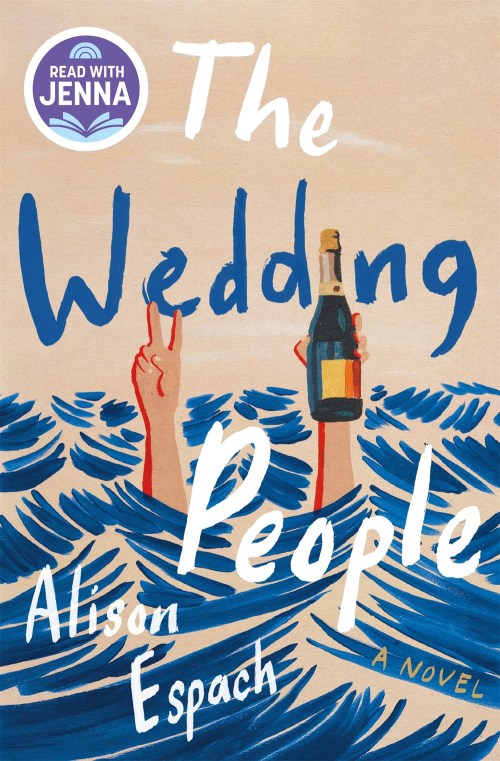
FICTION
The Wedding People
by Alison Espach
Henry Holt and Co.
Published July 30th, 2024


