


Education is supposed to be a path toward a better life. But what happens when the path becomes so competitive, expensive, and unforgiving that the pursuit of that better life begins to consume the life itself? In American Hagwon, Min Jin Lee uses the world of private education to explore that question over fifteen years, across two continents, and through one sprawling Korean American family. The result is an ambitious, deeply compassionate novel about immigration, class, family obligation, and sacrifices parents and children make for one another.
A hagwon is a for-profit private educational institute in South Korea where students go after school for extra instruction. When Helen Joh moves her family to Seoul, her thirteen-year-old daughter Mido struggles to adjust to a demanding school system. After a teacher hits her with a ruler for a math mistake, her new friend Yun introduces her to Eagle Academy, an elite hagwon where students can learn at their own pace and American teachers offer a different approach. What begins as an after-school refuge eventually becomes central to the lives of Mido, her family, and their friends.
Lee divides the novel into five sections spanning 1992 to 2007, following her characters as they move between Seoul, Sydney, and California. The structure mirrors their constant search for belonging and a better future. Mido struggles with expectations while finding her voice. Her brother Bo faces an education system where exam results can determine his opportunities. Her other brother DH sees education as a path to playing soccer in America. And their friends Yun and Lion build lives in California while carrying Korea’s cultural and economic expectations with them.
The hagwon is where these worlds collide. Lee complicates its reputation as a machine for producing academic achievement: in Korea, education is tied to class mobility and parental anxiety, with success often feeling like a family’s only protection against economic precarity. Yet Eagle Academy also offers students something traditional schools do not. A place to ask questions, learn at their own pace, and build confidence among their peers.
The contradiction extends to Lee’s characters. Helen and John, living abroad, have a more relaxed approach to their children’s education and upbringing, while Helen’s sister Sonya takes a more pragmatic view. Having experienced poverty and instability as a child, she is determined to secure extraordinary wealth and security for her family. Her arranged marriage is less a romantic choice than an economic strategy. For Sonya, sacrifice is the price of protection; for Helen, love and family are worth risking that. Lee presents neither woman as entirely right or wrong. Instead, she uses their competing ideas of success to expose the impossible choices created by class and circumstance.
The novel’s geographic movement is equally significant. Lee’s characters are “gyopo”—people of Korean descent living outside South Korea—and their lives are shaped by a feeling of belonging everywhere and nowhere. Helen feels this displacement most when she returns to Korea, where she is reminded that living abroad does not make her special. Her alienation from both Korea and the places she has lived makes the family’s constant movement more than a change of scenery; it becomes part of their identity.
Lee’s most compelling achievement is the way she makes education stand in for this larger immigrant struggle. Every move, degree, exam, job, and school becomes an attempt to secure something more stable for the next generation. Bo’s repeated exam failures are devastating not simply because those tests seem capable of determining the limits of his future, while Mido’s decision to work at the hagwon rather than finish university reveals the limits of the American promise: immediate economic security can matter more than another credential. Set against the 1997 Asian Financial Crisis, with its mass layoffs, bankruptcies, and rising unemployment, the novel’s fixation on education and economic security feels especially urgent. Lee ultimately shows how economic instability can turn education from an intellectual pursuit into a survival strategy.
At times, the novel’s breadth works against it. With so many characters moving through so many years and locations, some emotional developments feel compressed, and major turns in the characters’ lives can arrive abruptly. Lee occasionally favors the sweep of a family saga over the sustained development of an individual moment. But that expansiveness is also part of the novel’s appeal. American Hagwon is less interested in a single transformative event than in the accumulation of decisions—educational, financial, familial, romantic that shape a life.

By the novel’s conclusion, the hagwon has traveled across the Pacific. What began as an institution tied to the pressures of Korean education becomes an American space where Korean immigrants and their children pursue community and upward mobility. Lee includes a quote from Carl Jung about “compressed modernity,” the coexistence of multiple, sometimes contradictory social worlds within an increasingly interconnected society. She captures this well in her characters: they are Korean and American, traditional and modern, ambitious and exhausted, deeply attached to family yet desperate for independence.
American Hagwon ultimately suggests that there may be no perfect system for building a better life, only people continually adapting the systems they inherit. Lee’s hagwon is therefore more than a school. It is a metaphor for immigration itself: a place of pressure and possibility, sacrifice and refuge, where the next generation is always being prepared for a future that may look nothing like the one their parents ever imagined.
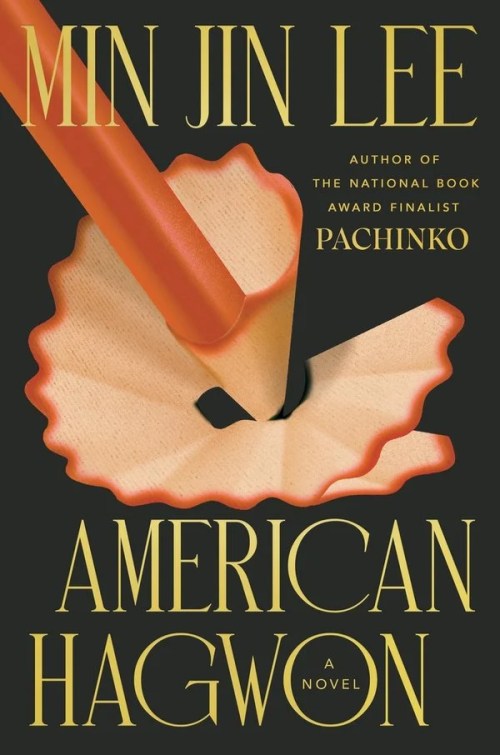
FICTION
American Hagwon
By Min Jin Lee
Cardinal
Published September 29, 2026


Intriguing! Adding it to the list. Thank you. 😊