


When, if ever, is the right time to have a baby, and can such a choice be made ethically, given the chaos and rampant injustice in our world?
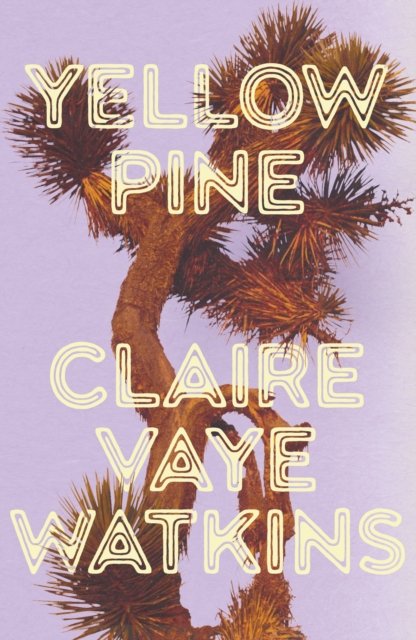
The heroine of Claire Vaye Watkins’s new novel, Yellow Pine, anxiously circles these questions. Rose Williams is in her early forties, a child of Nevada living in a forgotten desert outpost near the small town where she grew up. The Sierra Club pays her salary, but she is growing disillusioned with her fundraising job and her employer’s failure to meet the demands of the climate crisis: “she felt like a flunky for the nonprofit-corporate-industrial-complex, a whipper of frenzy, a vulture, an opportunistic bottler of rage, a hack alchemist… a miner of fear”. When we meet Rose, she has moved back to the desert for a fresh start after a divorce and the death of her mother. She buys a cabin with the life insurance payout and finds her tribe in Tecopa, a community of radical environmental activists, cannabis dealing priests, exiled academics, and wayward souls. She yearns for her daughter, Juniper, who lives most of the year with Rose’s ex-husband in Philadelphia. In fits and starts, Rose “mostly” quits drinking, pursues an upright lifestyle aligned with her values, and communes with the land in a clear-eyed, John McPhee-ish orientation toward the “geologic time” of the desert and its creosote, beautiful sunsets, and mysterious night sky.
But Rose is under no illusions about the dire state of the ecosystem or the “fabulously abused landscape” of the American West, with its old nuclear test sites, “humongous scrape scars from Gold Rush 2.0… bleak industrial wineries, skeletal orchards, windowless warehouses.” She worships Rachel Carson, the godmother of the postwar American environmental awakening, and falls in with a contingent of climate warriors and eco-activists mobilizing against Yellow Pine, the industrial solar array under construction just “one range east of Tecopa.” The activists gather to resist and protest the solar development’s blighting of the earth and destruction of habitat for native desert tortoises.
Still, Rose’s love for the land is a gateway drug for an even more visceral and desperate love for Miles, the long-lost boyfriend who moves in with her in an attempt to pick up where they left off more than twenty years ago. Miles shares her affection for the desert and the sky, for literature and right living. He is both grounded and an armchair philosopher. Rose’s love for him blooms with earthly mysticism:
“Rose wondered now if she ever saw Miles, ever saw him as he truly was. Probably not. She was seeing Frida Kahlo and Rachel Carson. She was seeing the wide, roiling Columbia, the rivers Yuba and Truckee, worshipping them, blinded by the shimmering peek-a-boo halo of Mount Hood.”
Watkins has a way of carrying us swiftly on the whitewater rapids of her full-to-bursting sentences and depositing us in a new place we would never have seen at the outset. She lyrically describes Rose’s love for Miles and her physical desire for a baby, and somehow splices these motivations convincingly with Rose’s yearning to be near her daughter, Juniper, and, at the same time, her growing affinity for the misfits working to save the tortoises from big solar. Watkins populates Tecopa with a rogue’s gallery of colorful and unlikely characters, like Rose’s sponsor, Jane, a seventy-five-year-old in a neck brace who is “always dressed in head-to-toe athleisure wear, as if Pilates could break out at any moment.” When Rose asks what led to the neck brace, Jane replies, “‘surgery for neuropathy in my throat chakra… from being made to shut up as a kid.” Or her neighbor Pastor Jack, who leads a demonstration of one every Friday by standing outside a lonely Shell station with a cardboard sign proclaiming “No Sacrifice Zones.”
The momentum in Yellow Pine comes from Rose’s rocky relationship with Miles and her guilty attempts to cajole him into having a baby with her—without giving much thought to the practicalities or ideological thorniness of such a decision. She only superficially recognizes her desire for another child as diametrically opposed to her disillusionment with the modern world and its numbered days. By and large, she avoids confronting the elephant in the room: how to justify bringing another life into a doomed society? “’We’re trashing the earth,’” Juniper herself declares. Too often, Rose dismisses her internal duel between body and mind, instinct and intellect, in favor of facile reassurances. In the end, Watkins leans on her prodigious talents as a prose stylist to guide her protagonist toward a measured and happy ending, assuring us that a small, tight-knit community may provide all the safety and security that a mother can hope for in this fraught time in history.
It is a challenge to parse the irony behind some of the book’s impassioned tirades against environmental degradation and predatory capitalism (what Rose dubs “settler madness”). I couldn’t tell if we as readers are meant to nod our heads in agreement or chuckle derisively as Rose rages to a friend that “‘climate change is… an ongoing regime of normalized global mass death at the hands of industry and its bought-off government,’” or when her ally Ira, a prep-schooled scion of an oil lobbyist, announces that “‘transitioning off fossil fuels would take a new land ethic informed by indigenous wisdom and the latest scientific knowledge.’” In reading the fervent diatribes of these characters, I felt a bit like Rose, mesmerized by one of Miles’ speeches: but “when she did listen to him and managed to grasp some meaningful percentage of what he said—forget it!”
Watkins is enjoying herself too much to admit that the language of revolution has become stale and self indulgent. Rose may be high on her own supply when she decries capitalism for “steadily euthanizing the planet” and condemns the rich for “burning up carbon and buffer habitat…” Doomerism is nothing new; it’s become its own brand of cliche. But there is a sly, conspiratorial flavor to Watkin’s version that reminded me of other recent commentaries on revolutionary discourse, like Rachel Kushner’s Creation Lake and the Paul Thomas Anderson film One Battle After Another.
Ultimately, Yellow Pine takes the scenic route to advocating for a return to the basics—community, family, and love for thy neighbor; values worth protecting for the benefit of the next generation of climate warriors to follow us.

FICTION
by Claire Vaye Watkins
Riverhead Books
Published on July 21, 2026


