


When you discover that everyone around you is performing a role, how can you learn to trust anyone at all? In Honeymoon Stage, Margaux Eliot’s debut novel—Eliot is the nom de plume of Chicago-based three-time novelist Julia Fine—wet-behind-the-ears television production assistant Cassidy Baum must develop her answers to this question on the fly.
Several years after getting her start on a reality show broadcasting the purported “real lives” of recent-ish child star Maggie McKee and her baseball-pro husband as they settle into their camera-saturated mansion, Cassidy finds herself in the exact same house once again. This time, she’s in front of the camera, about to step into her own made-for-TV wedding to one of Maggie’s former co-stars. Tabloid-famous Maggie and her now-ex husband are on hand to lend juice to the proceedings. So is Lauren, the show’s monomaniacal producer, whose zeal for drumming up storylines (read: ratings) nearly drove Cassidy out of the TV industry altogether. The whole band is back together, and Cassidy’s unresolved doubts about the murky, maybe murderous events that unraveled the show inevitably rush back up from the depths, on what’s supposed to be the happiest day of her life.
I sat down with Margaux/Julia over coffees on a beautifully overcast early fall day in Chicago’s Irving Park neighborhood to discuss the legacy of reality TV now that we can all curate our own content on social media, how our choices about how to present ourselves to the world influence our sense of self, and, not inappropriately, what it’s like to write and publish a book under a pseudonym.
The following interview is edited for length and clarity.

Aaron Wolfson
You used the 20th anniversary of the show Newlyweds, with Jessica Simpson and Nick Lachey, as your initial inspiration for this book. In retrospect, it’s easy to see how manipulative some of these reality shows were, especially towards women. In Honeymoon Stage, Maggie’s character plays into that stereotypical presentation in some ways, but there’s also so much more depth to her, behind the scenes. To what extent did you have Maggie adhere to or transcend these influences?
Julia Fine
When I decided to write a book that takes place on the set of a show like that, I went back and re-watched Newlyweds. You can actually find them all on YouTube. And I was just appalled at the way everybody was talking to Jessica Simpson. This is an adult woman. Part of it is, she was, like, 21, 22, but still, they’re so disrespectful, they’re so dismissive. It is crazy to me that she’s the primary breadwinner in all of these relationships, she’s the one whose career is burgeoning, and if she ever pushes back on anything, the feedback she gets is like, Oh, you’re such a stuck-up, spoiled brat.
They say it all the time to her, and I’m like, I cannot even imagine my husband saying this to me on national television. If you think back to relationships you have in your late teens, early 20s, you’re still figuring out what level of respect you deserve and how you should be treated, so it makes sense that she’s having these relationships. But they’re broadcast on TV, and then the entire country is picking up on them and amplifying these things that already seem unfair to her and inappropriate.
I wanted to address that, but I also wanted to give Jessica credit for what she was doing. If you read her autobiography, she admits, Yeah, I’m something of a ditz and a dumb blonde. But also, she had really hit on something culturally that was going to be a big moneymaker and was going to turn into the crafting of a public persona and playing into these roles in a way that, like, she didn’t have a ton of power, but she had more power than the movie stars in the 50s who were controlled by PR networks. So I wanted Maggie to be a character who embraced both sides of that. And I had her go a little further than actual Jessica Simpson, in terms of her own manipulations. But I definitely wanted the hypocrisy of everybody ripping on this woman who now has a million-dollar fashion line—like, she’s very savvy, she’s done very well for herself. How can she both be this total idiot who doesn’t know what tuna fish is, and a really savvy marketer who has been able to build these brands and have a music career.
And then when I started writing Maggie, as all characters do, she went off in her own direction and became her own thing. And she also was sort of a composite of not only Jessica Simpson, but a lot of the other young pop stars of the time. Like, there’s a lot of Britney Spears there, there’s some Mandy Moore, and then there’s some stuff that’s just her.
Aaron Wolfson
And it all gets to this question that is very potent through the whole read: is it worth it? Each character kind of comes to their own conclusion. Lauren, for example, the producer, it’s always worth it all the time, like there is nothing other than the show. Other characters who have much more nuanced takes. When Cassidy discovers the hidden camera footage, the first thing she sees is just Vinny sneaking cigarettes. And Cassidy is like, Isn’t it nice to have a little time to yourself? Don’t we all just want to be ourselves and not watched? Do Maggie and Jason, the stars, ever feel that desire? Even with all of the success the show creates for them?
Julia Fine
It’s hard to know. The opportunity cost of being a celebrity, basically, is that you have to dispense with knowing that you can go out in public and no one is gonna know who you are or care about what you’re doing. But there’s a lot of perks too.
With Jason, I thought a lot about the differences because, one of the big things I deliberately did in the very beginning is, I wanted to make it very clear this wasn’t Nick and Jessica. So Jason is a washed-up athlete, and it’s interesting to compare being a superstar athlete to being a pop star, because athletes have a clearer expiration date. The psychology of it is really interesting to me. Like if you’re going to be a pro athlete, and you sacrifice everything, you give up schooling, you spend all your time perfecting your craft, and then you get hurt. Well, maybe none of it was worth it then, because you’re not going to get the payoff. But you sacrificed it all, and it’s like the balance of that would really mess with you. Jason, from my perspective at least, needs the show because he doesn’t have anything else. He’s pretty much a mess. Yeah, I guess it depends on what you value and what you’re willing to give up.
Aaron Wolfson
I like that there’s no obvious answer. It’s such an enduring question. You’ve said there might be a throughline from these 2000s shows to the modern social media influencer. Do you think we have learned anything from the legacy of reality TV?
Julia Fine
I think people know how to be in control of their image in a way that, in those early days, they didn’t. The Osbornes, though, did fine with it, they played into it. I feel like people weren’t as mean-spirited then. I think there’s a reason so many influencers are, like, very glossy, and it feels very artificial. And I think it’s because people have learned how to be in control of every little thing.
With Newlyweds, it was the beginning of being inauthentically authentic, I guess, and I think we’ve mastered that now with TikTok and social media. Your actual life looks a certain way, and then you’re sharing everything about your life in this sort of hyper-filtered way. But you don’t see all the time spent setting up the camera or adding the filters. I think we’ve gotten so used to it that we don’t always question it in the same way. And there was something sort of cool and raw about it in the early 2000s that we’ve lost.
We’ve all gotten very good at knowing what it’s supposed to look like, thanks in part to Newlyweds. But I think who’s pulling the strings makes a difference. And being the first of your kind to do something—if someone came out and did it that way today, we’d all be like, This is fake. And it probably would be. People know now.
Aaron Wolfson
It’s like we’ve traded some version of artifice for a more sophisticated one. Now you could create an entire deepfake reality show that’s not actually real at all, with the new AI actresses.
Julia Fine
Oh gosh.
Aaron Wolfson
There’s a really cool scene when Cassidy goes home and she’s watching the show with her mom, and her mom’s like, “Why do people watch this?” How do you answer that question?
Julia Fine
I find reality TV so addicting, even knowing that a lot of it is fake, and I tend to be more interested in the ones where the people are almost like lab rats, like Love Is Blind, where it’s like, We’re gonna put you in this weird cubicle and not give you any reading material or your phone and totally isolate you, like a social experiment, and then, however people behave, it’s like, of course they’re gonna act like that because they’ve been manipulated. I just find those fascinating, like watching a car crash, almost. Part of it is being unable to look away.
With the celebrity stuff, too, if you think about the way people are so obsessed with knowing everything about, like, Taylor Swift, it’s just weird parasocial relationships where—and this is the case with Maggie, for sure—you both feel better than her, but also you wish you were her. And it’s this really weird line of, Do we feel better about ourselves and the fact that we are not billionaires, because we can sit here making fun of them? Or do we watch it thinking, “Man, I wish that was me.” And I think it’s a little bit of both.
Aaron Wolfson
And one of the cool things about having Jason as an ex-athlete is, sports are also a form of it. That is my chosen reality TV. And it is real—I don’t believe in conspiracy theories that, like, the Chiefs are getting all the calls because they’re the Chiefs. At the same time they’re playing a contrived game, in this highly set-up environment.
Julia Fine
And you can watch the media training kick in with some of them. With football, they’re either really slick, or they don’t know how to talk to the camera at all. But now that there’s such an industry of, like, whoever the social media intern is for the Chiefs going up and asking them a question or something, they’ve figured out now how to do it. And you watch them turn into the persona of themselves.
Aaron Wolfson
The clip you linked with the Chargers players reading the Sarah Maas book I was just like, “None of you are reacting real to this at all, please just say something real.”
Julia Fine
Because we know, and we’ve all been ruined.
Even the ones you want to think are real, like, I really liked the new iteration of Queer Eye and everybody on it seems so nice. But then—I mean, it’s all gossip, but it’s like, “Behind the scenes, these ones are mean to each other, and this one yells at the staff.”
I feel like nobody believes anything straight out anymore, which is part of the problem with America. We just have been so conditioned to be skeptical. We went from being super willing to believe that what we saw was what we got, to now, every little thing, we read into. Anything a public figure does gets picked apart. “Well, they probably meant to do this.”
Taylor Swift feels like the best example to me, the analysis around, like, What color did she paint her fingernails? Like, let a girl live! She’s not making a political statement. It’s just so crazy to me, the way we’ve gone from thinking, “Jessica Simpson, total idiot, not involved in any of it, let’s laugh at her,” to “Taylor Swift, mastermind behind literally everything in the world, not a single thing doesn’t have 25 hidden meanings.” And, well, the truth is somewhere in the middle for both of those things.
Aaron Wolfson
And that’s kind of like what Cassidy is dealing with too, right? Like, she starts somewhat naive about the industry.
Julia Fine
Then sort of flips to the other side. Like, “Roll it back a little. Dial it back.”
Aaron Wolfson
Yeah, she’s like, “Oh, is this all too good to be true?” She doesn’t really think it is, but she starts wondering, and through her work on the show, she becomes convinced that it’s all manipulation. So, what is a healthy role for skepticism in someone’s life? And should we be looking to reality TV for an answer?
Julia Fine
Probably not.
I started writing this book in 2022, and even in 2025, the answer to that question feels really different. I think a lot of it comes down to, Is this a good faith interpretation of what somebody is doing, and when should it be, and when shouldn’t it be? Some combination of media literacy and trusting your gut helps you determine that. You want to be able to take people at their word, and at the same time, there are so many aspects of public life where people are flat out lying to each other that it’s hard to figure it out. As a parent, this is a tricky one, too. How do you navigate that with kids? Like, how do you teach them how to figure that question out?
Aaron Wolfson
In this story, Cassidy is dealing with the manipulations of Gabe and Maggie, who are used to performing for others, having been on TV and on stage since they were kids, but really, we’re all performing in some way for the people in our lives. The word “performative” is now a thing that is getting applied to everyday situations. People who are not at all on TV, but they are acting. We’re all acting in certain ways in many situations. How do we allow for that while still protecting ourselves?
Julia Fine
There is a level of vulnerability in trusting people, too, and that feels like an important aspect of fiction in general to me. I want to read books and write books that deal with vulnerability in some way, that are willing to be like a little cringe, or a little open. Because you lose human connection when you just have your cynical walls up, and you’re suspecting everybody all the time. There’s certainly a level of just being willing to look silly, or have people laugh at you, or have someone say whatever it is they’re gonna say, being able to let it roll off your back, because otherwise it’s just, my wall talks to your wall, and nothing ever happens. Nothing ever gets through.
Aaron Wolfson
Yeah, you see that the choices Maggie makes are so brave in that way. She’s chosen to allow this incorrect perception of her to persist because she has these specific goals.
Julia Fine
It is a choice, but it’s between a rock and a hard place, because either she buys into this image, or she goes back to live in Youngstown.
This is probably my big writerly hang up, if we’re picking one thing that’s present throughout my work—how things that are presented to us as choices, really aren’t choices. I think a lot of the empowerment Maggie feels, you could also look at it as a really patriarchal, misogynistic thing, these producers in a room telling her what to do. She’s going along with it in the best way she can, and she’s trying to take power there in whatever way she can, but at the end of the day, this is a role that somebody has designed for her, that she’s embracing. But can we really say that she’s in charge when they built the box for her, and she walked into it? She chose to walk into it, but it’s still a box.
Aaron Wolfson
Cassidy and Gabe make, in some ways, the opposite choice, to turn down the trappings of success in order to get more agency for themselves.
Julia Fine
Ultimately they’ll have more agency, but there clearly is a lot they’re giving up. If this is the career that you want, TV producer, musician, you sort of need to either be willing to jump through these hoops, or settle for not hitting the stratosphere with it. But from an artistic perspective, I feel like more of us should be like, I just want to sit here and make my art, and less like, I want to be a best-selling author and millionaire. We can sometimes forget to say, Oh, how cool that this is a guy who gets to write songs and help people write songs for a living. Maybe he’s not selling out stadium tours, but very cool that he’s making a living this way. I feel like there was a time where you could be an artist and not be crazy famous and still make a living and have a good life, because life cost so much less, and now it’s so much harder to do.

Aaron Wolfson
Speaking of which, I’m very curious about how you see this book sitting with your other work. Thematically, it’s very in keeping with it. But of course, you’ve got a pen name. And you’re sort of going for a different market?
Julia Fine
When I had the idea, I thought it was going to fall more in line with my other stuff, in terms of being a little more literary, having something speculative about it, and the more I wrote, the more I felt like the MTV frame needed it to be something else. The first draft was very much a hybrid of my books under my own name, and what this ultimately became.My editor basically was like, we have to choose, what version of this book is it gonna be?
Ultimately, she was like, I think we should go with the more commercial version, it’s more accessible, it moves a little bit more quickly. Because it wasn’t under my name, I was able to make editorial decisions that were better for the book but might have been harder to make. I’m sure there will still be people who think Cassidy thinks too much, but you know, long, philosophical pages were a lot easier to cut when I’m like, Oh, this is a Margaux Eliot book. This does not belong here.
The biggest thing to me is that there’s nothing speculative about it. The writing, I think, is more accessible. The one right before this is very Baroque and twisty and complicated in, like, the actual prose, and this is much simpler and more modern.
Aaron Wolfson
And you’re still getting Slaughterhouse-Five references in there.
Julia Fine
Oh, they’re all in there. That’s one of the things that went too, is a lot of the references, but some of them stayed. It’s there, but it’s a little easier. You can read this book and read it strictly at surface level, just for plot, and have a good time. Or you can read it for the ideas and also have a good time. But it’s both. Whereas I feel like my other stuff is a little more demanding in terms of, there’s not a fun breeze-through read, like you have to sort of sit with it a little longer maybe.
Aaron Wolfson
Now that you’re getting into the promotion phase, do you see any parallels at all between having a nom de plume, like this sort of different version of yourself, and the version of themselves that Maggie and Jason are playing on the show?
Julia Fine
It’s such an open secret. I think that if I were to really lean into it more, probably. But to me it feels very much like just a way to position the book to reach readers who might have picked up my past stuff and been like, This is not for me. And a way to signal, Okay, this is something different, but it still feels, thematically, perfectly on track with all my other stuff.
Aaron Wolfson
I hope it’s been fun to play with. I noticed in the author bio, it says, This is Margaux Eliot’s debut book, but writing as Julia Fine, she has these books . . .
Julia Fine
I know, it’s weird. It’s been a very weird space to navigate. It’s nice because it lets me now have two lanes, where, if the next thing I want to write is Gothic and speculative, I can go one way. Or if I want to do something that’s a little bit more commercial, well, we’ll see.
Aaron Wolfson
You’ve mentioned leaning into the fun side with this book. How was it to go back and dig up all these references to Mapquest and AIM?
Julia Fine
It was amazing. It was so great. Coming off of writing historical fiction that was hundreds of years ago into historical fiction that I was alive for was a lot easier! Everybody knows things have changed so much, but I forget what it was like before having a smartphone. “Wait a minute, I was in my twenties without a smartphone?” It feels like this has been life forever, and it really hasn’t. So it feels important to pause, and go back and figure out, like, what messaging system they would have been using.
Aaron Wolfson
How much of that was research, and how much of it was, once you got into it, it jogged your own memories?
Julia Fine
Most of it was my own memory. There were a few times where the copy editor was like, Did this exist in this year? And I was usually right. I was usually pretty good about it, because I have a very specific time of my life that I had in mind. I also listened to a lot of celebrity memoirs about Los Angeles in the early 2000s, and those are just so fun to listen to, because they read them themselves. It’s a nice companion while you’re cleaning the house.
Aaron Wolfson
When you were watching these shows originally, did you ever have any desire to be on them, or work on them?
Julia Fine
I think that I’m interested in the crafting of storylines, in the same way that I am in the crafting of storylines for fictional things. I definitely would not want to be on one, at all. I want the perks. Like, I would like to take a private helicopter ride over the Grand Canyon. I can see myself, had I grown up on the West Coast around TV production, it feels like a path that I could have taken, just because part of what I like about my job now, particularly when I’m reading other people’s work, and helping with developmental stuff, is taking all the pieces and putting together the story and figuring out how to set everything up so that it means one thing or another thing. I enjoy that, but as Cassidy learns, it’s vastly different doing that with fictional characters than with actual people’s lives.
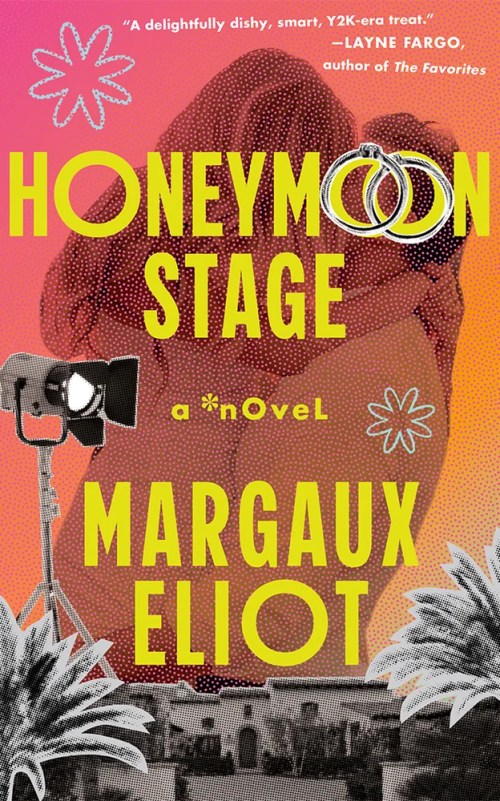
FICTION
Honeymoon Stage
By Margaux Eliot
Little a
Published November 4, 2025


