


Antonio Michael Downing’s latest novel Black Cherokee skillfully explores identity primarily through the eyes of Ophelia Blue Rivers, a Cherokee and Black child born on a former reservation along South Carolina’s Etsi River. Motherless, Ophelia’s father is unwilling to carry the responsibility alone. He leaves the child with his mother, Grandma Blue, to raise as her own.
Seven-year-old Ophelia wants to attend the proper school of the region. Grandma Blue’s children resent her because of how students and teachers disrespected them. Raising Ophelia was Grandma’s chance to right what she saw as those wrongs, but tensions rise when the corporation that bought the town out of its reservation status begins poisoning the river and forces the old woman to act against her wishes and send the girl away. The circumstances make her question all the choices she made for her children.
The town levees a lawsuit against the immoral corporation and asks Grandma Blue as the widow of the reservation’s chief to help lead the fight. She accepts even though she was the person who pleaded to not sell their land rights to the corporation after her husband died.
Ophelia goes to live with her aunt Aiyanna once the Etsi River becomes too unsafe. Unfortunately, she isn’t much better off. Aiyanna is young, drinks too much, and resents the situation. She escapes caring for her own children only to have to raise her niece. She treats caring for the child as a prison sentence, and therefore treats her niece disrespectfully as retribution. Ophelia changes hands again, in a manner of speaking, when her father, who is all but a ghost in his mysterious absence, enrolls her in a new school where her other aunt Belle is an instructor. She tries to use Ophelia as the blunt instrument to beat back the racism within the school system. She wants to prove a young Black and Cherokee student can succeed beyond her white counterparts. Everyone’s plan upends when Ophelia falls for Christopher, a white boy at school.
The reader learns that Ophelia used Grandma Blue’s lessons in Etsi to survive in all the spaces that reject her. Later, her cooking talent helps her trick and punish a bully at school and it’s what helps raise her status at the Christian church. By the time she’s dealing with Christopher and his family, she’s almost completely lost her tendency to daydream—an endearing quality when she was a child that Grandma Blue despised. Christopher reawakened it in her for a short time, but when he turns his back on her when she needs him most, she becomes just as cold and calculating as Grandma Blue. She vows never to let anyone use her again.
Exploring Dual Identities
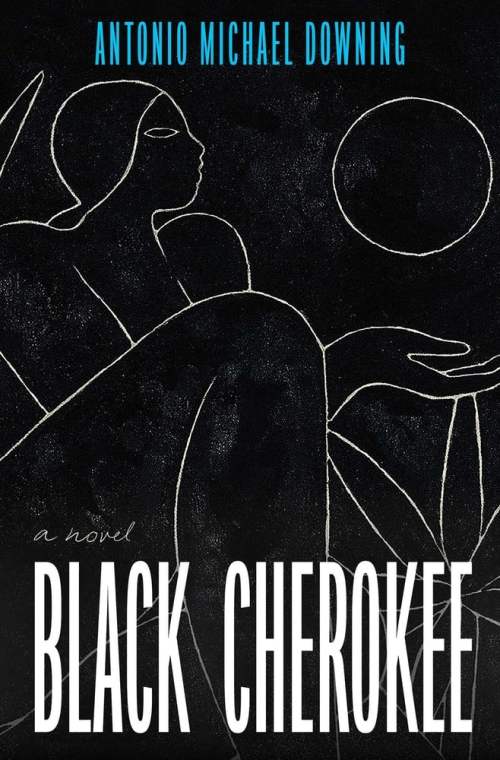
Downing starts his process of exploration at the title. When a reader first sets eyes on the book or cover image and sees “Black” and “Cherokee” as identifiers, they understand there is a duality in place and an identity that is at stake, in flux, or perhaps both at once. Ophelia going to the school is a problem because of her Blackness—or more specifically—her impure Cherokee-ness.
While living with her aunt, Ophelia gives Christianity a try. She thinks she’s found family at the church, but a would-be friend sets her up. She’s expelled from the congregation because she does not stay quiet and invisible. Under Aunt Belle’s tutelage, Ophelia becomes the object of affection of the rich and white Christopher. He is the son of the oligarch who runs the company poisoning the Etsi River. The boy is also infatuated with Black culture. Ophelia seems to connect with his “duality,” but learns a harsh truth of what it means to use identity as a prop the way Christopher puts on Blackness—like a fresh pair of Jordans.
Shakespeare’s Wolves
Black Cherokee is an excellent subversion and blend of classic stories brought to bear on more modern soil. Downing calls upon Shakespeare’s plays in the telling of this story. Firstly, Ophelia is the name of the two main characters of the story. Academia debates whether Hamlet’s Ophelia has gone mad and killed herself thanks to contradicting truths about her future with Hamlet the man. Further, the two warring families whose progeny find love is, of course, Romeo and Juliet. However, Downing reverses Christopher and Ophelia’s economic status.

Shakespearean tragedies end in death and his comedies end in marriage—this is where Downing uses a deft pen. Rather than simply flip the coin to the other side, the author refuses to choose between a simple binary. Just like Ophelia doesn’t choose between her Blackness and Cherokee-ness, Downing recognizes the complexity of owning multiple identities. As a storyteller, he implements both a combination and rejection of the two Elizabethan/Jacobian-era tropes.
Downing’s exploration misses one opportunity. The reader could have spent more time with Grandma Blue, charting her reintegration into the community via the lawsuit. She seemed to need to win over so many people, some of whom literally spit at her feet at the sight of her, but the story instead follows young Ophelia’s journey. So much happens off the page that when Ophelia and Grandma Blue reunite and the town learns the results of the lawsuit, it seems abrupt.
Grandma Blue’s story is a remarkable parallel to her granddaughter. The two stories working in tandem in the first part of the book were impactful showing how to reckon and reclaim identity from multiple perspectives. It would have been interesting to see how an older woman and her stubbornness navigate a modern problem using traditional methods and mindset. But despite this discrepancy, the book handles the dueling wolves of identity without having to choose between the two—it implores you to choose both.
FICTION
Black Cherokee
By Antonio Michael Downing
Simon & Schuster
Published August 19, 2025


