“I was just about to turn seventeen,” writes Jay, the retrospective narrator of The South, celebrated Malaysian writer Tash Aw’s carefully sculpted new novel, “and at that age, what did I really know about time?” And over a series of taut chapters told from multiple perspectives during an extended stay at the failing farm that Jay’s family has recently inherited in the country’s southern region, the idea of time emerges as the novel’s true subject, its passing interminable one day and impossibly fleeting the next. The South also explores time’s inevitable effects on narrative and memory, and how each can shape and transform the other.
Jay is central to the novel as both its subject and storyteller, and his evolving relationship with Chuan, the older son of the farm’s manager, forms the plot’s tender and quietly transgressive core. The book opens with the boys’ first sexual encounter, which takes place outdoors among the diseased and rotting trees of the farm’s doomed orchard, before stepping back and explaining the context and circumstances of what is at stake. Jay, his parents, and his two older sisters have made the journey south to take stock of what is now theirs, and the slow boil of long-simmering conflicts gives the novel a sense of heat, even as it lacks a conventional sense of propulsion.
“It seemed everyone was waiting for something better,” Jay notes as he observes everyone around him navigate hardships rooted in some inability to appreciate their lives in the present—perhaps because of the increasing obsolescence of the ways of life that had sustained them until now. The chapters from the adults’ points of view are written in third-person present tense, the action narrated precisely but at a distance as Jay’s parents navigate marital obstacles based on cultural understandings of the roles they’ve agreed to play, all of which ultimately inflects the family’s future with a wild sense of uncertainty.
Jay, for his part, is desperate for the future to come as quickly as possible. “Time is something to be endured; there is too much of it ahead of me,” he complains as he imagines the opportunities awaiting him when he gains the freedom of adulthood. “Why doesn’t time accelerate and propel you into a new age, when you can emerge a different person—stronger, calmer, more beautiful?” And it is this obsession with leaving the past behind that serves as his engine of curiosity and change, desperate to replace innocence with experience at whatever cost, even as he writes now many years later with his sense of the new having long been dulled.
The novel’s innovation in narrative perspective takes place at the level of point of view, with subtle shifts modulating closeness and distance in self-storytelling to expert effect. The two boys in the opening chapter are referred to in the third person by the narrator, as if describing a scene that he’s only witnessed rather than participated in, and it reads like an attempt to recapture a memory rather than to recount it: “It is the first time he has felt his body slipping away from his control,” writes Jay of himself as an adolescent, imagining his way back in time as he tells the story to the reader. “In the future there will be other occasions in other places far from here, and he will grow accustomed to it, but for now this sensation is new.”
Following this opening, most of the retrospectively narrated chapters from Jay’s point of view are presented in the first-person past tense, even as the perspectives sometimes collide, the “I” narrator referring to Jay as a separate entity, the mind and body of narrative memory suddenly severed. Aw seems to suggest with this technique that there are different ways of reconstructing the self in the past, some more confidently than others, and that we’re always reimagining and remembering simultaneously as we become unreliable narrators of our own stories.

There are novels of incident and novels of pathos, and The South is certainly more steeped in the latter, as its narrative of one character’s irrevocable refusal of the blinders of childhood mirrors that of the quiet passing into history of a lost time and place. “That was how memory worked; it was the opposite of recollection,” Jay observes, “never as strong as we thought it was, always relinquishing the instances that mattered most to us.” He’s telling us that something remarkable in youth—even perhaps our first taste of love and desire—becomes forgettable over the passing of time. The power of The South is in its enactment of this truism, its narrator always keenly aware that the people we might have once been in the past are already long dead.
FICTION
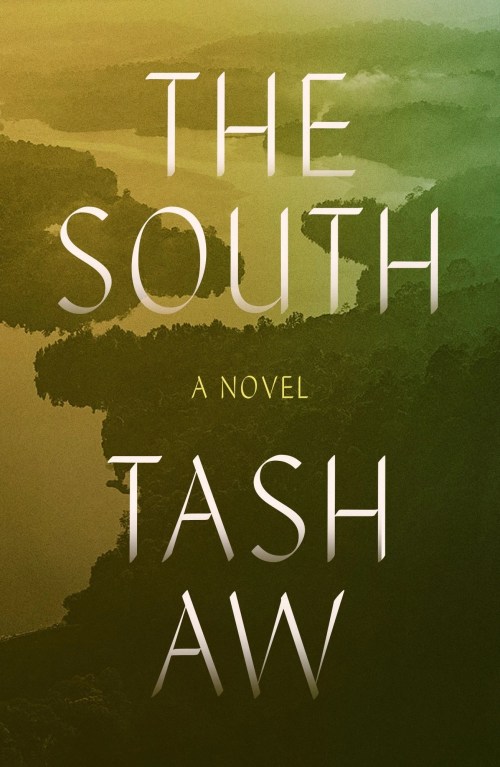
The South
By Tash Aw
Farrar, Straus and Giroux
Published May 27, 2025