


What would you do for a chance to revisit a moment of your past? In Dete Meserve’s The Memory Collectors, four residents of a sleepy California town are selected to experience the newest innovation from Aeon Expeditions. The rules for this highly coveted experience are as follows: you only visit for one hour, you can’t change the present by altering the past, and no one else will feel what you experienced.
It’s an expensive procedure to alter your own metaphysical construct of time—costly to your wallet, your body, and your psyche. It’s a challenging task to traverse the footprints of your former self without becoming tangled in “if only,” “what could have been,” and the ever-present “what if I could do it all differently?”
Before the loss of her only child, Elizabeth was preparing for her new routine as an empty nester. Andy was an author trudging through writer’s block when Kate brightened his world with love at first sight before disappearing without a trace. Logan, a daring athlete, was injured in an accident that he cannot remember. Brooke once felt confident she was a decent person. But after hitting two people with her car and fleeing the scene, her relationships with her family, her community, and herself aren’t the same. She longs now for the days when she wasn’t haunted by the unforgiving mantra “you may think you’re a good person, but when it comes down to it…”
What Meserve’s characters regret most can’t be changed within the single hour allotted. But when the hour is up and the machines fail to jump them back into the present, the four gain the unexpected opportunity to dream of changing everything.
Metserve’s pacing of these characters’ journey into the past is even and clean. The first third of the book cycles through their points of view one after another, the rhythm changing as she reveals the lines of connection that tie these unknowing “Memory Collectors” together. More substantive revelations are woven throughout, with smaller tidbits that cling to the corners of the mind—little reminders the reader should bookmark for later as they track how the paths of these four strangers cross and whether the characters yet recognize the weight of these interactions.
In the first person, Meserve also has the conceptual space to wrestle with what each of the four fears most. Was I a bad mother? Did she ever really love me at all? Am I just looking for something else to blame? Am I a good person? Can I still try to be a good person? This is a story about grief. Grief for the dead, grief for the living who don’t see you in the same way, and grief for what you wish was still possible.
In her descriptions of parenthood, Meserve’s detail shines through. Elizabeth’s characterization of her son Sam and his fresh, post-college life is tender and tangible—his shoes tossed haphazardly on the living room floor, his scruffy beard shaved for first job interviews. They share the push-and-pull tension of a child entering the unknown world of adulthood choices and the strain of active parenthood coming to an end. Brooke plays the same torturous question-and-answer game with her own daughter, feeling the weight of milestones she missed, the absence of her daughter’s need for her in the aftermath of her accident. The invisibility Brooke feels as a mother is potent as she contends with no longer being a moral crux of her daughter’s universe.
Still stuck in the past, the four all try to change their fate. Additionally, the foursome’s status as the famous “Memory Collectors,” trapped in the past, becomes a media spotlight that goes underexplored in terms of its impact and consequences. And although this story is an intimate mystery, I wondered how our world’s recurring media narrative of billionaire tech entrepreneurs launching expeditions to space, the deep sea, and beyond (for those with the fame and bank account to afford it) might affect the newly returned Memory Collectors.

Why the final part of the book feels less seamless lies in Andy’s share of the narrative. While the others navigate their intense desire to re-live their old, Andy chases a phantom in his memories. He pursues the hazy afterimage of a woman he briefly met, convinced himself he knew intimately, and never saw again. Meserve even includes a small diatribe from Andy about modern dating and how he spent so much time maintaining the charade of the perfect guy that he didn’t notice how much Kate concealed from him. When Andy meets her again in the past, he realizes there were signs all along that he didn’t know her as well as he thought. It’s a case of how the stories we tell ourselves are limited to our own perspectives, and it isn’t until we reflect that we can widen our gaze and see what we ignored.
We often think of our memories as records of what we’ve experienced. In actuality, it’s likely better to think about reflecting on our memories as an act of revisiting. Every time we revisit a past moment, we re-edit our version of the events, and the new version becomes part of our recollections. The Memory Collectors introduces time travel like so: “We don’t change time, but time changes us.” In at least some ways, hindsight being 20/20 is a small way we get to practice time travel each day.
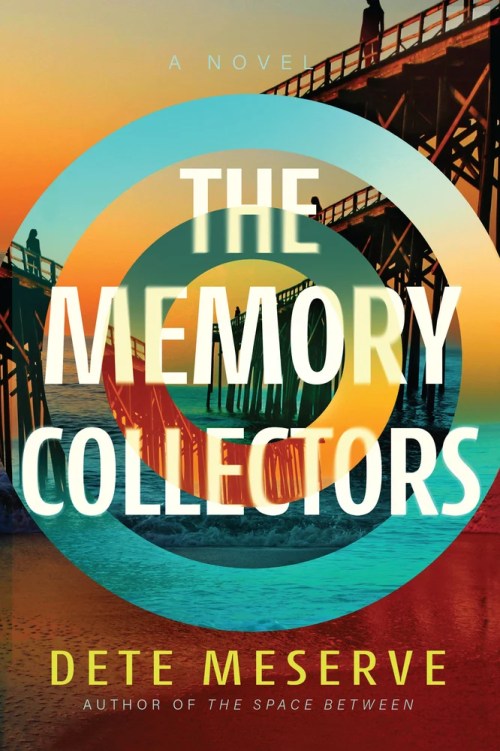
FICTION
The Memory Collectors
By Dete Meserve
Crooked Lane Books
Published May 20, 2025


