


The ideal soundtrack for Greg Hewett’s debut novel, No Names, would start with a Schumann piano concerto, followed by a Black Flag anthem, manually mixed onto a dusty cassette tape with a handwritten label. The punk tracks represent Mike and Pete, two young guitarists who form an infatuated friendship in the mid-1970s on the working-class side of a fictional city situated near the Rust Belt, on the migratory path of tundra swans. Pete, who has supportive parents, speaks in a theater kid patois and loves philosophy, literature, and spontaneous swims in dangerous waters. Mike, who comes from a troubled family wracked with grief over a brother who died in Vietnam and a criminally closeted father, surprises everyone—even himself—with his musical talent. He slips through his post–high school malaise with a self-aware, wishy-washy shrug. Mike cannot constructively deal with his queerness, and his confusion makes him thwart Pete’s attempts at conventional success.
Reminiscent of Theo and Boris in Donna Tartt’s The Goldfinch, Mike and Pete engage in deep conversations and embark on reckless escapades. Instead of stolen art, they traffic in tunes. After high school, they form a band called the No Names and release a record. A European tour takes them to Copenhagen’s notoriously hedonistic Christiania commune, where two pornography-filming, drug-dealing French villains upend the band’s rise to punk notoriety.
When the novel opens in 1993, Mike and Pete’s tragic romance is in the past. Hewett introduces Mike as a shepherd hermit who composes complicated guitar solos on a remote Faroe island, living a charity existence made possible by Mike’s sometimes-lover Daniel, a world-famous classical pianist who grew up in aristocratic privilege. Then Hewett cuts to Isaac, who’s a generation younger than Mike and hails from the wealthy part of Mike’s hometown. Instead of making the most of his post–high school gap year, Isaac wallows in affluenza. He’s mean to his mom, an image-obsessed, culturally appropriating white woman who wears do-rags and changed her name to Vashti after getting into yoga (i.e., her son’s scorn is at least half deserved). After the No Names’ album speaks to Isaac like a higher power, Daniel sends Mike a fan letter from Isaac, then forces a meeting, where the connections between Mike and Isaac spiral out like the springing strings of a smashed electric guitar.
The four central characters take turns narrating in first person, along with select sections narrated by Pete’s mother, Mariko, a gentle homemaker with a passion for guns and gardening. Isaac’s narration is the most playful and voice-y, especially when he complains about his conflicts with Vashti: “I’d pictured her face going full-on gargoyle as she gestalted the whole story in my bomb about staying at my grandmother’s.” Mike’s sections offer a keenly sentimental perspective on the thin threshold between love and harm, and pleasure and pain. “The crowd goes nuts,” Mike explains the addictive, ritualistic draw of No Names’ punk performances. “They want me, I want them. They start grabbing at me, pawing me, hitting me. It’s crazy, it’s like those ancient Greek cults Pete talks about, the ones that rip their god apart.” The different voices, time periods, plot threads, and locations have a contrapuntal feel, like a complicated Bach invention.
Some of the contrived epistolary communiqués between Mariko and her California cousin do a little more telling than showing, but Mariko’s thoughts about Mike and Pete’s found family dynamic are a welcome female perspective, as otherwise most of the women in No Names exist as caricatured plot devices instead of fully drawn characters.
Hewett’s plot explores contrasts: the high-low tension between classical and punk, and Daniel’s rarified surroundings with Mike and Pete’s autodidactic musical origins. Dichotomies are a major theme; even Isaac has two different-colored eyes. No Names teems with symbolism and plays with literary allusions in the song lyrics, which Mike and Pete write using liberal references to the American and British literature canon, thanks to the influence of their high school English teacher. Punk fans will catch musical Easter eggs in some of the place names and menu items.

As each character deals with their own inner turmoil, the plot crescendos to a satisfying musical moment. Each character’s trajectory is resolved in surprising ways, like a minor fugue ending on a major Picardy third, making No Names an enjoyably dense, globe-spanning, philosophy-filled love story with a twist.
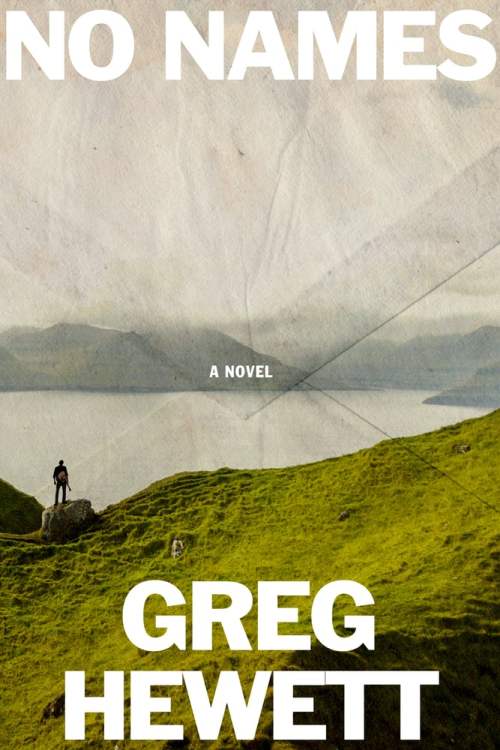
FICTION
No Names
By Greg Hewett
Coffee House Press
Published April 8, 2025



I’ve been following your blog for quite some time now, and I’m continually impressed by the quality of your content. Your ability to blend information with entertainment is truly commendable.