


Sarah Moss’s writing is characterized by a precision of language and judgement. It refuses reductive, comforting evasions, insisting on the complexities of the problems it confronts. This clarity of vision is central to the pleasure of her texts. It is not only the basis of their sharp humor but their ability to do justice to even the most troubling characters and situations. Bill, the abusive father in Moss’s 2018 novel Ghost Wall, is not a monster, solely responsible for his considerable flaws, but the product of his society. Recognizing this is essential to understanding his violence as a political as well as an individual problem; as Moss argues in a 2020 interview, “when we decide that the angry men are just monstrous, we let off the hook the structures that have put them in that position.” Literature is defined partly by this concern with moral and intellectual difficulty, with the various, often contradictory pressures that shape seemingly straightforward people and practices. Moss’s artistry and insights depend on her exact and exacting prose, which enables her to maintain a critical distance from her subjects and to see them clearly.
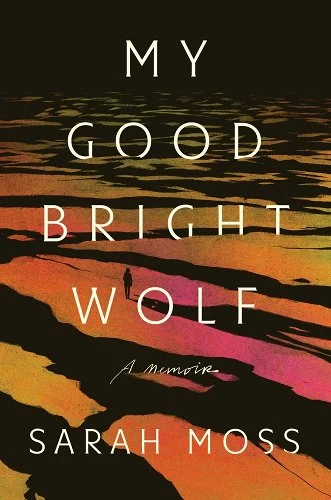
These distinctive strengths are visible in Moss’s new memoir, My Good Bright Wolf, which explores the origins and ambiguities of her self-discipline. The determination she develops as a child enables her to “succeed, pass exams and job interview and promotions,” make her “good in a crisis, best in a crisis,” but that determination is also destructive; being able to “override fatigue and weakness and pain” means being able to push too hard and go too far. As Moss emphasizes, this is learned behavior. The form of her self-control is determined by broad, gendered structures. Raised in a culture where “[b]eing a woman was being on a diet,” and a household where eating was regarded as “a lapse of willpower, to be deferred and resisted as long as possible,” her shrinking body in particular becomes a demonstration of her will. Abstention is a source of perverse agency as well as constraint. Moss’s focus on food is certainly exacerbated by her upbringing and by a father who responds to the fact that his nine-year-old daughter has lost weight by saying for the first time “good job… well done.” But like Bill’s violence, it is a social as well as an individual problem. As Moss observes, “The instruction to eat and weigh as little as possible had not originated in your crazed head. There was no delusion in your idea that women are rewarded for being thin and punished for fatness.”
Like all good memoirs, My Good Bright Wolf is not simply about the self but exposes the general implications of particular experiences. Moss is sensitive to numerous systems of oppression, but she is characteristically perceptive about gender and the ways in which inequality is reinscribed in spheres that appear apolitical. As she recognizes, even her commitment to ideas often reinforces dominant cultural models rather than liberating her from them. By sixteen, Moss accepts the argument that “decent women valued mind over body.” She internalizes the injunction so completely that, in her forties and about to pass out due to severe malnourishment in an Irish hospital, she wonders whether she is experiencing “the state enjoyed and promised by… the men of reason, greed at last disciplined, hunger silenced, weight under control, the mind all but liberated from the mess and need of the body,” whether this is how “true scholars, true scientists, live their lives.” The long-established identification of men with thought and women with biology shapes this moment of crisis, in part because “self-starvation” promises self-determination. As Moss observes, early feminists such as Mary Wollstonecraft argued that “the cost of the female mind was the female body,” that men “already knew that women were always after cake and new dresses, their minds full of trivia about fashion and recipes, and so it was your job to prove them wrong.” Anorexia is a form of constraint that too often promises freedom from the very gendered models it reinforces.
Moss’s clarity of vision extends to her account of her childhood, which cannot be explained by poverty or conservatism. As she repeatedly emphasizes, her parents, referred to throughout the text as the Owl and the Jumbly Girl, are progressive, even radical. The Owl has as “a young man in newly desegregated America… repeatedly put himself in clear and present danger as an activist” for racial justice, and the Jumbly Girl is a feminist who works for disability rights. Their middle-class rejection of consumer culture is expressed in their homemade meals, and clothes, their hiking and camping. Moss recognizes the continuities between their choices and her own, the fact that “you live your adult life in a broadly similar way, because – because it seems obviously better,” but she also recognizes that the damaging control she exercises over her body is rooted partly in the “puritan feminism” that shapes her childhood. Her “bourgeois boho neglect” as a child is legitimized by her parents in terms of principles they found liberating and which, in many instances, she still shares.
Moss’s roots still clutch at her, returning in the judgmental voices that punctuate her text, contradicting and trivializing her memories. These passages are simply not the words of the Owl and the Jumbly girl but of what Freud calls the superego, the internalized form of both parental authority and the social structures it represents. Experienced as conscience or even reason, and so potentially as a form of support, the superego in fact makes demands that cannot be satisfied. It is supplemented and extended by later authority figures, a process demonstrated here by the “men of science,” the nutritionists and dieticians whose advocacy of fasting reinforce the discourses Moss absorbs as a child and contribute to her relapse. The contradiction between the promise of care and experience of its absence can feel like madness.

In My Good Bright Wolf, these social and parental voices are present from the opening page, challenging everything from minor details (“that wallpaper was in the kitchen”) to whole episodes (“none of this happened”). Most of all, they deny Moss the right to tell her story, insisting “you’re still crazy and greedy and lying and lying and lying.” The existence of the memoir is consequently in itself an assertion of agency that gains strength from a clear-sighted understanding of how hard agency is to achieve, just as the life-affirming qualities of the text are grounded in “seeing all the ways out… and choosing all the time not to take them.” There are no simple solutions, just as there are no simple monsters. What My Good Bright Wolf offers is what Moss always offers and what literature should always offer; an unflinching willingness to confront what is difficult. Its control and precision are all the more valuable for being so hard won.
NONFICTION
My Good Bright Wolf
By Sarah Moss
Farrar, Straus and Giroux
Published October 22, 2024


