


Perhaps driven by the isolation of the pandemic, or maybe the world was simply ready for another sexual revolution, the early 2020s brought a new exuberance for polyamory. Pop culture embraced the trend with open relationship plots on hit shows like Succession, and the once taboo idea of throuples and polycules and non-monogamy suddenly seemed altogether less shocking. Open relationships were everywhere, a panacea for the mundane monogamous marriages of middle age.
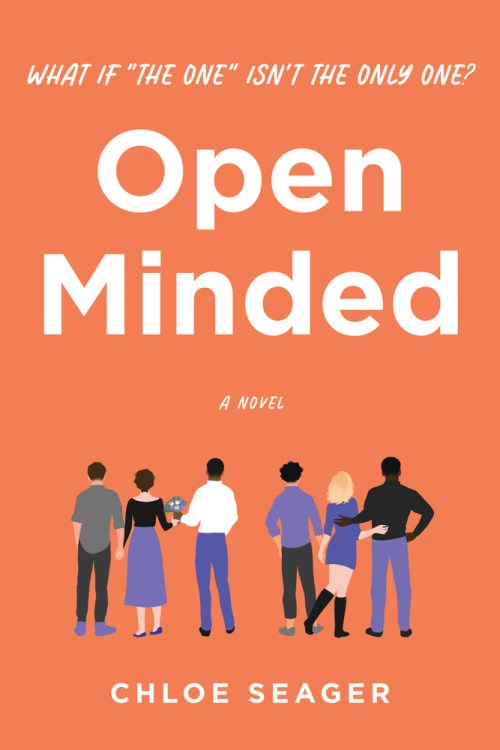
Open relationships are still a bit of a shock for Holly, the protagonist in Open Minded, a new novel by Chloe Seager. This relationship-centered comedy grapples with balancing desire, love, and the freedom to choose. The novel opens with Holly expecting Will to propose marriage after nine years of dating. Instead he proposes they open up their relationship to see other people.
We meet Fliss with a raging UTI, a side effect of all the sex she’s been having. Fliss already is happily in an open relationship. You might see where this novel is headed.
Holly, heartbroken, follows through with the agreed upon plan to open things up. She finds a date through an app, and upon his arrival immediately breaks down into tears in the women’s bathroom. Here she meets Fliss, who is something of an expert on non-monogamy and has the opposite problem of Holly. After years of enjoying her open relationship with boyfriend Ash, he now wants to close things up, creating an exclusive relationship she struggles with.
The two women, both of whom take turns narrating the novel, decide to help each other out. Fliss offers open relationship advice to Holly while Holly helps Fliss deal with how to survive in an exclusive relationship. The story flips back and forth between the two perspectives, each of them struggling like fish out of water.
The heart of this novel is the friendship that is kindled between Holly and Fliss while they try to figure out how to date the men in their lives. Female friendship has been deeply dissected in novels of the last decade, and while Open Minded offers a fun entry point, there isn’t really anything groundbreaking because the story simply never dives deep enough into either character. The lack of depth isn’t necessarily a problem for a book that clearly wants to be a romantic comedy—a tune the novel plays effortlessly.
Though most romantic comedies follow a couple falling in love after a meet-cute, the twist here is Fliss and Holly are falling into friendship. Their relationship follows the expected ups and downs of a mid-90’s Hugh Grant film like clockwork. The one concern here is how the rhythm becomes predictable, particularly with the b-plots like with Fliss’s brother, Henry, who is getting divorced, and Holly’s job, where she expects a big promotion.
Henry’s divorce at first feels like it was written into the plot to provide a contrasting relationship to draw parallel discourse about the dangers of monogamy, especially compared to Fliss who is struggling with being exclusive. The coincidental arrival of Fliss’s beloved ex-boyfriend piles on the problems. But don’t worry, there isn’t really any discourse here. Henry’s divorce has a far more pedestrian cause. He’s gay, and didn’t know how to come out before the wedding. Now he and his ex-wife must figure out co-parenting a child. This reveal doesn’t seem much like a spoiler given the trail of breadcrumbs leading up to it, particularly when Fliss dismisses the possibility of Henry’s sexuality outright.
Ultimately, the characters’ non-monogamy feels a bit like an internal debate between the competing desires of the same person. Holly and Fliss mirror each other so perfectly, the premise comes off as a bit too contrived, like a construct to weigh the pros and cons of opening up or closing down the relationship. And maybe here too we see the lack of depth in that neither desire seems to win the day. But an ideal romantic comedy isn’t meant to make us think too hard.
If there is one conclusion, it’s that the act of dating is kind of horrific. Nobody seems to have much fun with it. Holly’s boyfriend, Will, perhaps has the worst success rate out of any of the characters. There is quite a great deal of pleasure in watching him squirm, hiding his failures and growing jealous of Holly’s success. It’s especially satisfying because he pushed Holly toward opening things up when she clearly does not want to. Dating is hard, and one of the benefits of a committed relationship is not being rejected on the apps.

Where Open Minded succeeds most is in these moments where the bad characters get what they have coming to them, and the good characters get what they deserve. Throughout the book, these conflicts are created and resolved predictably, but they are nevertheless satisfying to see play out.
Open Minded is a classic romantic comedy, fun and fast to read, structured around and promoted with a trendy, sexy twist. Open relationships may not be quite as hip as they were a year or two ago, but they remain an exotic temptation for the unhappily married. But it’s not a treatise on polyamory, and despite focusing around the taboo of non-monogamy, it fits neatly within the parameters of the rom-com genre. Open Minded reminds us that dating is always messy, and perhaps open relationships are less about the sexual partners we sleep with and more about the friends we make along the way.
FICTION
Open Minded
by Chloe Seager
William Morrow & Company
Published November 12th, 2024


