


About twenty years ago, a pair of retired detectives announced that college-aged men across the Midwest were being targeted by a serial killer. In the years since the announcement, over forty possible victims have been tallied, all dying or disappearing in the late 1990s through the late 2010s. Discussions continue regarding the “Smiley Face Murder Theory,” so-named due to the recurring symbol of a graffitied smiling face found near the bodies. Active law enforcement had previously determined the causes of death as drownings, and officially these conclusions are still held. Regardless, private investigations and fascination with “Smiley Face” have continued. The retired detectives who announced the theory are still searching for evidence, and even acted as the hosts of a miniseries on the matter in 2019.
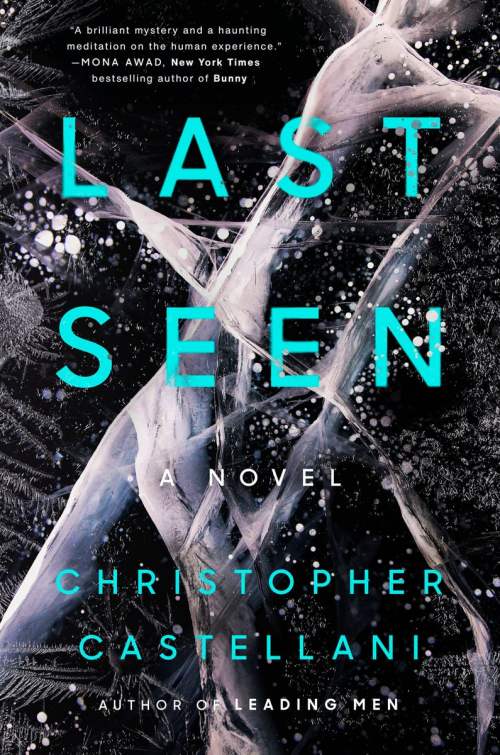
Christopher Castellani’s latest novel, Last Seen, is a fictional look at this phenomenon. The novel, however, has dug out the psychological truth of the “Smiley Face Murders” more completely than any previous interpretation.
Castellani is a successful and established writer. A holder of an MFA in Creative Writing from Boston University, he has taught English literature at Tufts University and Swarthmore College, and is the former artistic director of Boston’s creative writing center GrubStreet. Last Seen is Castellani’s fifth novel.
Last Seen focuses on four victims—four college-aged men who disappear and are found dead in icy rivers—and the people who knew them. Chapters are organized in a way that at first can feel overwhelming, but becomes captivating. In some chapters the dead meet together in a diluted afterlife, able to do nothing more than speak with each other, and view the current moment in the life of a living person closely tied to them. Other chapters follow these living characters: a mother giving birth to her son, a wealthy socialite meeting her secret lover, a surviving sibling that becomes an orphan, and an older married man who begins what is initially a quick fling with a young homosexual. We see how they met the victims, the last time they saw them, and their lives in the aftermath.
The novel does an excellent job building eight strong point-of-view characters, making all of their realistic lives, concerns, and struggles interesting. We’ll briefly summarize the victims. Leo Ridgeway has what feels like a dead-end life, living with a drug-abusing mother and an infant sister. (He says: “My story: terror relief terror relief. The rest is just details.”) Steven Donovan is an orphaned young man working at a Boys & Girls Club where he is the focus of adoration from the young kids. Caleb Aldrich is a genius determined to solve the crises of the world, but in the meantime wanders parking lots looking for older men. Matthew Cardullo is a kind college wrestler obsessed with a girl who is tired of him. He doesn’t realize just how tired until she sends her new police officer boyfriend to break them up for her.
The four victims meet in the pale afterlife and try to remember their deaths, while the ones they perhaps loved most—Leo’s sister, the wealthy socialite Steven meets, the older married man Caleb picks up one day (and who later becomes a Smiley Face investigator), and Matthew’s mother—come to terms with the deaths of the young men and move forward with their lives, each in their own way.
Last Seen is extremely well-done. The plot and mysteries are engaging, the characters are complex, the moralities ambiguous and thought-provoking. The theme connecting the four young men—or boys, as they are often referred to by the older characters—becomes an important topic, one not generally discussed: male loneliness and despair. Violence is not absent from their lives, but more quietly fatal is the loss of an inner will to live. A family member says of one protagonist that, ultimately, they had been the victim of “untreated anxiety and depression”. In their afterlife the dead have no bodies, only visions of the waters where they died: gray gloomy waters and fragments of ice slowly flowing by. For some of the dead, their lives may have felt much the same.
Love is an answer, yet love is the greatest danger. If love breaks, one is plunged into the ice again. Some readers may be tempted towards a transcendent answer, but Last Seen is ultimately agnostic. What we can know for sure are the struggles and frustrations of this world, the rays of love that shine in and then flicker off all too suddenly. For the dead men, what they know are their memories and the lives of the ones they left behind. If there is transcendence it is like love: a grace that is received, not taken.
FICTION

by Christopher Castellani
Viking
Published on February 17, 2026


