


In honor of the 10th anniversary of the Chicago Review of Books, The New Chicago Renaissance series revisits exemplary works of literature about Chicago from the last 10 years and explores their continued relevance. Join us all year long as 12 leading writers and artists explore books that they love and why they’re meaningful to our understanding of modern Chicago.

I can still picture Nate Marshall showing up to Young Chicago Authors in a full suit one hot July day in 2009. He had come straight from his shift at Macy’s downtown, collared shirt buttoned and shoes sharp against the scuffed wooden stage and the graffiti mural that overlooked our weekly open mics. I was nineteen years old, rehearsing with my fellow Louder Than a Bomb college slam winners for the National Poetry Slam in August. Nate sat in the corner as we practiced, his formal fit juxtaposed against the cozy, mismatched furniture. He was only three days older than me, but he carried himself with the weight of someone navigating multiple worlds at once. In that room we were already learning something about Chicago, about the multitudes it contains, the multitudes it asks us to hold.
Nate and I both grew up on Chicago’s South Side, in neighborhoods with very different demographics, reputation, and proximity to whiteness. I grew up in Beverly, the historically Irish-immigrant neighborhood known for housing cops and firefighters. Nate grew up in Roseland, a predominately Black area frequently described as one of Chicago’s most dangerous regions. Though we were raised less than four miles from each other, our paths didn’t cross until we ventured to the north side for open mics and poetry slams in our teens. Years later, Nate and I became members of the Dark Noise Collective, a group of poets freshly graduated from college who banded together to support each other as we began to navigate the professional literary world. We started an epic group chat and would hold biannual retreats where we would cook for each other, give craft talks, write poems, talk shit, and generally hold space for each other.
In my years teaching alongside Nate and listening to his artist talks, I would often hear him repeat that “the most important thing a writer can give you is permission.” In other words, great poets not only show you that you are allowed to write, they also show you that your specific world is worthy of being written about. Nate’s poetry has always shown me exactly that. What strikes me now, looking back at those first days at YCA, is how Nate has grown into a writer whose work inhabits the tensions between worlds, insisting on the full texture and complexity of his experience, and building a home within the language. Writing poems that speak “as my people might.”1
Senegalese filmmaker Ousmane Sembène famously said:
Europe is not my center, Europe is on the outskirts… Why be a sunflower and turn toward the sun? I myself am the sun!2
In his two poetry collections, Wild Hundreds (University of Pittsburgh Press, 2015) and Finna (One World/Random House, 2020), Nate’s center of gravity is Chicago’s South Side, Roseland aka the Wild Hundreds to be precise. In these works, Blackness is more than the subject matter of the poems, it’s also a point of reference. Our speech, our geographies, and our interior lives are the sun around which everything else turns.
While both books have roots on the South Side, they each offer different entry points into his artistic lineage. Wild Hundreds is a long love song to Chicago, employing Nate’s “hood pastoral” aesthetic to celebrate the people and culture often left out of civic discourse about the city. It is a book that displays the beauty of Black survival even as it mourns the tragedy of Black death, rendering the physical block with the tactile detail of a home movie.
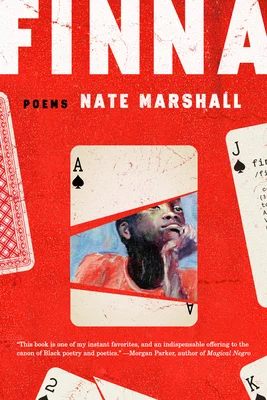
In Finna, Nate’s focus expands to the landscape of the tongue, exploring the power of words—from the names we call ourselves to the labels imposed by others. Nate defines the title as a contraction rooted in African American Vernacular English, but also as a synonym for “Black possibility; Black futurity; Blackness as tomorrow.” These poems reckon with the violence against Black people and the disposability of Black lives through the medium of language. They offer up our own vernacular as a site of resistance, rendering our speech as a language of hope and a tool to reimagine possible futures. Together, Nate’s two collections form a comprehensive, living archive of Black life in 21st-century Chicago.
The Material of the Street
For me as a writer and a Chicagoan, the resonance of Nate’s books begins with our mutual fav Gwendolyn Brooks’ own guiding principle. She famously stated:
I wrote about what I saw and heard in the street… There was my material.3
A true student of Brooks, Nate’s poems in Wild Hundreds take the raw “material” of Roseland streets and treat it with the same depth old white dude poets might have used to render the shadows and shades of a forest. He doesn’t merely write odes; he documents the layers and complexities of a neighborhood that is often flattened by outside observers. His work offers a radical green light to write about your origins and environment in your own words, from your own perspective. Like Brooks (whose life Nate helped bring to the stage as a co-writer of “No Blue Memories,” a musical about her legacy) he honors the tradition of documenting “ordinary” Black lives with surgical precision and immense love. This sense of permission extends into the very music of the lines. Nate has expressed that his literary and musical lineages are inseparable, stating:
For me they are very much interconnected. I think the way I think about rhythm and sound in a poem is of course related to having a background in hip-hop. I think also the approach of having poems that speak to people in accessible language. All of that comes from hip-hop.4
By blending these hip-hop sensibilities with Brooksian craft and neighborhood vernacular, Nate demonstrates that the influences of a Black writer do not need to be compartmentalized. Instead, they can collage, overlap, and sample from one another easefully, an aesthetic Nate knows well from having released three hip-hop albums of his own.
Chicago Over Everything, South Side Over That
This seamless integration of his musical and literary lineages is matched by his rendering of the South Side as a sacred, central landscape. When Nate writes, “Chicago over everything, south side over that,” he’s not just expressing civic pride, he is expressing a literary manifesto where the Black experience is the default, not the “other.” His writing takes an “if you know, you know” approach. If a reader doesn’t understand a specific cultural touchstone or geographical shorthand, Nate doesn’t stop to explain it. Instead, he invites the reader to lean in and see for themselves.
Even the anatomy of his metaphors reflects this commitment. He consistently uses Black cultural markers to define and compare other aspects of Black life. For example, in Wild Hundreds, his series of poems titled “Chicago High School Love Letters” offers love languages specific to a Black South Side teen:
i would take the bus
for you, walk through
your neighborhood
navigate the colors.
Here, the act of love isn’t compared to a rose or a summer’s day, but to the tangible, risky, and devoted navigation of the city’s complex geography. This use of the second person creates an immersive experience, much like the car ride tours of the South Side Nate famously gives friends from out of town. You aren’t a detached viewer watching the news, you are in the passenger seat of the journey. In this way, he humanizes the neighborhood, showing how systemic tragedy reverberates into personal grief and how, despite everything, life is stubbornly created and celebrated in the midst of it.
This perspective offers a vital correction to the “bird’s eye view” often used by national media to describe Chicago. While outsiders frequently essentialize neighborhoods like Roseland as mere statistics of violence, Nate provides an inside lens through what he calls a “hood pastoral” aesthetic. Traditionally, pastoral poetry idealizes rural life, but Nate’s work “re-establishes the urban landscape as one capable of the greatest beauty.”5 In poems like “candy store” and “fame food & liquor,” he treats neighborhood shops not as blighted spaces, but as essential to the ecosystem, the perennials of the block.
Language as Homeland
Central to this humanization is language. In Finna, the Chicago vernacular, the “native tongue,” is a home that exists even when the physical neighborhood is threatened by displacement or erasure. In the poem “landless acknowledgement,” Nate writes, “closest i got to a homeland is my daddy’s laugh in a spades game.” This line strikes at the way Black people have had to invent and expand the definitions of home. Because we were removed from our original homelands, our lineages and languages interrupted, we pass down a portable language that keeps evolving to hold us. It reframes the vernacular not just as a “style” of speaking, but as a survival technology, a way of carrying an entire civilization in the breath when the ground beneath your feet is constantly being contested or stolen. In these poems, home is a frequency, a specific set of sounds and rhythms that provide a sense of belonging that the state cannot grant or take away.
This mapping of the self through sound is most inventive in the poem “welcome to how the hell i talk.” Written in the form of a geography textbook entry, Nate samples encyclopedic language to chart the origins of his own speech:

demographics: 35 percent missibamaisiana-isms from the Up
South old folks. 20 percent
magnet school doublespeak. 15 percent white girl whispering in
the suburbs or summer camps.
18 percent too many rap records. 12 percent my mom’s work voice.
By blurring the lines between a physical place and the way its people speak, Nate emphasizes this idea of linguistic sovereignty—the idea that as long as the language survives, the home survives.
Wrestling with History
Nate’s work is particularly resonant because it “wrestles with history”6 in real-time, with these two collections bridging the gap between the beginnings of the Black Lives Matter movement and our current era of emboldened white supremacy. He is a lover of history who understands that the present is always haunted by its past. In “when i say Chicago,” he issues a sharp directive to outsiders to keep the city’s name out of their mouths:
my city is the city.
not your close enough suburb not
subject to the suppression of tape
& the tapping of phones.
how can you say anything about our blocks
& schools & children that you refuse to see.
don’t tell us what is wrong
with all of our cousins you’ve never known.
you do not govern what you do not love.
In these lines, Nate provides the necessary historical context for the systemic violence often mischaracterized as “random.” In one breath, he draws a direct connection between the modern-day suppression of the Laquan McDonald dashcam footage and the FBI’s illegal wiretapping of Black Panther Chairman Fred Hampton. By placing the “tape” and the “tap” side by side, Nate argues that this violence is not a series of isolated incidents, but a recurring pattern of state surveillance and silence. He argues that you cannot critique a community you have refused to truly see, and you cannot decide what’s best for a place you do not love. His poetry acts as a living archive for these truths, refusing to let the city’s history be sanitized.
The Legacy of Permission
The literary world has resoundingly celebrated Nate’s poetry. Wild Hundreds won the Agnes Lynch Starrett Prize, the Great Lakes College Association New Writers Award, and the Black Caucus of the American Library Association Poetry Book of the Year, while Finna was named a Best Book of the Year by both NPR and the New York Public Library. Nate has toured these books internationally, from local South Side bookstores to festivals in Singapore and Australia.
Ultimately, however, Nate’s legacy isn’t just held in the prizes or the books he leaves behind, but in the next generation of voices he inspires. From his early days teaching at Young Chicago Authors to his current tenure as a professor at the University of Wisconsin-Madison, he has spent his career passing down the same permission he first found in Brooks’ work. Because he champions the full vibrancy of his language, young writers will inherit a body of work that speaks in their own tongue with unapologetic clarity. Nate Marshall’s work shows us that we don’t need to look toward other suns to light ourselves, we can look toward our streets, our stories, and the wealth of our own experiences.

POETRY
Wild Hundreds
By Nate Marshall
University of Pittsburgh Press
Published September 9, 2015
POETRY
Finna
By Nate Marshall
One World
Published August 11, 2020

- from [title] ↩︎
- Caméra d’Afrique (African Cinema: Filming Against All Odds), directed by Férid Boughedir (1983; New York, NY: Janus Films/The Criterion Collection, 2024), restored version, excerpt featuring Ousmane Sembène ↩︎
- Gwendolyn Brooks, “We Asked Gwendolyn Brooks about the Creative Environment in Illinois,” interview by Paul M. Angle, Poets.org, Academy of American Poets ↩︎
- Lauren Prastien, “From Wild Hundreds: An Interview with Nate Marshall,” Michigan Quarterly Review, September 2015 ↩︎
- Young Chicago Authors, Check the Method: 2015-2016 Curriculum, (Chicago: Young Chicago Authors, 2015), [Page 1] ↩︎
- Scott Simon, “In ‘Finna,’ Poet Nate Marshall Is ‘All About What Happens Next,’” NPR, August 8, 2020 ↩︎


