


If you’re looking at small presses for your book and have dreamed of having your work read around the world, be sure to check out Santa Fe Writers Project. SFWP, an independent press that has been around for twenty-seven years, offers global book distribution by the Independent Publishers Group.
I had the pleasure of chatting with their Acquisitions and Developmental Editor, Adam al-Sirgany, whose story collection, More Hell, was published last year by another small press (Whiskey Tit). I’d heard al-Sirgany talk about book distribution last year at our local indie bookstore, and was eager to hear more of his thoughts on publishing. He notes the changing landscape: “Tariff paper costs notwithstanding, in 2026 there are fewer barriers than ever to an individual producing a book-object in some format. If you have a manuscript, you can get Amazon to print it, like, yesterday. You can publish your novel on Substack. Hell, Salman Rushdie did.”
But al-Sirgany knows there is no one size fits all approach to book publishing. “What is right for your book depends on your book, your skills, your time, your hopes, your readers. SFWP’s model incorporates international distribution and subrights, along with serious editorial, design, and marketing processes. We want our authors to be able to reach a global community of readers and artists as little bound by borders as they can be. This helps our authors’ sales and diversifies the community of literary conversation. Most forms of non-traditional publication aren’t able to provide that.
“Along with the high-minded reasons for that concern, wide distribution supports marketing. And awareness of and interest in a book creates not only unit sales but opportunities for subrights sales. We want to be ready when audiobook producers come looking to make new versions of our books. We’re lucky to be able to collaborate with Susan Schulman who’s had a remarkable career working with the likes of Michael Ondaatje, Marilynne Robinson, Louis Sachar. Her team has positioned us for conversations few independent presses have—which means it’s positioned our authors for publications, translations, films, that can feel (or are) out of reach to authors in other circumstances.”
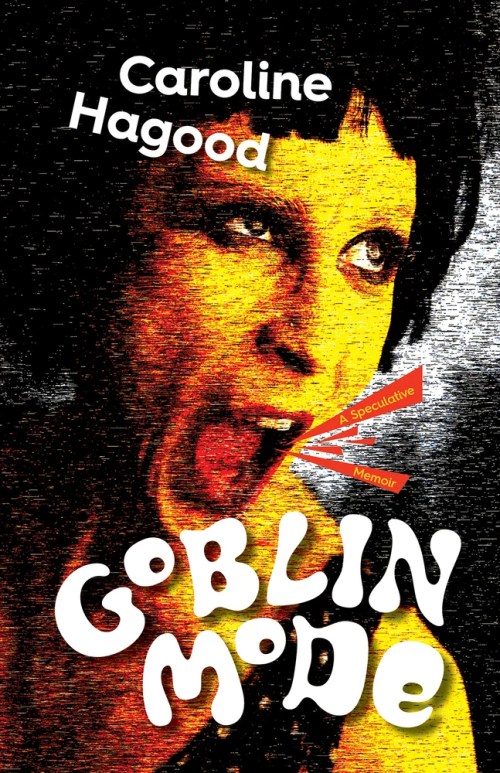
“Caroline Hagood’s Goblin Mode is a hybrid memoir about raising kids in Brooklyn during the Second Pandemic, thinking out the idea of ‘goblin mode,’ and the literalization of that concept. It feels ziney, but so fresh and real and darkly funny.”
SFWP was founded by Andrew Nash Gifford, who remains the press’s Director. “He’s always been very hands-on in the vision,” al-Sirgany says. “He reads submissions, manages our pub schedule, and supports our marketing and subrights sales, among other things. He also takes on a good bit of editing.”
al-Sirgany has been their Acquisitions and Developmental Editor for about five years, helping to select books for publication and foster the books that get contracted. SFWP also has a few freelance designers, copyeditors, proofreaders, and layout folks they work with regularly, but al-Sirgany notes their authors are active in the processes of design and layout; sometimes choosing their own cover artists.
All their authors work closely with SFWP on marketing and publicity. Andrew Nash Gifford has built an extensive overarching marketing plan. “But there’s some real adaptation [from] author to author,” al-Sirgany says. “The ends of marketing are always the same-ish, right? But the tacks Jerry Wayne Longmire (a professional comedian and content creator) and Caroline Hagood (a writer and professor) take to get to where they’re going will differ slightly because they have very different books and very different existing audiences. We’ll all discuss that. We’ll all work through that together.”
From talking to al-Sirgany it’s clear SFWP authors get a lot of care and attention. “I think of it as my job to help authors actualize what their art wants most. To help them know they are in ‘right relation’ to the work before their book goes to ARC/ uncorrected proofs and the marketing part of the process sweeps them and their focus up.” He believes good editing is about working closely with an author. “It’s about being an advocate for that author in-house, and it’s about being an advocate for the book with the author.”
His process is extremely hands-on. “With every book, I’m going to do at least three close reads: I’ll blind read it for feel. I’ll chat with the author about that. We’ll talk about what the author hopes the book is conveying, and what the book is conveying to my particular perspective. More pragmatically, we’ll discuss plot and character development. Usually, the author will do a little tweaking and rewriting at that point, then I’ll do some line editing on their adapted manuscript. There may only be one round of this. There may be 11. I’m always aware of the pub timeline, but you have to work the book until it’s done, until it says what it wants to say with all the music and verve and veracity with which it can say it.
“I take a lot of long walks, and the walks I take get longer while I’m deep in editing. Walks are the most crucial part of the process to my mind. It’s the way I clear my head and scry. I’m super intuitive about art. When I’m walking around just thinking about what the book does—rather than what it’s trying to do—it’s time to move on.
“These days, I always conclude the editorial process with what I call a ‘book club read.’ I ask authors to read their own book while performing their ideal reader. That might seem silly, but most literary artists will spend months or years, sometimes decades, on a book. It’s next to impossible to read your own work objectively at that point. I may work with an author for 5 or 6 months. It becomes impossible for me to read the book objectively too. So the goal is for us to pretend to be other people, people who would want to read the book if it were firing on all cylinders.
“We have some tea or a glass of wine or whatever, and we see if the work we’ve done has gotten us where the work wanted to go. Sometimes we find ourselves critiquing lines or moments that the author and I will have to go back and tweak. But if we love the book, and that’s what our book club is getting at, the book is ready to go to layout.”
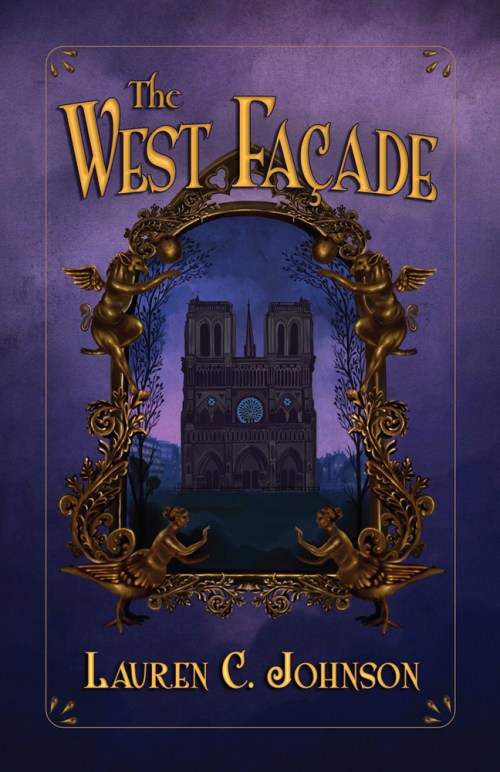
“The West Façade by Lauren C. Johnson is pretty great. Picture: it’s the Black Plague in Paris, and the statues on Notre Dame are occasionally sentient, and our heroine has a teenager’s libido and a stone’s age of insight and chooses to become human to stave off a cultish takeover by a statue of an angel.”
SFWP receives around 2,000 manuscript submissions per year. Most of those come through their annual contest, but they also accept agented submissions and have occasional open-call periods. al-Sirgany finds the volume heartening: “There are many people who still believe in and engage in the act of creating literature. Say what you will about the state of the world, I find great hope in the abundance of future books. Honestly, I wish I could work on more of them.
“Which leads me to the pragmatic: we’re a small team. We value doing well by the authors we take on. We shoot for 8-10 books a year.
“Some of our decisions are practical and financial. If we publish books that make money, we can keep publishing books. So, yes, a writer who understands a bit about marketing themselves and who has come to us having at least begun building a platform—which, by the way, need not be social media—is more likely to get selected for publication, all other things being equal. Publishing is a business of passion, but we’re bound to the cost of paper. The key is finding art that feels complete as art, and authors who love what they’ve done in a way that pushes them to be out in the world sharing their creations.”
As mentioned, al-Sirgany is a writer himself, so he understands rejection. “Many people—most of us?—take ‘rejection’ very personally. You put life and spirit into something your identity is bound to, you want folks to love it.
“As an editor, I want to work with books I believe I can support well. Enthusiasm for, love and dedication for a book—those are personal, powerful and hard to explain. But a publisher’s enthusiasm for someone else’s work isn’t really a rejection of yours.”

“Stephen Eouannou’s Nicholas Bishop series is really Steve at his best. I’ve gotten to work with him on several books, and his world keeps growing in these incredible ways, and the writing keeps getting better.”
SFWP’s website states they aim to publish “exciting” fiction and creative nonfiction. I asked al-Sirgany what makes work exciting. “That’s a big complex question. There’s a great Kundera article where he describes literary context not as ‘lineages’ but as ‘aesthetic houses.’ The idea, as I understand and have incorporated it into my own work, is that each of us as artists isn’t simply building on chronological and dependent history and canon but on our own history with the art we encounter, art that matters to us.
“A friend recently told me SFWP books tend to be literary realism with a strong sense of the absurd. Or absurd with a strong sense of realism. That feels true as far back as some of the early stuff Andrew published—Pagan Kennedy’s work for example.

“My own aesthetic house, like everybody’s probably, is a jumble of what I was taught, what I thought I was supposed to like (and did), and what I was raised with. I want Baldwin meets Kafka meets slightly weird jokes about Murder She Wrote and the Catholic Catechism. I appreciate lyricism and rhythm in language. I have a sort of classic sensibility that books are elevated by the poetry within their prose, and vice versa. Take Melissa Llanes Brownlee’s stories in Bitter Over Sweet. They are these insanely rich short shorts about growing up native Hawaiian. Melissa extracts so much from a line.
“I love when work has a relationship to its past as it tries to remold it. They’re wildly different books, but Yesteryear by Stephen G. Eouannou (a book about the creator of the Lone Ranger as a Lone Ranger-style radio play) and The Death and Life of August Sweeney (a contemporary medical novel that takes me straight back to Rabelais) both do this for me. When artful language and a sense of ‘the tradition’ meet writerly self-acceptance of one’s personal weird, magic can happen. It’s how Wendy J. Fox makes domestic discontent absolutely captivating in The Last Supper. It’s how Jess Bowers makes historic horses hilarious and tragic and effervescent all at once in Horse Show. It’s how Rachel Zimmerman allows grief about her husband’s suicide to be a subject we can discuss and process, even as we accept what we don’t like about ourselves along the way.”
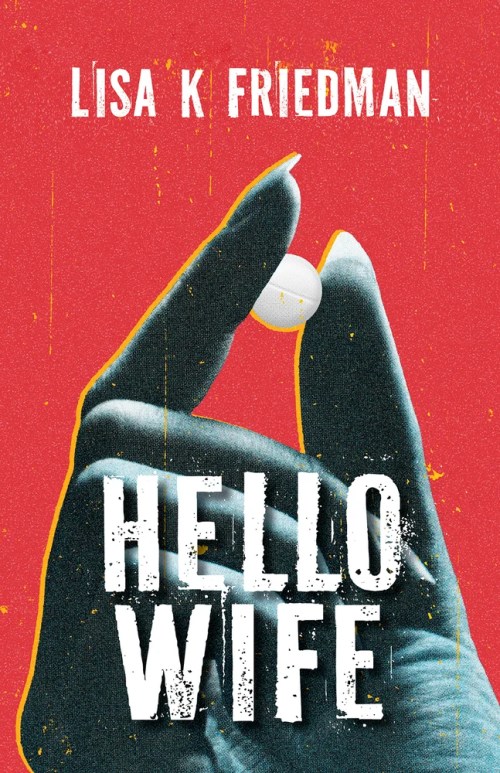
“I dig Hello Wife, Lisa Friedman’s novel about a middle-aged woman seeking love and finding it—question mark—in a man-child who’s addicted to opioid painkillers. The characters are quirky and loveable and sort of Kafka-esque, id-close-to-the-surface, in all the right ways.”
And so what is al-Sirgany personally drawn to? “I love the weird. Not intentionally and self-consciously weird. Not pretentious but failing to recognize the many forms created throughout the history of the language arts weird. Not faux-radical, birds-up-to-the-man, punk-rock-patches-and-bad-cigarettes weird. And certainly not offensive-for-the-sake-of-pretending-I’m-a-free-speech-absolutist weird.
“The thing about the real, earnest, weird-weird is that it isn’t describable. I don’t know it yet. It’s just going to find me. And I’m going to go, Oh dang! I haven’t seen that before.”
In short, “If we’ve decided to take one on, it’s because there’s magic there for us.”

“Jerry Wayne Longmire’s The Reckon Yard is a project I’m unusually proud of. It’s the kind of passion project few editors get to undertake. He’s a comedian, but his memoir, it’s really about his time growing up in a rural junkyard, his life emerging out of that blue-collar space, and trying to be a good man despite role models and life experiences that could have made him otherwise.”
Another unique thing about SFWP is that it also maintains an online literary journal. “The lit journal allows us to foster authors, to give them a space for ideas that are still nascent, or that are best suited to be a short piece or cycle,” al-Sirgany says.
“The journal is somewhat separate from the press. Different folks usually read the submissions there, but there’s a lot of cross support and consultation.“Importantly, the journal staff reads the SFWP books, and the press staff reads the journal. I trust the journal’s taste, and I take it seriously when folks who published an essay or something at the journal expand that work into a full-length manuscript. Like, Hey, I know this is our vibe. I met this person, even if digitally, and I know I can work with them.”
al-Sirgany urges readers to check out SFWP’s backlist. “I’m not only proud of what I’ve done at SFWP, I’m proud to have gotten to join SFWP, which has done brilliant stuff for years. The backlist has aged well, and it tells an amazing story about what indie lit has been and is still becoming.”


