


There’s been a lot of dark satirization of the wealthy elite recently in media and pop culture, but what about middle and upper management? The system doesn’t keep printing money without the soulless grind of the 9-5 office worker surrounded by spreadsheets, social media analytics, and slide decks. It is definitely an artistic challenge to render a character working a sort of abstract startup job as an interesting entry point into broader questions of modern life, but Mariel Franklin is up to the task in her debut novel.
In Bonding, narrator Mary is a thirty-something in London ambivalent in her career and in her love life. On a trip to Ibiza on a whim after her job is eliminated, she encounters Tom, a charming chemist turned marketing executive who is helping to sell the public on a new antidepressant, Eudaxa, that is supposedly capable of resolving psychological and interpersonal strife. Around the same time, Mary is offered a content marketing and data management role by her ex-best friend Lara at Lara’s trendy dating app (with the requisite vowel missing from its name of course), Openr. Mary’s story unfurls at this strange intersection of our modern conceptions of happiness and desire.
The novel is slick, pragmatic, and bleakly funny. All of the characters are scrambling to figure out how to live in this world where the sense of purpose and restraint supplied by religion and traditional social norms has been lost, where attention has been so atomized that it feels like everyone’s searching for the next big thing ad infinitum (“… bombarded with ads for various prophylactics—fitness programmes, anti-capitalist marches, psychotherapy courses. Anything to ward off the realization that no one had any idea how to live.”)
Mary, Tom, and Lara all dance and stumble back and forth over the thin line between the marketing pitch and the material consequences. Franklin is able to balance a compelling plot with thoughtful digressions about existing at a time when companies are trying their hardest to optimize and commodify even the most human aspects of life.
Ahead of the US release of Bonding, I had the opportunity to interview Mariel Franklin about the book and what she’s thinking about the tech elite, hyperreality, and pessimism.

Anson Tong
Bonding has been out for a year in the UK, and is now being released in the US. Congratulations on that! How has the experience of your debut novel being out for a year been? Has anything surprised you about the reception and do you think that there’s anything Americans might take differently compared to your British readers?
Mariel Franklin
Thanks Anson. Definitely—I wrote the book very privately over the Covid lockdown and had never written anything before, so I never thought it would get published at all. The UK reception blew me away but I think that might have had something to do with the fact that I studied art at Goldsmiths College in London which has a tradition of this kind of writing e.g., from Mark Fisher and the other writers in the Cybernetic Research Culture Unit, who were influenced as much by musicians and artists as they were by other writers. Some of those names had an outsize influence in certain circles—including tech circles—and although Bonding is very different, it has echoes of that movement which I think helped to give it context in the UK. It also seems to have gone down well with younger people, which I wouldn’t have predicted. I’m not sure if US readers will have that same framework but I’ll be interested to see how they respond.
Anson Tong
Both commercial ventures central to Bonding, Openr (a dating app) and Eudaxa (a next-generation antidepressant), are sold by identifying very real problems of loneliness and selling a utopian tech solution. How did you go about conceptualizing these two fictional products? Were there ever other industries or product ideas in the mix?
Mariel Franklin
I worked in tech for a while after finishing college, managing data for various start-ups, so I had some experience of both of these industries. The other reason I chose them is that I wanted to write more broadly about the 2010s postcrash era. There was this balls-out, pioneering Libertarianism that everyone associates with Silicon Valley—this idea of these Wild West pioneers finally becoming powerful enough to take on the slow and sclerotic European and East Coast Establishments with their at least performatively enlightened values, culture and manners—albeit with some DEI concessions (or at least those still existed before Trump 2). But there’s another side to it that’s less discussed, which is the conflict between these utopian ideals of limitless freedom and human flourishing and the actual business model, which is far more mundane: to sell products that increase predictability, whether that’s targeting an ad campaign, a drone strike or a new drug. These goals aren’t compatible and they’re also vastly oversold, which leaves us with something far more rudderless and chaotic.
I liked the idea of dating and psychedelics in particular because they’re both so steeped in Californian liberal idealism but if you take those aspirations seriously, the internal conflicts become obvious pretty fast—and these are conflicts that go to the heart of liberalism itself. How far are we really prepared to take the idea of equality? What do we really think the future should look like? And how much are we prepared to compromise to get it?
Anson Tong
You absolutely nail the kind of woo-woo, aspirational language and delusions of startups (“taglines that were grandiose but also bland, like ‘globalizing breathing’ or ‘exploding words’”). What do you make of tech’s obsession with ideas of “well-being” and “human flourishing” and their importing/co-opting of philosophical and artistic ideals while simultaneously being a driver for the decline of the humanities?
Mariel Franklin
I think the lack of awareness of the humanities in tech is a cause as much as it is a symptom. It’s much easier to unironically promote, for example, the longevity movement, when there’s no awareness of the history of that idea—which is at least a thousand years old, probably originated with Gnosticism and is inextricably linked to Christianity (it’s no coincidence that Peter Thiel and Bryan Johnson grew up in Evangelical and Mormon families respectively).
That lack of awareness can be an advantage—it allows for a blind confidence in the present moment, as if it isn’t encumbered by anything that came before—but obviously, that isn’t true. It’s just a fantasy, like any other.
The cherry-picking of philosophical and artistic ideals is more opportunistic, in my experience. A lot of university humanities departments became very focused on a certain set of principles post-WW2, mostly Frankfurt School-inspired ideas, and that left a gap in the market for everything else, which has become a huge driver of engagement online.
That’s not to say there’s anything wrong with extending life, just that nothing happens in a vacuum and some of these companies have more in common with the prosperity gospel than they do with the work of say, a Fleming or a Jenner.
Anson Tong
I appreciated how you mock self-serious political commentary (“talking points around ‘the marketization of the culture’, ‘the violence done to marginal voices’ and ‘the cul-de-sac of aesthetics as resistance under the conditions of late capitalism.’”) and consider the way culture has devolved into trends. Mary often measures experiences by how alive or on the periphery of her life she feels. How do you think we proceed in this world where everything real seems to become abstracted and aestheticized away from reality?
Mariel Franklin
One thing we can do is become more aware of the world beyond this vibes-based ecosystem. Take a step back, take some time to look at how our thinking has been influenced over the years—and why it happened the way it did. Laugh at it too—a lot of these cultural swells date really fast and seem extremely nuts in retrospect. Basically, spend time on things that put some distance between the immediate pull of the cultural machinery and everything else. It’s possible to develop some immunity through distance, which is the one thing most digital media companies are trying to erase.
Anson Tong
I was struck by the way you characterized Lara and Mary in communication as this “shared stream of consciousness” that Mary falls into, while Mary doesn’t have that with her lover Tom, because he doesn’t really text, so every time they meet it feels more important. More generally, the wordless sending of photos is a common mode of communication between characters. Can you talk a bit about that dichotomy of communication?
Mariel Franklin
I think love is one of the few aspects of life where physical presence really matters.
Lara and Mary have this easy stream of consciousness, they’re close, but there’s something different going on between Mary and Tom and that doesn’t translate so seamlessly through their devices. I wanted to make that distinction because I’ve found it to be true in my own life.

Anson Tong
How much of this is about the need for friction in real life (while tech companies try to remove it all to find efficiency), or is this merely generational? Part of my fascination with this aspect of the novel is that I find myself tending towards the assumption that higher volume and frequency of communication points towards a sense of closeness because it evinces that the other person is thinking of me, but that also seems to perhaps be shaped by the logic of social media engagement and posting. Some of the detritus need not be preserved ultimately. I also really liked how for Tom/Mary and Lara/Mary it plays into how much of an imagined persona of each of them exists for Mary. Figuring out how much of phone world/texts/social media to include in a contemporary novel is also an interesting choice to hear about—some novels feel to me like they’re not as in our time because the characters actually don’t look at their phones that much, but that can be a good thing.
Mariel Franklin
Maybe it is a generational difference—and this is only anecdotal, obviously—but I remember the shift from phones being used to organise the thing to becoming the thing itself (let’s say around 2010-2012) happening really fast and pretty universally, even amongst people who didn’t have smartphones as teens.
I agree it’s weird when it isn’t addressed in fiction because it totally blew apart the rules of engagement. Even now there are so many different vernaculars. For example, I have friends who’ll text for any reason at all, even if it’s totally random. It’s almost like they’re posting at me and they’ll keep going without expecting an answer anytime soon, because they know I’ll pick up the thread at some point—it’s comfortable and low demand. Then there are people who’ll treat it like an instant conversation and can’t be left on read for too long. Then you have the more creative, minimal chats, like we’ve descended into a more surreal space and will just send a single photo or meme, unless there’s something more important going on. That’s without even getting into group chats, social media etc. It’s complicated and it keeps evolving—and yes, it’s under-explored in literature.
The reason I wrote Tom and Mary’s relationship as low text is because—and this is also only anecdotal—when a really serious romance takes hold, it’s so obviously a reaction to that person’s physicality: their mannerisms, smell, touch, the way they react in the moment when you’re in front of them. Even the emotional and intellectual aspects rely so much on momentary expressions, eye contact, subliminal reactions. Once the initial anxiety has worn off, the whole performance of text and social media can feel like an annoyance—as if you already trust each other, you know what’s going on between you, so the phone is no longer the thing in that relationship. I had a baby recently and felt the same way—as if the whole rigmarole of maintaining presence online was an intrusion. I just didn’t want to give it headspace. I was much happier with the people closest to me and couldn’t imagine doomscrolling or going back to casual texting ever again. It all crept back in eventually but that kind of intimacy is one of the few things that seems resistant to the digital space.
But you may be right, maybe that’s a generational difference.
Anson Tong
Mary, as the narrator, is quite unmoored but she’s able to at least somewhat see through the hollow, aspirational language of the marketing and venture capital she’s around. The book feels like it might be an argument in favor of pessimism when it comes to being vigilant about the downstream impacts of so-called “disruptive technologies,” but it’s not like Mary is happy or successful as a result of her skepticisms. After spending a lot of time contemplating marketing, tech, and aspiration, what do you think are the roles of pessimism and aspiration in this ecosystem?
Mariel Franklin
I think there’s a false dichotomy right now between the techno-pessimism of the political Left and the blind optimism of the Right. Someone like Mark Andreessen will say the only reason he’s not a philanthropist like Rockefeller or Carnegie is because the Democrats are too skeptical and tax-heavy on his industry. Meanwhile, Vance is out there trying to sell monarchical technocracy to Middle America. Clearly neither of these positions is about the value proposition of any particular technology, these are old-fashioned power struggles between competing elites. None of this is new and as ever, it relegates a lot of the language around these issues to propaganda for one side or the other.
In terms of the skepticism in the book, I think it’s important to recognise how little power we have as individuals in this context. We can try to make money by getting ahead of the latest hype cycle, or we can hold power collectively and gain control through political solidarity, but the personal aspiration that is sold so heavily in this culture—a lot of that has proven to be empty marketing that has only accelerated the transfer of money and influence to the very top. Mary isn’t happier for acknowledging this but she is at least lucid. That’s a kind of freedom. It’s also the only possible beginning of something new.
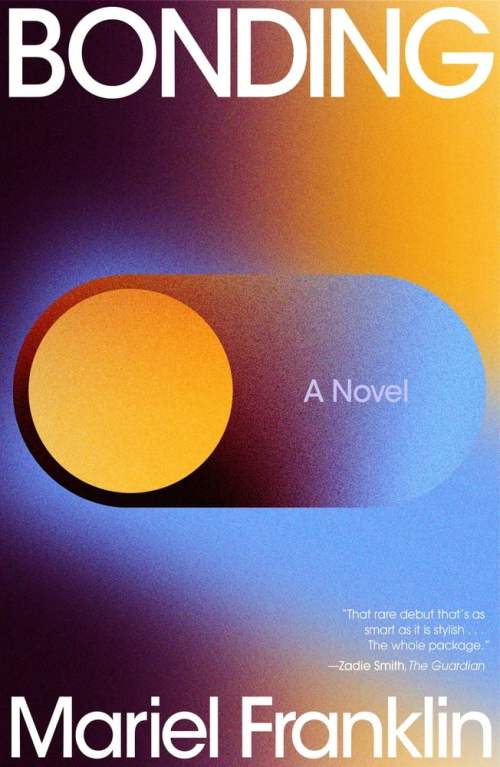
FICTION
Bonding
By Mariel Franklin
FSG Originals
Published July 22, 2025


