


Nickolas Butler certainly isn’t the first writer for whom inspiration struck in a bar. But this isn’t a story about finding a new novel at the bottom of a glass. Instead, Butler says the spark for his fifth novel, A Forty-Year Kiss, stemmed from a conversation he overheard while sipping a beer alone and working a Sudoku puzzle one night at the Tomahawk Room in Chippewa Falls, Wisconsin. An old man next to him told a woman he still dreams of her, he still loves her, and he asks her if he could kiss her. Butler says he expected a short, chaste kiss, but instead, the kiss was so passionate he was almost embarrassed.
Who were these people? What was their story? He had to know! So he wrote it himself—a fictional version, anyway.
A Forty-Year Kiss is the story of Charlie and Vivian, who reconnect in a bar in downtown Chippewa Falls forty years after their short marriage ended in divorce. Will the two, now in their sixties and with the majority of their lives behind them, get a second chance at love?
I recently got to talk with Butler over Zoom about his new novel, the art of happiness, drinking in Wisconsin, why he comes to care so much about his characters, and Mickey Rourke.
The conversation has been edited for clarity and length.

Greg Zimmerman
What made writing this novel inevitable or impossible for you not to do?
Nickolas Butler
This novel became both inevitable and impossible not to do in that moment when I was seated beside those two people and then in the moments after they left the bar. My last book was a literary thriller (Godspeed, 2021), which is totally different than this one. It was about the dark side of the American dream and meth addiction and late-stage capitalism, and I knew that that’s probably what (my last publisher) wanted from me again, another literary thriller. But I had just been privy to this amazingly romantic conversation, and I just thought, “Well, shit. This is where I’m supposed to go.”
Early in my career. I didn’t really believe in something like the writing gods or a muse or anything like that. I would have thought that was a little “woo woo” for this northern Wisconsin writer. But I really did feel like I was in that bar on that night for a reason, and to not write that story would have somehow been cosmically disrespectful. I didn’t know who those people were, but immediately, my brain began working on, “Okay, well, what happened to them in the 40 years? Why did they break up? Why are they getting back together now?” And those are all the key questions a novelist needs to move forward.
It was a fun book to write. I enjoyed every step of it. I like to do different things too. I’m not a paint-by-numbers kind of guy, and I always want to try different kinds of projects and stretch myself.
Greg Zimmerman
Yes, it’s very apparent you had fun writing this book! This is such a sweet, heartwarming story. Most novels hinge on darkness and gloom, but this is the opposite. I was just reading Salman Rushdie’s book Knife, and he says, “I have always been interested in writing about happiness, in large part because it’s extremely difficult to do.” Do you agree with Rushdie? Is writing about happiness more difficult?
Nickolas Butler
I think writers see it as difficult because they can risk overstepping into the melodramatic, which is not something that you probably have to risk if you’re writing about darker subjects. I love that you brought up Rushdie because I frequently think about the spectrum of human emotions, and I wonder why, as writers, we only deem the sort of darker stories as being critically or culturally valuable. That doesn’t make any sense. That would be like meeting the Dalai Lama and saying that he was simple for insisting on happiness, thankfulness, or greatness.
Part of the trick of writing this book was knowing how to modulate the happiness. There are some dark themes happening in this book, but they don’t ever overtake the book.
Greg Zimmerman
Since you mentioned the risk of melodrama, I’ll tell you that as I’ve been recommending this novel to readers (which I wholeheartedly do!), I’ve suggested it’s important to turn their cynicism dials to zero. I mean that as a compliment because one of your hallmarks as a writer is how much you care about your characters. What is your secret for your preternatural care for your characters?
Nickolas Butler
When I was going through grad school at Iowa trying to figure out what sort of writer I wanted to be, I decided I wanted to be a writer like Kent Haruf. He was so kind and compassionate to his characters. There is an unexplainable warmth in his books. When you look at the prose on the page, nothing really that jumps off the page. But he is able to imbue his characters and words with this kind of strange warmth. And I always wondered how he did that.
I remember being a student at Iowa, and sometimes, somebody would turn in a draft where they were really unkind to their characters. That just never turned me on at all. I almost wondered if it had something more to say about the writer. Like why are you abusing these imaginary people?
One of the literary touchstones in my life has always been The Old Man and the Sea. That’s an incredibly kind book, actually. So kind and thoughtful!
Greg Zimmerman
Speaking of kindness, we couldn’t get out of this interview without me asking you about the Midwest. This story, which takes place in and around where you live, is really, really Midwestern. There is even a funny line somewhere in the novel about how culture arrived in Wisconsin several months after the coasts, but by then, they’d moved on to something else. Would this novel have worked anywhere else but in rural Wisconsin?
Nickolas Butler
I think it could have. The thing is, I don’t need to do a lot of research to write a book about Chippewa Falls, Wisconsin (laughing). One of the things about that evening in the Tomahawk Room was that I realized that I don’t just love this bar as a place to have a drink. It’s a place of community. It’s a bar that I find almost strangely romantic. I love downtown Chippewa Falls, so I immediately understood what the universe of this book was going to look like, and I knew it naturally. It was going to be a book I could write passionately.

But the basic concept could happen anywhere. It just might’ve felt very different, sure. But one thing that’s happening in the background of the book is this theme of alcoholism. Or another way to put it is, what do you love? And some people love alcohol. And if you live in northern Wisconsin, alcohol is a big part of the culture, you know?
Greg Zimmerman
Yes, and I was going to make a joke about “Drink Wisconsinibly,” which you also reference in the novel, but it’s probably in poor taste since one of your characters actually is an alcoholic. But you write early in the novel, from Charlie’s POV: “You live long enough, you understand the value of a second chance. A new beginning.” The key to second chances, though, is reckoning with the mistakes of the past. For Charlie, that means coming to terms with his drinking. Why does Charlie deserve a second chance? Why do we root for him and Vivian?
Nickolas Butler
Well, one thing that’s interesting about our culture right now, and online culture specifically, is that it’s very quick to take somebody down quickly. But you realize is what you’re destroying is somebody’s reputation that takes a lifetime to build. And I think one thing I like about this book is that it sort of exists outside of a lot of the nastiness we see in the world. We like Vivian. It’s not a slam dunk that Vivian is going to come back to Charlie or that Charlie is going to be able to remain sober over the course of the whole novel. Those questions are part of the mysteries of the book.
But I like the idea of people having second chances. Historically, America was a place where we looked forward to the second act of someone’s career, right? Like they fell out of politics, but they come back. Or they made bad choices in Hollywood, and now they’re coming back for their second act. I think of The Wrestler. I mean, Mickey Rourke disappeared from our culture for like 20 years. And he came back, but people were excited for that performance. So I don’t know; I guess I just believe in second chances.
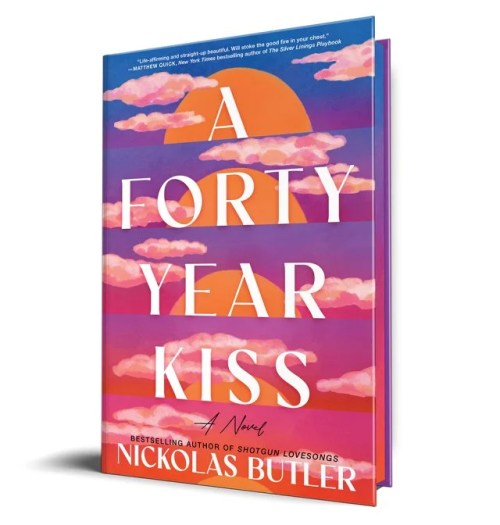
FICTION
By Nickolas Butler
Sourcebooks Landmark
Published February 4, 2025


